
Top RO Plant Solutions in Gurgaon | Expert Installation & Service
Comprehensive Guide to Finding the Right Water Purification Systems for Your Property in Gurgaon
Clean drinking water has become a luxury rather than a basic necessity in most Indian urban centers. With groundwater contamination reaching alarming levels and municipal supplies often failing to meet safety standards, residents and businesses across Gurgaon are increasingly turning toward advanced water purification solutions. According to recent studies, approximately 70 percent of water sources in Haryana contain contaminants that exceed permissible limits set by the Bureau of Indian Standards. This situation has created an urgent need for reliable water treatment systems that can deliver safe drinking water consistently.
The growing awareness about waterborne diseases and their long-term health impacts has transformed how we approach water consumption. Families are no longer satisfied with basic filtration methods that only remove visible impurities. Instead, they demand comprehensive purification systems capable of eliminating dissolved solids, heavy metals, bacteria, viruses, and chemical pollutants. This shift in consumer consciousness has led to widespread adoption of reverse osmosis technology across residential complexes, commercial establishments, educational institutions, and healthcare facilities throughout the millennium city.
However, finding the right ro plant near me is just the first step in ensuring water safety. The real challenge lies in understanding your specific requirements, choosing appropriate capacity systems, ensuring professional installation, and maintaining optimal performance through regular servicing. Many consumers make hasty decisions based solely on initial costs, only to face recurring problems and expensive repairs later. The total cost of ownership, reliability of service providers, and quality of components all play crucial roles in determining whether your investment delivers value over its operational lifespan.
This comprehensive guide addresses everything you need to know about selecting, installing, and maintaining water purification systems in Gurgaon. Whether you manage a small household or oversee water requirements for a large commercial facility, understanding these critical aspects will help you make informed decisions that protect health while optimizing long-term costs.
Understanding Water Quality Challenges Specific to Gurgaon
Gurgaon faces unique water quality issues that stem from rapid urbanization, industrial growth, and depleting groundwater tables. The Total Dissolved Solids levels in groundwater across different sectors vary dramatically, ranging from 300 ppm in some areas to over 2000 ppm in others. DLF Phase 1, Sushant Lok, and older residential sectors often report higher contamination levels compared to newer developments. Additionally, the presence of nitrates, fluorides, and heavy metals like arsenic creates health hazards that simple filtration cannot address.
The industrial corridor connecting Gurgaon to Manesar contributes significantly to water pollution through untreated effluent discharge. Meanwhile, the city's dependence on borewells has led to over-extraction of groundwater, causing not just depletion but also increased concentration of harmful minerals. During summer months, when water scarcity peaks, the quality deteriorates further as deeper aquifers with higher mineral content get tapped. These seasonal variations make it essential to install robust purification systems rather than relying on inconsistent municipal supplies.
Commercial properties and housing societies face additional challenges with storage tank contamination. Even if incoming water meets quality standards, improper tank maintenance allows algae growth, bacterial proliferation, and sediment accumulation. This is why comprehensive ro plant installation must address both source water treatment and post-storage purification. The system should ideally include pre-filtration stages, membrane-based purification, and ultraviolet sterilization to handle the multi-layered contamination typical of Gurgaon water supplies.
Testing your water before finalizing a purification system is absolutely critical. Many consumers purchase high-capacity systems when their actual requirement is modest, or vice versa. A proper water analysis report identifying specific contaminants, TDS levels, hardness, pH balance, and microbial content enables you to choose appropriately configured systems. This preliminary testing investment of around 1500 to 3000 rupees can save lakhs by preventing wrong equipment purchases.
Evaluating System Capacity and Configuration Requirements
Determining the right capacity for your ro plant requires careful calculation based on daily consumption patterns rather than guesswork. A typical Indian household of four members consumes approximately 20 to 30 liters of drinking and cooking water daily. However, commercial kitchens, office pantries, hospitals, and schools have exponentially higher requirements. Undersized systems lead to constant water shortages and accelerated component wear, while oversized installations waste electricity and generate excessive reject water.
The recovery ratio, which indicates how much purified water the system produces versus how much gets wasted, directly impacts your operational costs. Standard residential systems typically have 30 to 40 percent recovery rates, meaning 60 to 70 percent of input water goes down the drain. For large-scale installations, this wastage translates to thousands of liters monthly, affecting both water bills and environmental sustainability. Advanced systems with higher recovery ratios cost more initially but prove economical over time through reduced wastage.
Storage capacity planning is equally important, especially in areas facing erratic water supply. Your purification system and storage should collectively ensure uninterrupted availability during peak consumption hours and supply disruptions. For instance, a 500-liter per day ro plant serving an office with 50 employees should have minimum storage of 200 liters to handle morning and afternoon consumption spikes. Inadequate storage forces the system to run continuously, reducing membrane lifespan and increasing electricity consumption.
Component quality significantly impacts long-term performance and maintenance costs. Membranes manufactured by reputable producers typically last 3000 to 4000 hours of operation when properly maintained, while inferior alternatives may fail within months. Similarly, solenoid valves, pressure pumps, activated carbon filters, and electronic controllers all come in varying quality grades. Opting for certified components with established track records might increase initial investment by 15 to 25 percent but reduces breakdown frequency and ensures consistent water quality.
Professional Installation and Compliance Considerations
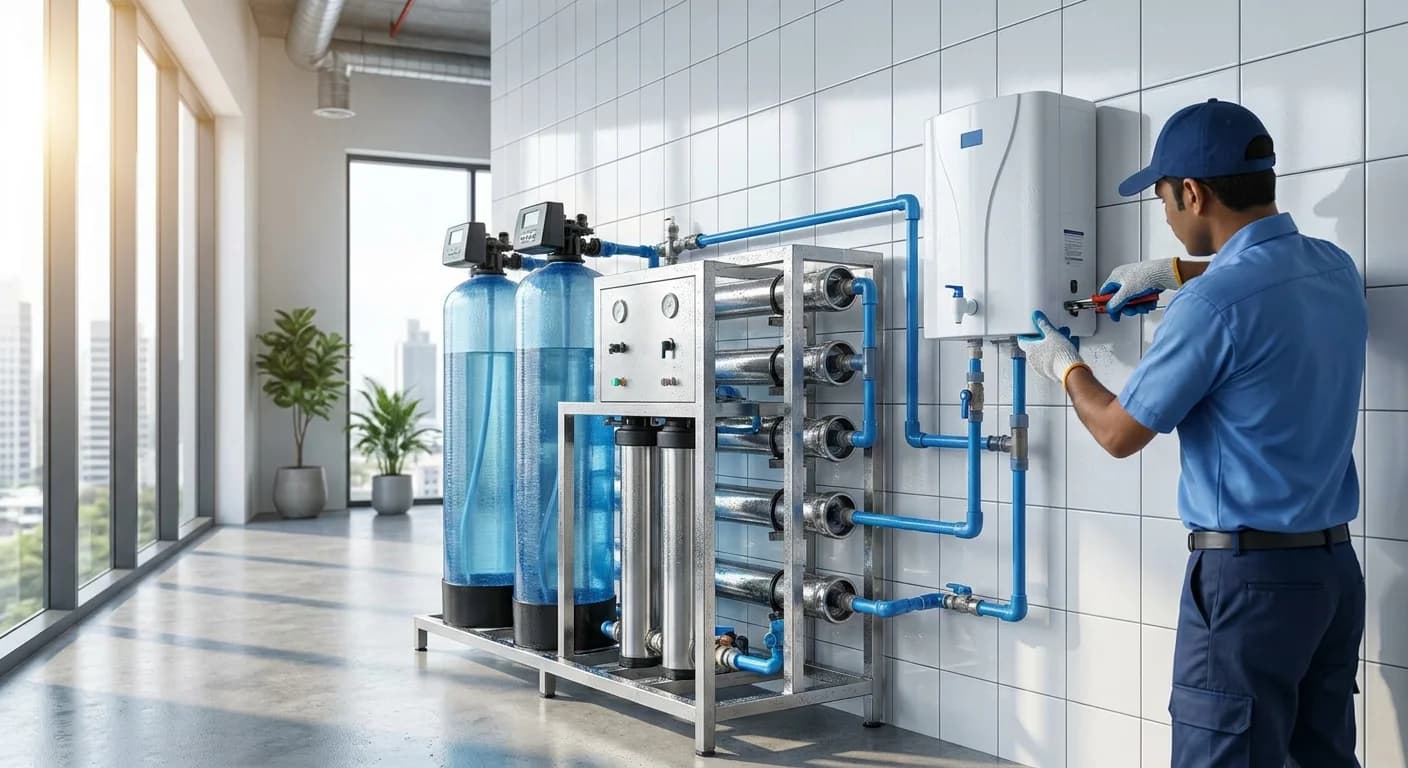
Proper ro plant installation determines whether your system delivers its rated performance or becomes a constant source of problems. The installation process begins with site assessment to evaluate available space, water pressure, drainage facilities, and electrical connections. Reverse osmosis systems require minimum inlet pressure of 40 to 60 psi for optimal functioning. In buildings with low water pressure, booster pumps become necessary, adding to installation complexity and cost.
Plumbing work must follow prescribed guidelines to prevent leaks, ensure proper water flow, and facilitate easy maintenance access. The installation team should use food-grade pipes and fittings throughout the drinking water pathway to prevent contamination from pipe materials. Additionally, proper grounding and electrical safety measures protect both equipment and users from electrical hazards. Many installation failures occur because unqualified technicians skip critical steps to save time, creating problems that surface weeks or months later.
Drainage arrangements for reject water disposal require careful planning, especially for high-capacity systems. Simply directing concentrated reject water into regular drains can cause pipe corrosion over time due to high TDS content. Some facilities harvest reject water for toilet flushing, gardening, or vehicle washing, significantly improving overall water use efficiency. This requires separate plumbing infrastructure that should be incorporated during initial installation rather than retrofitted later.
Documentation and compliance certificates may be required for commercial ro plant installation, particularly in food service establishments, hospitals, and educational institutions. These certifications verify that the system meets prescribed water quality standards and operates within environmental regulations. Maintaining proper installation records, including component specifications, plumbing layouts, and electrical diagrams, proves invaluable during troubleshooting and helps future service technicians understand the system configuration quickly.
Maintenance Protocols and Service Requirements
Regular ro plant service in gurgaon prevents minor issues from escalating into expensive breakdowns while ensuring consistent water quality. The pre-filter cartridges that remove sediment and chlorine typically need replacement every three to six months depending on input water quality and consumption volume. Neglecting timely filter changes forces membranes to handle contaminants they were never designed to process, drastically reducing their lifespan from years to months.
Membrane cleaning and sanitization should occur annually or when water production drops noticeably below rated capacity. This specialized procedure requires trained technicians who understand the chemical processes involved and use appropriate cleaning agents. Harsh or incorrect chemicals can permanently damage membrane material, necessitating expensive replacements. Similarly, the storage tank should be drained, cleaned, and sanitized every six months to prevent biofilm formation and bacterial growth.
Performance monitoring through periodic water testing helps identify declining efficiency before it affects water quality. TDS meters provide quick checks, but comprehensive laboratory testing every six months ensures that the system effectively removes specific contaminants of concern. This is particularly important for commercial installations serving vulnerable populations like children, elderly residents, or hospital patients whose health could be compromised by contaminated water.
Preventive maintenance contracts with reliable ro plant service in gurgaon providers offer peace of mind through scheduled inspections, priority breakdown response, and discounted spare parts. These annual maintenance contracts typically cost 3000 to 8000 rupees for residential systems and proportionally more for commercial installations. While seemingly an additional expense, they prevent costly emergency repairs and extend equipment lifespan significantly. However, verify that the service provider maintains adequate spare parts inventory and employs certified technicians before committing to long-term contracts.
Types of Water Purification Systems Available
Wall-mounted domestic systems designed for individual households typically purify 10 to 25 liters per hour and include compact storage tanks. These systems integrate multiple purification stages within space-saving cabinets suitable for kitchen installation. They work well for families consuming 20 to 40 liters daily and operate on standard single-phase electrical connections. Most models feature automatic operation with tank-full cutoff to prevent water wastage.
Under-counter installations provide larger storage capacity and higher purification rates while maintaining kitchen aesthetics. These systems house major components below the sink, with only the dispensing tap visible on the countertop. They typically handle 50 to 75 liters daily consumption and suit larger families or small offices. The concealed installation protects components from kitchen heat and humidity, potentially extending their operational life.
Commercial ro plant configurations serve offices, restaurants, schools, hospitals, and housing societies with daily requirements ranging from 100 liters to several thousand liters. These systems feature industrial-grade components, multi-stage purification, larger storage tanks, and often include UV sterilization as final protection against microbial contamination. They require dedicated installation space, three-phase power supplies for larger models, and professional maintenance contracts to ensure uninterrupted operation.
Whole-house systems treat all incoming water for an entire residence rather than just drinking water. While expensive, these systems eliminate concerns about bathing in contaminated water, protect plumbing fixtures from scale buildup, and improve quality of water used for cooking and washing. They require significant space for equipment installation and generate substantial reject water that should ideally be harvested for non-potable uses.
Conclusion
Selecting the right ro plant in gurgaon involves balancing immediate costs against long-term performance, reliability, and health protection. The investment extends beyond purchasing equipment to include professional installation, regular maintenance, and periodic component replacements. By understanding your specific water quality challenges, accurately assessing capacity requirements, insisting on professional installation, and committing to preventive maintenance, you ensure safe drinking water for years. The health benefits and peace of mind from knowing your family or organization consumes contaminant-free water far outweigh the financial investment required for quality water purification systems.
FAQ
Q - What capacity RO plant should I choose for my home in Gurgaon?
A - The capacity depends on your household size and daily water consumption patterns. For a typical family of 4-6 members, a 50-75 liters per day system usually suffices for drinking and cooking needs. Larger families or those who entertain frequently may require 100-150 LPD systems. It's advisable to assess your peak consumption hours and consider a system with adequate storage capacity to handle demand spikes during morning and evening times.
Q - How often does an RO system need servicing and maintenance?
A - Regular maintenance is crucial for optimal performance and typically includes filter replacements every 6-12 months depending on usage and input water quality. The pre-filters and sediment filters usually need changing every 6 months, while the RO membrane can last 2-3 years with proper care. Professional servicing should be scheduled at least twice annually to check for leaks, sanitize the storage tank, and ensure all components function correctly.
Q - What are the warning signs that my RO plant needs immediate attention?
A - Several indicators suggest your system requires servicing: reduced water flow rate, unusual taste or odor in purified water, and constant drainage or water wastage. Other red flags include strange noises from the pump, water leakage around connections, and the rejection of water becoming excessively high. If you notice the storage tank takes much longer to fill than usual or the TDS levels in output water have increased significantly, contact your service provider promptly.
Q - Can an RO system handle Gurgaon's varying water quality across different sectors?
A - Yes, modern RO systems can be customized to handle varying contamination levels, though the configuration matters significantly. Areas with TDS levels above 1500 ppm may require multi-stage purification with additional pre-treatment. High-quality systems with adjustable settings and robust membranes can effectively treat water across different Gurgaon localities, but proper assessment of your specific water source is essential before installation to ensure the chosen system matches your area's particular challenges.
Discover how advanced RO purification systems are transforming water quality standards across Gurgaon's residential and commercial sectors. Learn more about the latest filtration technologies, certified installation protocols, and comprehensive maintenance frameworks that ensure consistent access to safe drinking water. Explore further insights into selecting providers with proven track records, understanding system capacities for different property sizes, and staying informed about regulatory compliance requirements that protect your investment and health.