
Top 100 LPH Commercial RO Plants in Gurgaon (2026 Guide)
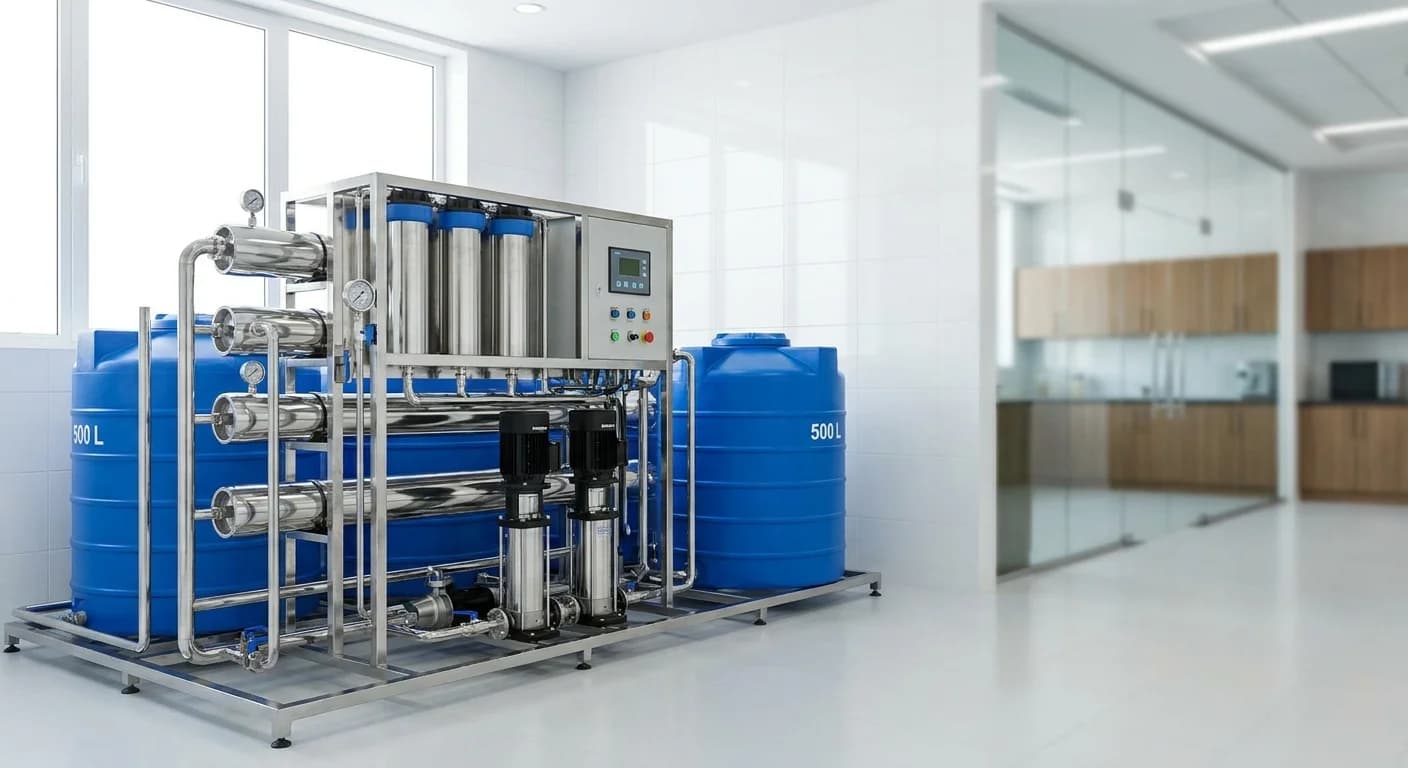
Finding the Right Water Purification Solution for Your Business in Gurgaon
Clean drinking water remains one of the most pressing challenges for businesses across Gurgaon, especially with the city's rapid industrial growth and expanding commercial sectors. Whether you run a restaurant, corporate office, educational institution, or healthcare facility, ensuring access to safe and purified water for employees, customers, and visitors has become non-negotiable. The groundwater in many parts of Gurgaon contains elevated levels of Total Dissolved Solids (TDS), often exceeding 1000 ppm, making it unsuitable for consumption without proper treatment.
Installing a suitable RO Plant has emerged as the most reliable solution for commercial establishments seeking consistent water quality. However, selecting the right capacity and configuration requires careful consideration of multiple factors including daily water consumption, available space, maintenance requirements, and budget constraints. Many business owners struggle to determine whether they need a smaller 50 lph RO Plant or a larger system that can handle higher volumes throughout the day.
This comprehensive guide focuses specifically on 100 LPH capacity systems, which represent the sweet spot for medium-sized commercial operations in Gurgaon. Understanding the technical specifications, cost implications, and key features will help you make an informed decision that serves your organization's needs for years to come while maintaining optimal water quality standards.
Understanding 100 LPH Capacity Requirements
The 100 liters per hour capacity represents an ideal middle-ground solution for businesses that have moved beyond basic requirements but do not yet need industrial-scale purification systems. To put this in perspective, a 100 LPH system can produce approximately 2400 liters of purified water in a 24-hour operational cycle, which comfortably serves organizations with 150 to 300 regular users depending on consumption patterns.
Commercial establishments like mid-sized restaurants, dental clinics, pathology laboratories, and boutique hotels find this capacity particularly suitable. The system operates efficiently without causing excessive water wastage, which becomes increasingly important as Gurgaon faces water scarcity challenges. Unlike smaller domestic units, Commercial RO Plant installations at this capacity incorporate robust pre-filtration stages, higher grade membranes, and automated monitoring systems that ensure consistent output quality even when inlet water parameters fluctuate.
The production rate also aligns well with storage tank configurations, typically paired with 500 to 1000 liter storage tanks that provide buffer capacity during peak consumption hours. This prevents the system from running continuously at maximum capacity, thereby extending membrane life and reducing operational costs over time. Business owners should calculate their peak hourly requirement by analyzing consumption patterns during lunch hours or shift changes to ensure the selected capacity matches real-world demand.
Comprehensive Cost Analysis for Gurgaon Businesses
When evaluating RO Plant Cost for a 100 LPH system in Gurgaon, businesses should budget between Rs 85,000 to Rs 2,50,000 depending on specifications and features. This significant price range reflects variations in component quality, automation levels, and additional functionalities like UV sterilization or mineral addition.
Entry-level systems priced around Rs 85,000 to Rs 1,20,000 typically feature manual operations, basic TDS controllers, and standard membranes that require replacement every 18 to 24 months. These units work well for businesses with consistent water quality and someone available to monitor operations regularly. Mid-range options between Rs 1,20,000 to Rs 1,80,000 incorporate semi-automatic controls, better quality membranes from established manufacturers, and enhanced pre-treatment stages that handle fluctuating input water quality more effectively.
Premium installations exceeding Rs 1,80,000 include fully automatic operations with digital displays, remote monitoring capabilities, auto-flushing systems, and food-grade construction materials essential for restaurants and food processing units. The best RO Plant investment considers not just initial purchase price but ongoing operational expenses. Monthly electricity consumption ranges from 200 to 350 units depending on source water TDS levels and recovery ratios. Membrane replacement costs between Rs 8,000 to Rs 15,000 annually, while pre-filter cartridges require quarterly replacement at approximately Rs 2,000 to Rs 3,500 per set.
Smart buyers in Gurgaon also factor in annual maintenance contracts, which typically cost 8 to 12 percent of the initial system price. These contracts ensure regular servicing, priority support during breakdowns, and genuine replacement parts that maintain system efficiency. Water wastage represents another cost consideration, with recovery ratios ranging from 30 to 50 percent depending on membrane technology and source water TDS levels.
Essential Features and Configuration Options
Selecting the best RO Plant requires understanding critical features that differentiate adequate systems from exceptional ones. Membrane technology forms the heart of any purification system, with thin-film composite membranes offering superior rejection rates for dissolved salts, heavy metals, and microbiological contaminants. Systems designed for Gurgaon's water conditions should handle TDS levels up to 2000 ppm effectively.
Pre-treatment stages deserve particular attention since Gurgaon's groundwater often contains sediment, chlorine, and hardness minerals that can damage RO membranes prematurely. Quality commercial systems incorporate multi-stage pre-filtration including sediment filters (5 micron), activated carbon filters for chlorine removal, and anti-scalant dosing systems that prevent membrane scaling. Post-treatment options like UV sterilization add an extra safety layer, eliminating any bacteria that might survive the RO process.
Automation features significantly impact daily operations and long-term reliability. Auto-start and stop functions based on storage tank levels prevent dry running and overflow situations. Low-pressure cutoff switches protect the pump when water supply interrupts, while high-pressure switches prevent membrane damage. Digital TDS meters allow continuous monitoring of product water quality, alerting operators when performance degrades and maintenance becomes necessary.
Material quality matters considerably for commercial applications where the system operates many hours daily. Stainless steel frames resist corrosion better than powder-coated mild steel alternatives. Food-grade pipework and fittings prevent contamination and ensure compliance with safety standards. Capacity expansion options provide future-proofing as your business grows, allowing you to add parallel membranes without replacing the entire system.
System Types and Variants Available
The commercial RO Plant market offers several configuration types suited to different operational requirements. Wall-mounted compact units save valuable floor space in cramped commercial kitchens or clinics, featuring vertical designs that can produce 100 LPH while occupying less than 2 square feet. Floor-standing models with integrated storage provide all-in-one solutions where separate tank installation proves impractical.
Modular configurations allow businesses to start with a 50 lph RO Plant and add another identical module when demand increases, eventually reaching 100 LPH or higher capacity. This phased investment approach eases initial capital requirements while providing scalability. Hot and cold dispensing variants integrate heating and cooling functions, eliminating separate water dispensers and reducing equipment footprint.
Customized industrial frames suit businesses needing specific plumbing configurations or those integrating RO systems with existing water distribution networks. Skid-mounted systems facilitate easy relocation if your business moves premises, with all components pre-assembled on a movable base. Zero water discharge configurations, though more expensive, recycle reject water for non-potable uses like landscaping or washroom applications, addressing Gurgaon's water conservation mandates effectively.
Making the Right Investment Decision
Investing in a properly sized and well-configured water purification system represents a crucial decision that impacts your business operations, employee health, and customer satisfaction for many years. The 100 LPH capacity offers versatility for growing commercial establishments in Gurgaon, balancing adequate production capacity with manageable operational costs and space requirements. Prioritize systems from manufacturers offering robust after-sales support with readily available spare parts and trained service technicians in the Gurgaon region. Compare multiple quotations while ensuring you evaluate total cost of ownership rather than just initial purchase price, considering electricity consumption, maintenance requirements, and component replacement schedules. The right system pays for itself through reliable performance, minimal downtime, and the peace of mind that comes from providing consistently safe drinking water to everyone who depends on your business.
FAQ
Q - What types of businesses in Gurgaon are best suited for a 100 LPH RO plant?
A - A 100 LPH capacity system works ideally for medium-sized commercial establishments including restaurants, corporate offices, dental clinics, pathology laboratories, educational coaching centers, and boutique hotels. These systems can comfortably serve organizations with 150 to 300 regular users throughout the day. The capacity produces approximately 2400 liters of purified water daily, making it suitable for businesses that have outgrown domestic units but don't require full industrial-scale systems. This capacity range ensures efficient operation without excessive water wastage while meeting the drinking water needs of staff, customers, and visitors.
Q - How do I calculate if 100 LPH capacity will meet my business's water requirements?
A - Start by estimating your daily water consumption based on the number of people using your facility and their typical consumption patterns. A general guideline suggests each person consumes 8-10 liters daily for drinking purposes in commercial settings. Next, identify your peak consumption hours like lunch breaks or shift changes to determine hourly requirements. If your peak hourly demand falls between 80-100 liters, this capacity suits your needs perfectly. Pair the system with an appropriately sized storage tank of 500-1000 liters to handle consumption spikes without overworking the purification unit.
Q - Why does Gurgaon specifically require RO plants with higher capacity and robust filtration?
A - Groundwater in many Gurgaon areas contains TDS levels exceeding 1000 ppm, which is significantly higher than the acceptable limit of 500 ppm for drinking water. This elevated TDS, combined with potential industrial contaminants from the city's rapid commercial growth, makes basic filtration insufficient. Commercial RO systems designed for these conditions include multiple pre-filtration stages and higher grade membranes that handle fluctuating inlet water quality. The robust configuration ensures consistent purification performance despite variations in source water parameters, which is essential for businesses that cannot compromise on water quality standards.
Q - What are the main advantages of choosing 100 LPH capacity over smaller 50 LPH systems?
A - A 100 LPH system provides double the production capacity, reducing the need for continuous operation and extending membrane lifespan through more balanced usage cycles. This capacity handles growth in your business without requiring immediate system upgrades when staff or customer numbers increase. The larger systems typically incorporate more advanced automated monitoring features and superior components compared to smaller units. Additionally, the cost per liter of purified water decreases with 100 LPH systems due to operational efficiency, making them more economical for medium-sized businesses despite the higher initial investment compared to 50 LPH units.