
How to Choose the Right 250 LPH RO Plant for Your Needs
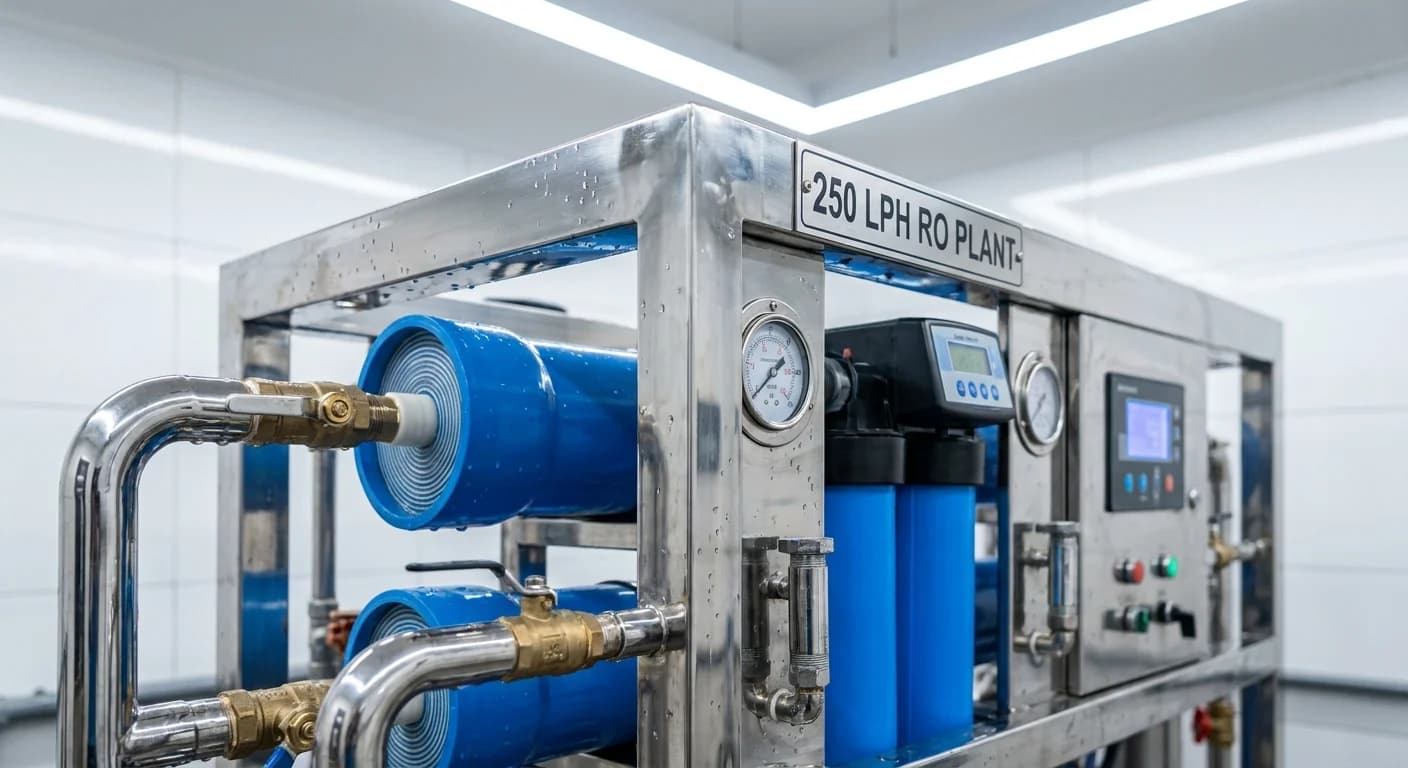
Selecting the Perfect 250 LPH RO Plant: Your Comprehensive Commercial Water Purification Guide
Clean drinking water is no longer a luxury but a fundamental necessity for commercial establishments, educational institutions, and healthcare facilities across India. With growing awareness about waterborne diseases and contamination, businesses are increasingly investing in reliable water purification systems. However, choosing the right system requires careful consideration of multiple factors including capacity requirements, water quality parameters, and long-term operational costs.
The 250 LPH capacity range has emerged as a sweet spot for medium-sized commercial applications, offering sufficient output for approximately 100-150 people daily. Whether you operate a restaurant in Connaught Place, manage a corporate office in Cyber City, or run a school in Noida, understanding the nuances of commercial water purification systems will help you make an informed investment decision. This guide walks you through essential considerations when selecting a RO plant that perfectly matches your specific requirements.
From evaluating feed water quality to comparing different manufacturers and understanding the total RO plant cost, making the right choice involves examining technical specifications, maintenance requirements, and compliance certifications. Let's explore the critical factors that should influence your purchasing decision.
Understanding Your Water Purification Requirements
Before approaching RO plant manufacturers, conduct a comprehensive assessment of your establishment's needs. Start by calculating your peak water consumption during the busiest hours. A standard 250 lph RO plant typically produces 10-12 liters per minute, making it suitable for mid-sized operations. However, if you experience significant usage spikes during specific hours, you might need additional storage capacity or even a higher capacity system.
Water quality analysis forms the foundation of proper system selection. Get your source water tested at a certified laboratory to determine Total Dissolved Solids, hardness levels, chlorine content, and presence of heavy metals like arsenic or lead. Different regions face distinct water challenges. For instance, establishments requiring a RO plant in Gurgaon often deal with high TDS levels ranging from 800-1500 ppm, necessitating multi-stage filtration. Similarly, areas near industrial zones may require specialized pre-treatment for removing specific contaminants.
Space availability and infrastructure readiness also play crucial roles. A standard 250 lph RO plant requires approximately 50-70 square feet of floor space, adequate drainage facilities, and stable electrical supply. Consider ceiling height for vertical installation options, proximity to the point of consumption to minimize piping costs, and accessibility for routine maintenance activities.
Evaluating Technical Specifications and Features
The membrane configuration represents the heart of any reverse osmosis system. Look for plants equipped with thin film composite membranes offering minimum 96-98 percent salt rejection rates. Quality membranes from reputable suppliers typically last 2-3 years under normal operating conditions, while inferior alternatives may require replacement within 12-15 months, significantly impacting your total ownership costs.
Pre-treatment stages determine system longevity and performance consistency. A well-designed RO plant should include multi-media filtration for removing suspended particles, activated carbon filters for chlorine and organic compound removal, and water softeners if feed water hardness exceeds 250 ppm. Some manufacturers offer advanced features like UV sterilization for complete microbial elimination, remineralization cartridges to restore essential minerals, and ozone treatment for extended storage without bacterial growth.
Automation and monitoring capabilities enhance operational convenience. Modern systems feature automatic pressure regulation, TDS controllers, auto-flushing mechanisms to prevent membrane scaling, and digital displays showing system status. Advanced models include remote monitoring through mobile applications, allowing facility managers to track water quality parameters and receive maintenance alerts in real-time. Recovery ratio, which indicates the percentage of feed water converted to purified water, should ideally range between 40-50 percent for optimal efficiency without compromising membrane life.
Assessing Manufacturers and Total Cost of Ownership
When evaluating RO plant manufacturers, prioritize those with established track records spanning at least 8-10 years in commercial water treatment. Request detailed client references from similar industry segments and visit existing installations if possible. Certification compliance is non-negotiable; ensure the manufacturer holds ISO 9001:2015 for quality management, and their products carry necessary BIS certifications and NSF approval for components in direct contact with drinking water.
The initial RO plant cost for a 250 lph RO plant typically ranges from INR 1,20,000 to INR 2,50,000, depending on automation levels, component quality, and additional features. However, focusing solely on upfront investment proves shortsighted. Calculate the comprehensive ownership costs including electricity consumption averaging 1.5-2.5 units per hour, membrane replacement every 24-36 months costing INR 15,000-25,000, filter cartridge changes required quarterly at INR 3,000-5,000 per set, and annual maintenance contracts typically priced at 8-12 percent of the system cost.
Service support infrastructure matters tremendously for uninterrupted operations. Choose manufacturers maintaining service centers within your city with guaranteed response times not exceeding 24 hours for breakdowns. Availability of genuine spare parts, comprehensive warranty coverage extending minimum 12 months on the complete system with 3-5 years on pressure vessels and frames, and transparent service charge structures prevent future operational headaches. Request detailed breakdowns of AMC inclusions, exclusions, and escalation clauses before finalizing your purchase.
Different System Variants and Their Applications
Entry-level manual systems suit small commercial setups with dedicated operators who can monitor operations regularly. These systems lack automated controls but offer reliable performance at competitive pricing, typically ranging INR 1,20,000-1,60,000. They work well for canteens, small restaurants, and boutique hotels with moderate usage patterns and available manpower for supervision.
Semi-automatic systems incorporate basic automation like auto on-off based on storage tank levels, low-pressure cutoff protection, and high-pressure switches preventing membrane damage. Priced between INR 1,70,000-2,10,000, these suit medium-sized offices, educational institutions, and healthcare clinics requiring consistent water quality without constant manual intervention. They strike an excellent balance between affordability and operational convenience.
Fully automatic systems represent premium offerings with comprehensive process automation, digital displays, TDS monitoring, auto-flush timers, and advanced diagnostics. These systems, costing INR 2,20,000-2,50,000, serve large corporate campuses, hospitals, and hospitality establishments where water quality consistency and minimal human intervention form critical requirements. They offer maximum operational reliability and lowest long-term labor costs despite higher initial investment.
Making Your Final Selection with Confidence
Choosing the appropriate RO plant demands balancing immediate budget constraints against long-term operational efficiency and reliability. Create a detailed comparison matrix evaluating shortlisted manufacturers across parameters including technical specifications, component brands, automation levels, service support quality, and total ownership costs projected over 5-7 years. Don't hesitate to negotiate payment terms, installation timelines, training provisions for your staff, and extended warranty options. Request pilot installations or trial periods if investing in larger systems or working with new manufacturers. Remember, the lowest initial RO plant cost rarely translates to the best value proposition. Prioritize systems offering optimal performance, proven reliability, and responsive after-sales support. Your investment in quality water purification infrastructure protects not just your consumers' health but also your business reputation and operational continuity for years ahead.
FAQ
Q - What capacity should I choose for my commercial establishment, and is 250 LPH sufficient for my needs?
A - A 250 LPH system typically produces 10-12 liters per minute, making it ideal for establishments serving 100-150 people daily, such as medium-sized restaurants, corporate offices, or schools. To determine if this capacity suits your needs, calculate your peak water consumption during the busiest hours and consider your storage tank capacity. If you experience significant usage spikes or serve more than 150 people, you might need a higher capacity system or additional storage solutions. Always factor in a 20-30% buffer capacity to handle unexpected demand surges.
Q - Why is water testing important before purchasing a commercial water purification system?
A - Source water testing reveals critical parameters like Total Dissolved Solids, hardness levels, heavy metals, and other contaminants that directly influence system selection and configuration. Different regions face unique water challenges—coastal areas may have high salinity, while urban industrial zones might contain specific chemical pollutants. Without proper testing, you risk purchasing a system that cannot adequately address your water quality issues, leading to poor performance, frequent maintenance, and potentially unsafe drinking water. A certified laboratory test helps manufacturers recommend the appropriate pre-treatment stages and membrane types for your specific water conditions.
Q - How much space and infrastructure do I need to install a commercial water purification system?
A - A standard 250 LPH system typically requires 50-70 square feet of floor space, though this varies based on configuration and additional components. Beyond physical space, you need proper drainage facilities for rejected water disposal, stable electrical supply with appropriate voltage protection, and adequate ceiling height if considering vertical installations. Consider proximity to water consumption points to minimize piping costs and pressure losses. Ensure the installation area is accessible for routine maintenance, filter replacements, and periodic servicing while being protected from extreme temperatures and direct sunlight.
Q - What are the main cost factors I should consider beyond the initial purchase price?
A - Total ownership costs extend far beyond the initial system price and include several ongoing expenses. Regular maintenance includes filter replacements every 6-12 months, membrane replacements every 2-3 years, and periodic sanitization, which can amount to 15-25% of the initial investment annually. Electricity consumption for pumps and controls, water wastage through the rejection process, and potential repair costs should also be factored in. Additionally, consider costs for annual water quality testing, compliance certifications, and service contracts. Evaluating these lifecycle costs helps you make a financially sound decision rather than choosing based solely on upfront pricing.
When selecting a 250 LPH RO plant for your commercial facility, understanding your specific water quality requirements, daily consumption patterns, and available space becomes crucial. This comprehensive guide walks you through essential parameters including TDS levels, recovery rates, membrane technologies, and automation features that directly impact purification efficiency and operational costs. Learn more about matching system specifications to your facility's needs, evaluating energy consumption metrics, and understanding maintenance schedules that ensure long-term performance. Discover how to compare warranty terms, after-sales support, and compliance certifications that protect your investment while delivering safe, purified water consistently to your staff, customers, or patients.