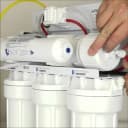
Water quality in Samastipur presents unique challenges due to the high mineral content and seasonal variations in the Ganga-fed supply system. Many households here rely on boreholes or hand pump water mixed with municipal supply, both of which carry elevated TDS levels and temporary turbidity during the monsoon months. An Eureka Forbes water purifier removes these contaminants, but the filtration system bears a heavy load under local water conditions.
Because Samastipur's water hardness and mineral concentration are higher than many Indian cities, filter replacement schedules need to be more aggressive here than the manufacturer's standard recommendations suggest. Regular Eureka Forbes service isn't optional maintenance — it's essential to protect both the purifier's lifespan and the safety of drinking water in your home.
Select Service


.webp&w=256&q=75)
Everything you need to know
Samastipur's groundwater typically carries high dissolved minerals, particularly calcium and magnesium salts. During the post-monsoon season (October to December), municipal supply lines sometimes carry suspended sediment and algae, forcing the purifier's pre-filters to work overtime. This combination means that an Eureka Forbes system in Samastipur works harder than identical units in areas with softer water supply.
When filters are overworked without timely replacement, the membrane efficiency drops faster. A membrane that should last 18 to 20 months in ideal conditions may degrade to 12 to 15 months here. The RO unit then becomes less effective at removing dissolved solids, and homeowners often notice a slight saltiness or metallic taste in the water. This isn't a fault in the purifier itself — it's the expected result of mineral-rich water passing through an overdue membrane.
Understanding this local context helps you schedule Eureka Forbes service proactively rather than waiting for obvious problems to emerge. A technician familiar with Samastipur's water profile can advise on whether your usage patterns and water source (borewell, municipal, or mixed) warrant more frequent filter changes than the standard recommendation.
Certain symptoms are more common in Samastipur due to water characteristics:
These symptoms don't necessarily mean the purifier is broken — they often mean the filters need urgent replacement. Booking Eureka Forbes service at the first sign of these issues prevents more expensive repairs down the road.
Homeowners in Samastipur face two paths: wait for a problem and call for repair, or schedule maintenance before issues arise. Each has different cost implications:
A diagnostic service visit happens when you notice something wrong. The technician inspects the unit, identifies which filters or components need replacement, and provides a quote before proceeding. This approach suits situations where a specific symptom has appeared — leaks, unusual noise, or a sudden drop in water output. You pay only for what's genuinely needed.
A preventive maintenance schedule means planning filter replacements based on your water source and usage rather than waiting for symptoms. For most Samastipur households using borewell water, this might mean replacing the sediment filter every 4 to 5 months instead of waiting for flow to drop noticeably. The membrane, under local water stress, might need replacement every 15 to 18 months rather than the manufacturer's suggested 24-month interval. This approach costs more upfront but reduces the risk of a breakdown that leaves you without safe drinking water for days.
Many households in Samastipur benefit from a hybrid approach: an AMC plan that includes regular inspection and seasonal filter replacements during high-risk periods (post-monsoon and peak summer), combined with diagnostic visits if unexpected problems arise.
Service cost varies based on several factors specific to your situation:
Type of work required: A sediment filter replacement costs less than an RO membrane replacement, which in turn costs less than pump repair or valve replacement. Some service visits combine multiple tasks, while others address a single component.
Your purifier's model and age: Older Eureka Forbes units with simpler designs (basic RO-only systems) often require fewer parts and less labour than hybrid models with UV and UF stages. Knowing your model number before calling helps the technician estimate more accurately.
Parts availability: If your filters are in stock with the local technician, the visit happens faster and costs remain predictable. If parts need to be sourced from outside Samastipur, you may face additional delays and transport charges.
Service call timing: Peak demand for purifier service in Samastipur typically occurs in October (post-monsoon) and May-June (pre-monsoon and peak summer), when water issues spike. Booking service during off-peak months sometimes attracts lower charges or faster scheduling.
Warranty coverage: If your purifier is under manufacturer warranty or covered by an active AMC plan, repair costs are either waived or heavily reduced. Always confirm this status before accepting a service quote.
Request a detailed estimate that separates the technician visit charge, labour costs, and parts costs. This transparency makes it easy to compare quotes from different providers and understand exactly what you're paying for.
An Annual Maintenance Contract bundles service visits, filter replacements, and minor repairs into a single annual fee. For Samastipur households, the economics often favour an AMC plan because local water conditions demand more frequent servicing than the national average.
A typical AMC plan might include three scheduled visits per year, with all routine filter replacements covered. For Samastipur, this translates to visits during high-risk periods: immediately after monsoon (October-November), during peak summer (May-June), and mid-winter (February). Additional diagnostic visits between these scheduled dates may be charged separately or included depending on the plan tier.
Plans differ in what they cover. Some include unlimited service calls and all parts; others cap the number of visits or charge extra for components beyond basic filters. A few key questions to ask before signing:
For many households in Samastipur with moderate to heavy water purifier usage, an AMC plan priced between 1000 to 2500 rupees annually makes financial sense because it prevents the uncertainty of unexpected repair bills during peak season.
Two filters do most of the heavy lifting in preparing water for RO treatment in Samastipur:
The sediment pre-filter sits first in the purification chain and catches suspended particles — rust from old pipes, algae during monsoon, sand from boreholes, and dust from atmospheric fallout. In Samastipur, this filter often becomes clogged within 4 to 5 months of regular use, especially if your water source includes borewell contribution. A clogged sediment filter forces the RO membrane to work harder, shortening its effective life significantly.
The carbon filter removes chlorine (from municipal supply), organic compounds, and anything that affects taste or odor. Samastipur's water doesn't usually have strong odor issues, but seasonal algae blooms during monsoon can create earthy tastes that only activated carbon removes effectively. This filter typically needs replacement every 6 to 8 months, though heavy usage or poor water source quality can shorten that interval.
These two filters, while less "important" than the RO membrane to the overall purification process, are actually the most frequently replaced components. Staying on top of their replacement schedule prevents cascade failures where neglected pre-filters damage the more expensive membrane. Many service providers in Samastipur now offer sediment and carbon filter packs at modest pricing, encouraging homeowners to replace them regularly rather than stretch their useful life.
Water quality and purifier stress vary throughout the year in Samastipur:
Monsoon and post-monsoon (June to November): Suspended solids in water increase, pre-filters accumulate sediment faster, and municipal supply lines sometimes carry debris. Service visits should ideally happen before monsoon starts (May) and immediately after it ends (October-November). Many households book preventive service in September to avoid the rush of calls in October.
Winter (December to February): Water quality improves, but mineral content remains high. This is often the least urgent season for service, though borewell-dependent households may still need filter replacements. Winter is an ideal time for AMC plan renewals since demand is low and technicians can usually respond quickly.
Peak summer (March to May): Water scarcity increases demand on boreholes, raising TDS levels. At the same time, heat can affect certain purifier components, and some households experience increased water supply from the Ganga system as irrigation projects release water. Flow rate changes and mineral content spikes make May a critical time for diagnostic checks, especially if you're approaching a membrane replacement schedule.
Planning service visits around these seasonal patterns helps you avoid long wait times and ensures your purifier is in peak condition during high-demand periods.
When you call to book an Eureka Forbes service appointment in Samastipur, the technician will ask several questions to scope the visit:
Having this information ready speeds up the booking process and helps the technician arrive with the right parts or diagnostic tools. If you don't have documentation of your last service, describe the symptoms as accurately as possible so the technician can anticipate what might need attention.
Eureka Forbes water purifiers are engineered to work optimally with filters and membranes that meet their specifications. Using mismatched or low-quality replacement parts saves money initially but creates problems:
Third-party or substandard filters often have lower dirt-holding capacity, meaning they clog faster and need replacement more frequently. A cheap sediment filter might clog after 3 months instead of 5, driving up your annual cost. Poor-quality carbon doesn't absorb chlorine as effectively, so taste issues persist. Most problematic, a non-genuine RO membrane with suboptimal rejection rates may not actually reduce TDS effectively, defeating the purpose of owning a premium purifier.
Eureka Forbes genuine filters and membranes are engineered to work together as a system. When you mix genuine components with substitutes, the purifier's performance becomes unpredictable. A reputable technician in Samastipur carries genuine Eureka Forbes parts or offers compatible aftermarket parts from established filtration manufacturers, and will explain the difference between options rather than pushing the cheapest choice automatically.
A few preventive habits reduce the number of service visits needed:
What makes us different
Water quality in Samastipur presents unique challenges due to the high mineral content and seasonal variations in the Ganga-fed supply system. Many households here rely on boreholes or hand pump water mixed with municipal supply, both of which carry elevated TDS levels and temporary turbidity during the monsoon months. An Eureka Forbes water purifier removes these contaminants, but the filtration system bears a heavy load under local water conditions.
Because Samastipur's water hardness and mineral concentration are higher than many Indian cities, filter replacement schedules need to be more aggressive here than the manufacturer's standard recommendations suggest. Regular Eureka Forbes service isn't optional maintenance — it's essential to protect both the purifier's lifespan and the safety of drinking water in your home.
Step-by-step guidance
Don't wait! Get the at the most competitive rates. Contact rocareindia today for a free consultation and quote.
Real repairs · Real customers · Real results

Verified Professionals

Work Assurance

On-Time Support

Covid-19 Safety
Find answers to common questions about our services
Find our nearby franchise stores in your city
Pure water, delivered.