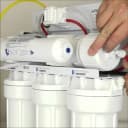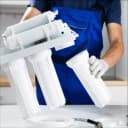
Madhepura draws much of its drinking water from borewell and shallow aquifer sources, which carry dissolved minerals and salts that leave visible deposits on taps and inside storage containers. Water hardness here runs consistently high, and during the post-monsoon months, sediment and turbidity spike sharply. An Eureka Forbes RO system is built to handle this, but only if filters and membranes are replaced on a proper schedule — the mineral load in local water shortens component life compared to municipal supply areas.
Homeowners in Madhepura who skip service or extend intervals between filter changes often end up facing avoidable breakdowns. The membrane can foul faster, the pre-filters clog quickly, and the storage tank accumulates sediment that bacteria thrive in. This guide covers what Eureka Forbes RO maintenance looks like in Madhepura's water context, how to spot problems early, and what service options actually make sense for local households.
Select Service

.webp&w=256&q=75)
Everything you need to know
The water quality in Madhepura is fundamentally different from areas served by treated municipal supply. Borewell water contains higher total dissolved solids (TDS) and hardness levels, which means your Eureka Forbes purifier is filtering out more dissolved minerals and salts than systems in other regions. This heavier workload directly affects how long each internal component lasts.
The sediment pre-filter, which sits at the beginning of the filtration chain, faces a harder job in Madhepura because of seasonal sediment surges — especially between August and November when groundwater turbidity rises. In softer-water regions, this filter might last six months comfortably. In Madhepura, you often need replacement every three to four months if your household consumes water regularly. Similarly, the RO membrane — the most expensive and critical component — typically lasts 12 to 18 months here rather than the standard 18 to 24 months you might see quoted for other cities.
Understanding this local reality helps you set realistic expectations for service intervals and budget accordingly. A technician experienced with Madhepura's conditions will factor this into their recommendations rather than applying a generic schedule that underestimates your actual needs.
Most Eureka Forbes users in Madhepura notice one or more of these issues before they reach out for service:
In Madhepura's water environment, catching these signals early is even more important than in other regions because mineral-heavy water can cascade problems quickly — a slow filter becomes a fouled membrane becomes a failed pump if left unaddressed. Scheduling service the moment you notice any of these signs prevents compounding damage.
The reverse osmosis membrane is where the actual purification happens — it's what stops dissolved salts, calcium, magnesium, and other minerals from passing into your drinking water. In areas like Madhepura, where mineral content is high, the membrane shoulders a heavier filtration load than in cities with softer water sources.
A membrane that has been installed for 18 months in Madhepura is often more worn than a 24-month-old membrane in Bangalore or Delhi. Signs of membrane wear include slowly decreasing water output, rising TDS readings in the filtered water, and the taste changes mentioned above. Some Eureka Forbes models display a TDS meter or indicator light that helps you track this, though not all models include this feature.
Replacing the membrane on schedule — typically every 12 to 16 months in Madhepura, depending on your specific household water consumption and source — is far cheaper than running a failing membrane that lets contaminated water through to your family. A technician can measure the actual TDS levels in your tap water to tell you whether the membrane is performing as it should, rather than just guessing based on time elapsed.
Service charges in Madhepura for Eureka Forbes purifiers depend on what work is actually needed. A straightforward filter change costs less than a membrane replacement or pump inspection. A full sanitization of the storage tank — which is recommended periodically in high-mineral-content areas — is a separate charge. Understanding these breakdowns before you call a technician prevents surprise bills.
Rather than being quoted a generic per-visit rate, ask the technician for a written estimate that breaks down each item. This transparency lets you understand exactly what you're paying for and which items are urgent versus optional maintenance.
An Annual Maintenance Contract bundles all scheduled servicing, filter replacements, and minor repairs into a single annual fee. For Madhepura households, an AMC plan often makes financial sense because water quality conditions here demand more frequent service than the average.
An AMC plan typically guarantees scheduled filter replacements (sediment, carbon, RO membrane, post-carbon) on a predetermined cycle, plus unlimited service visits for troubleshooting and repairs. Because you're not paying for each component individually, the total annual cost often undershoots what you'd spend booking visits separately throughout the year, particularly in a high-mineral-content area like Madhepura where component wear is accelerated.
The main benefit is predictability. You know your annual water purifier maintenance cost upfront, so there are no surprise repair bills. Equally important, AMC plans ensure your technician visits on schedule — you're less likely to skip or delay service if a visit is already booked and paid for as part of your plan. This consistency directly translates to better water quality and longer equipment life.
However, an AMC may not be worthwhile if your purifier is brand new and still under manufacturer warranty, or if you use the unit very lightly (such as a single person in a studio apartment). Compare what different plan tiers actually include — some separate the visit charge from parts costs, while others bundle everything — before committing.
A competent Eureka Forbes technician in Madhepura needs experience with two things specifically: first, knowledge of Eureka Forbes purifier models and their internal layouts, and second, familiarity with how high-mineral water affects component longevity and performance. Not every plumber or general appliance technician understands the second point, which can lead to underestimating service intervals or recommending unnecessary replacements.
When you call for service, it's reasonable to ask whether the technician has prior experience with Eureka Forbes systems and whether they've worked in Madhepura's water conditions before. An experienced technician will understand why your sediment filter clogs faster here, why tank sanitization matters, and whether your current service interval is realistic given your local water source.
Response time matters too, especially during monsoon season when water turbidity spikes and more units develop problems simultaneously. A provider who can schedule a visit within one or two days ensures your household doesn't go without safe drinking water for an extended period.
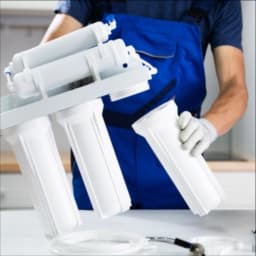
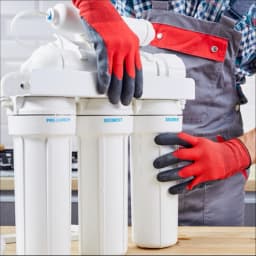
Understanding the service process helps you evaluate whether a technician is doing thorough work and not just swapping out parts without diagnosing the root cause:
The technician begins by checking water flow rate, listening for unusual sounds, and inspecting fittings and the outer housing for cracks or leaks. They'll measure TDS levels in the filtered water output — this reading tells them whether the membrane is still performing effectively or nearing end of life. If your purifier has an indicator light or digital display, they'll reset or note those as needed.
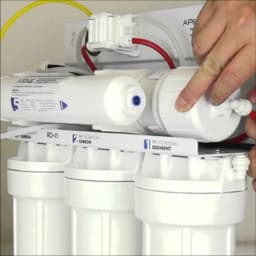
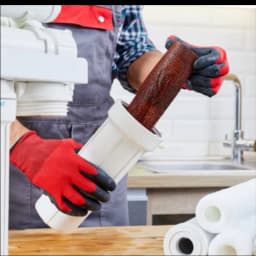
Next comes inspection of each filtration stage. Rather than replacing all filters automatically, a good technician checks sediment buildup in the pre-filter, color and smell of the carbon filter, and the visual condition of other internal components. Only those that actually need replacement get swapped out, so you only pay for what's necessary.
The storage tank inspection and cleaning is particularly important in Madhepura because mineral deposits and bacteria accumulation are common. A thorough service includes draining the tank, scrubbing the interior, and sanitizing it before refilling. This step is often what prevents the "stagnant water" smell that can develop in hard-water areas.
After component replacement, the technician runs the system through a full cycle to confirm water flow, TDS output, and taste are all within normal range. You should receive documentation of what was replaced, when the next service is due, and clear guidance on which filters to watch based on your local water conditions.
It's tempting to delay service visits to save money in the short term, but in Madhepura's water conditions, this usually backfires. A membrane that goes unserviced for 20 months instead of 15 accumulates scale buildup that makes it harder to clean and may cause permanent damage. A sediment filter that clogs gradually and is never replaced forces the pump to work under constant strain, which shortens its life by months or years.
When a pump fails in an RO system, it often requires replacement rather than repair — a much larger expense than staying on a regular service schedule would have cost. Similarly, a storage tank that has been allowed to accumulate sediment and bacteria for over a year may develop odor and taste problems that a single sanitization visit no longer fully resolves, requiring deeper chemical cleaning or tank replacement.
Booking Eureka Forbes service on the schedule appropriate for Madhepura's water conditions — more frequent than the generic recommendations — is the most cost-effective approach over the purifier's lifetime. You spend more per year than a household in a soft-water region, but you avoid emergency repairs and premature component replacement that would cost far more.
Madhepura's water quality shifts noticeably through the year. Post-monsoon months (August through October) bring sediment surges and higher turbidity that overload filters faster. During dry season months (March through May), TDS levels can spike as groundwater becomes more concentrated. Winter sees occasional scaling issues when temperature changes affect mineral precipitation in pipes and tanks.
If you're noticing service issues clustering in particular months, it's likely because seasonal water quality changes are temporarily exceeding your system's current component capacity. A technician familiar with Madhepura's seasonal patterns can recommend filter replacements or service timing that accounts for these variations, rather than treating every season the same.
What makes us different
Madhepura draws much of its drinking water from borewell and shallow aquifer sources, which carry dissolved minerals and salts that leave visible deposits on taps and inside storage containers. Water hardness here runs consistently high, and during the post-monsoon months, sediment and turbidity spike sharply. An Eureka Forbes RO system is built to handle this, but only if filters and membranes are replaced on a proper schedule — the mineral load in local water shortens component life compared to municipal supply areas.
Homeowners in Madhepura who skip service or extend intervals between filter changes often end up facing avoidable breakdowns. The membrane can foul faster, the pre-filters clog quickly, and the storage tank accumulates sediment that bacteria thrive in. This guide covers what Eureka Forbes RO maintenance looks like in Madhepura's water context, how to spot problems early, and what service options actually make sense for local households.
Step-by-step guidance
Don't wait! Get the at the most competitive rates. Contact rocareindia today for a free consultation and quote.
Real repairs · Real customers · Real results

Verified Professionals

Work Assurance

On-Time Support

Covid-19 Safety
Find our nearby franchise stores in your city
Pure water, delivered.