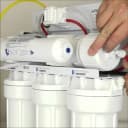
Purnia's water supply, drawn largely from borewells, carries dissolved minerals that make it among the hardest in Bihar. This hard water works your Eureka Forbes RO system harder than standard municipal supplies do, putting additional strain on filters and membranes. What this means for you is that routine maintenance becomes not just a convenience but a requirement if you want your purifier to keep delivering safe water and lasting several years.
Many homes in Purnia rely on the same borewell source for extended periods, meaning sediment loads and TDS fluctuations stay consistent within each household — yet different from the next street over. Understanding your specific water characteristics and how they affect your Eureka Forbes purifier helps you stay ahead of problems rather than facing sudden breakdowns during the hot season when demand for filtered water peaks.
Select Service

.webp&w=256&q=75)
Everything you need to know
The water reaching your tap in Purnia carries a distinct chemical signature. High total dissolved solids (TDS), elevated calcium and magnesium ions, and seasonal increases in sediment during monsoon rains all have consequences for reverse osmosis filtration. The pre-filters that stop visible impurities get clogged faster in areas with high sediment content. The RO membrane itself, the heart of your Eureka Forbes unit, becomes clogged more quickly when TDS levels remain persistently high. A membrane rated to handle water with 800-900 TDS can foul within 12-15 months in Purnia conditions, compared to 18-24 months elsewhere.
This isn't a flaw in your purifier — it's simply how RO systems behave when water chemistry is against them. The solution is acknowledging that Purnia households typically need filter replacement cycles that run shorter than the generic timeline printed in manuals. Adjusting your maintenance schedule to match local water realities, rather than following nationwide averages, prevents the slow degradation that homeowners often mistake for permanent unit failure.
Several warning signs tell you it's time to call an Eureka Forbes technician rather than waiting for next month's planned service:
Purnia's municipal water department issues advisories during monsoon about seasonal turbidity spikes. If you've just received such notice, scheduling preventive service proactively saves you from a sudden breakdown when water quality dips.
Understanding the repair process demystifies what happens when a technician arrives and helps you gauge whether the work done matches the bill presented. A proper Eureka Forbes service follows a structured sequence:
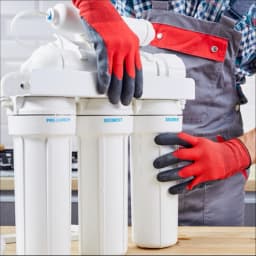
The technician begins by measuring the water flow rate and, if your unit has a display, noting the TDS reading. This baseline tells them how far performance has degraded. They then systematically check each filtration stage, starting with the sediment pre-filter, moving through the carbon stage, and inspecting the RO membrane. In Purnia's high-hardness environment, calcium deposits often accumulate on the membrane itself, and the technician will determine whether cleaning can restore performance or whether membrane replacement is necessary.
The storage tank receives inspection for bacterial growth, scale deposits, or loose sediment — a step many casual service providers skip but which is critical in areas like Purnia where water sits stored for hours before use. The UV or post-filter stage (if your model includes one) gets examined for saturation. Only after this full assessment does the technician present you with what actually needs replacement rather than swapping out parts on speculation.
Once parts are approved for replacement, the unit is drained, cleaned, and reassembled with new filters or membrane. After service, water is flushed through the system for 10-15 minutes to clear out any carbon dust or assembly residue before final testing. A technician should leave you with written documentation of what was done, the date, and when the next service is due based on your specific conditions.
When you call for a quote, the service provider will ask specific questions about your symptoms because cost genuinely depends on what's needed:
Visit charge: This covers the technician's time and expertise for diagnosis. It's a flat fee regardless of what repair work follows.
Parts cost: Sediment filters, carbon filters, and RO membranes are priced separately. In Purnia's hard-water conditions, you may find that RO membranes are the highest recurring expense since they wear faster than in softer-water regions. Asking whether parts come with any warranty — typically a few months on filters, sometimes longer on membranes — helps you understand value.
Labor for replacement: Depending on your Eureka Forbes model, installation complexity varies. Simpler cartridge-type filters take 15-20 minutes to swap; membrane replacement, if the housing needs to be cracked open, can take 30-45 minutes.
Cleaning service: If your storage tank needs sanitization or if sediment has accumulated inside the feed lines, this is an additional charge, though it's often bundled at a discount when combined with filter replacement.
Rather than phone quotes, many Purnia residents benefit from requesting a technician to visit for diagnosis first. The diagnostic charge (usually small) gives you clarity on what's genuinely needed, and you can then decide whether to proceed or seek a second opinion. Transparent providers will itemize everything before starting work.
An Annual Maintenance Contract fixes your service expenses and schedules regular attention before problems arise. In Purnia's high-hardness scenario, this model has genuine appeal.
A typical AMC plan includes quarterly service visits (or visits on demand, depending on the tier), automatic filter replacement on schedule, and parts labor at no extra charge. Premium tiers may bundle the RO membrane into the annual fee, while basic plans charge separately for the membrane but cover smaller components.
For a Purnia household where the water profile demands shorter filter cycles, an AMC plan that spreads cost predictably throughout the year is often easier on the budget than paying for each urgent repair separately. The plan also ensures someone trained on Eureka Forbes systems checks your purifier before you notice degraded water quality — catching problems when they're still small.
Before committing, confirm what the plan covers: Does it include parts? Does it cover diagnostic visits or only scheduled service? Are there blackout periods during monsoon when response time lengthens? In Purnia, where water quality can deteriorate rapidly during the rainy season, ensuring your AMC kicks in during exactly that period matters. Some plans exclude monsoon surge periods, which is precisely when Purnia residents need the protection most.
Unlike year-round consistency in cities with stable municipal supply, Purnia's water profile shifts with seasons. Adjusting your maintenance mindset accordingly keeps costs reasonable and water quality reliable.
During the dry season (roughly April to June), borewell TDS often rises because the water table drops and minerals concentrate. This is when you might see slower filtration and need to consider whether your current maintenance schedule is keeping pace. Late monsoon (August to September) brings peak sediment load as rain stirs up surface contamination and overflowing borewells — pre-filter clogging happens fastest during this stretch.
Winter sees moderately stable conditions, making it a reasonable time to schedule major maintenance or membrane replacement before the next season's stress. If you're planning to enroll in an Eureka Forbes AMC or replace a major component, scheduling this work in November or December often means better availability and potentially faster service than booking during peak-stress seasons.
Eureka Forbes has produced multiple purifier lines — some with RO only, others combining RO with UV, others with advanced stages like UF or mineralization. Your model number, usually found on a sticker inside the unit's cabinet or on the back panel, determines which spare parts fit and which technician expertise matters most.
When searching for a technician, mentioning your specific model (Aquaguard, Aquasure, or a direct RO model with an alphanumeric designation) helps them prepare the right components in advance. A technician familiar with your particular model can diagnose faster and avoid suggesting unnecessary part replacements. If you've misplaced your manual, the model number alone is enough to pull up correct filter specifications, membrane specifications, and typical service intervals for your system.
While technician expertise is essential, your daily habits extend time between services and prevent avoidable damage:
Keep the inlet valve turned off if you'll be away from home for more than a few days, since stagnant water in feed lines can promote bacterial growth and sediment settling. Wipe down the unit's exterior monthly with a dry cloth to prevent dust from settling around vents and motor. Check visible tubing and connections every few weeks for signs of dampness or discoloration, which often precedes a visible leak. If your purifier has an indicator light or digital display, note the date when you first observe a status change rather than waiting for total failure — early intervention is always cheaper.
Note the month when your last service was completed, either on a note kept near the unit or in your phone calendar. Purnia's water challenges mean you can't rely on the standard "every 8 to 12 months" advice without adjustment. Knowing your actual last service date lets you judge whether you're approaching a maintenance window or overdue.
What makes us different
Purnia's water supply, drawn largely from borewells, carries dissolved minerals that make it among the hardest in Bihar. This hard water works your Eureka Forbes RO system harder than standard municipal supplies do, putting additional strain on filters and membranes. What this means for you is that routine maintenance becomes not just a convenience but a requirement if you want your purifier to keep delivering safe water and lasting several years.
Many homes in Purnia rely on the same borewell source for extended periods, meaning sediment loads and TDS fluctuations stay consistent within each household — yet different from the next street over. Understanding your specific water characteristics and how they affect your Eureka Forbes purifier helps you stay ahead of problems rather than facing sudden breakdowns during the hot season when demand for filtered water peaks.
Step-by-step guidance
Don't wait! Get the at the most competitive rates. Contact rocareindia today for a free consultation and quote.
Real repairs · Real customers · Real results

Verified Professionals

Work Assurance

On-Time Support

Covid-19 Safety
Find answers to common questions about our services
Find our nearby franchise stores in your city
Pure water, delivered.