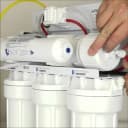
Water quality in Kokrajhar is shaped by the region's geography. Much of the town's supply, whether from municipal mains or shallow bore sources, carries high iron content and seasonal silt, especially during monsoon months when surface run-off increases turbidity. This is very different from the challenge posed by hard water or pure minerals—the filters in your Aquaguard are engineered to handle dissolved solids, not the fine sediment and iron compounds that clog pre-stages rapidly in an Assam climate.
These conditions mean pre-filter and sediment cartridges need more frequent replacement than the manufacturer's standard guideline suggests. Recognizing this local reality upfront helps you plan maintenance around your budget and avoid sudden breakdowns during the heaviest rainfall months, when technician availability can stretch thin.
Select Service





.webp&w=256&q=75)
Everything you need to know
An Aquaguard purifier in Kokrajhar encounters water quite unlike what the unit experiences in cities with stable, treated municipal supplies. The first line of defence—the sediment pre-filter—bears most of the load. During June through September, when monsoon run-off peaks, the pre-filter can clog in weeks rather than months, forcing the entire system to work harder and shortening the working life of downstream components.
Iron-rich groundwater, common in much of western Assam, also creates a secondary problem: the carbon filter layer, which is designed mainly to remove chlorine and organic odours, can become coated with iron oxide, reducing its effectiveness and creating a faint metallic taste in the output water. Neither issue means the Aquaguard has failed—both are normal responses to local water chemistry—but both require earlier intervention than a standard service schedule from the user manual would suggest.
A few problems appear repeatedly in service calls across Kokrajhar households. Understanding them helps you describe your issue accurately to a technician and avoid unnecessary alarm.
Standard Aquaguard filter guidelines assume an average municipal water supply with moderate TDS. Kokrajhar's water profile is heavier on sediment and iron, which shifts the replacement schedule forward. Rather than following the user manual's suggested timings rigidly, a more practical approach is to:
A transparent service provider in Kokrajhar will break down costs into visit charges and component costs, each handled separately so you can see exactly what you are paying for.
Ask your service provider for an approximate cost sheet for the three most common repairs (pre-filter replacement, carbon filter replacement, and membrane replacement) so you have a rough baseline before an emergency occurs.
An AMC plan consolidates routine servicing, filter replacements and minor repairs into a single annual fee. For Kokrajhar households, the value proposition depends on your specific use pattern and water conditions.
Before committing, confirm what is covered under the AMC. Some plans include unlimited filters and visits but charge extra for membranes or valve replacements, while others bundle everything. In Kokrajhar, verify whether the contract includes pre-filter and carbon filter changes at the higher frequency needed here, or whether you will be billed separately for frequent pre-filter swaps.
Kokrajhar's town water network consists of municipal supply fed largely by the Brahmaputra and its tributaries, supplemented by shallow bore supplies in outer residential areas. Each source creates distinct maintenance patterns.
If you receive municipal supply, your water undergoes basic treatment at the source, which removes coarser sediment but may not eliminate iron compounds or seasonal turbidity spikes. During monsoon, the municipal system can temporarily carry higher suspended matter, making your Aquaguard work harder for a few weeks until the load normalizes.
If you rely on a bore or private well, the water is untreated when it reaches your Aquaguard, placing the full burden of sediment and iron removal on the pre-stages. These households typically see pre-filters clog faster and benefit most from an AMC plan or a standing agreement for bi-monthly pre-filter checks.
A technician who services your Aquaguard regularly will quickly learn which category your supply falls into and can recommend a maintenance rhythm that suits your exact situation.
Most Aquaguard repairs in Kokrajhar can be arranged through a local service partner who maintains stock of common replacement parts and is familiar with local water quality patterns. For urgent issues—leakage that risks water damage, complete stoppage during the monsoon—same-day or next-morning visits are usually available.
Online booking platforms for Aquaguard service often let you describe the problem and select your preferred visit window, which reduces phone-queue time. If you prefer to speak directly, calling the local service desk during business hours remains a valid option for non-urgent jobs. You can reach our Kokrajhar service desk on 9311587744.
When you contact a technician, have the following information ready: your Aquaguard model number (usually on a sticker on the unit), the date you last replaced filters, and a clear description of what is not working. This speeds up the booking process and helps the technician decide whether to come with standard filters, a replacement membrane, or diagnostic tools.
If a repair does not fully resolve the problem, or if the same issue resurfaces within a few weeks, most service providers offer a follow-up visit at no charge or minimal cost. Document the visit date, the technician's name, what was replaced, and the date the problem recurred—this record makes it easy to request a warranty repeat visit without dispute.
In some cases, a problem recurs because the underlying cause was not addressed. For example, if slow flow returns quickly after a pre-filter replacement, the real issue might be that the incoming supply line itself is clogged or that a downstream component (like a check valve) needs attention. A good follow-up visit should dig into this rather than simply swapping the same part again.
Kokrajhar's monsoon season (June through September) and dry season (November through April) create distinct service windows. Planning around the calendar helps you avoid breakdowns at the worst possible times.
Before monsoon arrives (May), schedule a full Aquaguard check-up including sediment filter inspection, carbon filter condition review, and UV lamp or membrane performance check. This ensures you start the heavy-rain season with all components in peak condition. If pre-filters have been clogging faster than usual, ask the technician about switching to higher-grade sediment cartridges that offer longer life in silt-heavy water.
During monsoon (June through September), monitor your Aquaguard closely. A noticeable drop in output pressure or a slight yellow tint in water are early signals that the pre-filter is nearing capacity. Do not wait for the indicator light; call for a pre-filter swap rather than let the membrane face unnecessary strain.
After heavy flooding or extended power disruptions, request a technician visit to check for electrical damage and ensure solenoid valves are functioning correctly. These events are common in Kokrajhar and can leave systems in unexpected states.
Aquaguard typically offers a manufacturer warranty covering the main housing and electrical components for one to three years, depending on the model and where you purchased it. Filters and membranes, being consumables, are almost never covered. In Kokrajhar, it is worth verifying your warranty registration with an authorized dealer when you buy the unit, rather than assuming coverage later.
If your unit develops an internal fault—a failed solenoid, a pump that will not start, a membrane housing crack—warranty repair typically means the dealer or an authorized service centre handles it at no cost. Labour and parts are covered, though you may need to provide proof of purchase or registration. Non-warranty repairs (filter changes, valve replacements done outside the warranty period) are charged at standard rates.
At some point, an ageing Aquaguard may cost more to repair than it is worth. If your unit is over eight years old, has had multiple major repairs, and is now facing an expensive component replacement, it may be time to consider a new purifier. However, if the unit is still relatively young and only the filters or a valve need replacing, repair is almost always the more economical choice.
A service technician can advise on this, but the final decision rests with you. Consider the repair cost, the age and model of the unit, how long you plan to stay in your current home, and whether a newer model might offer features (like higher storage capacity or lower electricity consumption) that matter to you.
What makes us different
Water quality in Kokrajhar is shaped by the region's geography. Much of the town's supply, whether from municipal mains or shallow bore sources, carries high iron content and seasonal silt, especially during monsoon months when surface run-off increases turbidity. This is very different from the challenge posed by hard water or pure minerals—the filters in your Aquaguard are engineered to handle dissolved solids, not the fine sediment and iron compounds that clog pre-stages rapidly in an Assam climate.
These conditions mean pre-filter and sediment cartridges need more frequent replacement than the manufacturer's standard guideline suggests. Recognizing this local reality upfront helps you plan maintenance around your budget and avoid sudden breakdowns during the heaviest rainfall months, when technician availability can stretch thin.
Step-by-step guidance
Don't wait! Get the at the most competitive rates. Contact rocareindia today for a free consultation and quote.
Real repairs · Real customers · Real results

Verified Professionals

Work Assurance

On-Time Support

Covid-19 Safety
Find answers to common questions about our services
Find our nearby franchise stores in your city
Pure water, delivered.