
Select Service


.webp&w=256&q=75)
Everything you need to know
The water entering your Eureka Forbes unit changes significantly across the year in Cachar. During and immediately after the monsoon season, the Barak River carries high sediment loads that colour the supply visibly. This increases the burden on pre-filters dramatically, sometimes reducing their lifespan from the standard 4 to 6 months down to 2 to 3 months in affected areas. Summer months often bring lower river flow and a corresponding rise in dissolved minerals, which strains the RO membrane. Understanding these seasonal patterns helps you anticipate when service is most likely needed rather than waiting for a breakdown.
Households drawing from municipal supply in central Cachar (Silchar area) generally experience more stable water quality, but borewell-dependent areas see greater variability. Iron-rich borewell water creates a distinctive reddish tint on pre-filters and can clog carbon stages faster. If you switched water sources recently or moved to a new area within Cachar, mentioning this to your Eureka Forbes technician helps them gauge the likely service frequency and parts needed.
Cachar's water conditions produce some diagnostic signs that are especially relevant to the region. A technician familiar with local water issues will recognize these faster than one working only in areas with different mineral profiles.
Slow water output is common in Cachar during and after monsoon, often pointing to sediment clogging in the pre-filter stage. If your purifier fills a glass in several minutes instead of the usual flow rate, a filter change is almost certainly overdue. Discoloration of the storage tank's interior, visible as rust-coloured staining or slime buildup, indicates either borewell water iron content or bacterial growth from delayed maintenance — both require immediate attention and tank cleaning as part of service.
A musty or metallic taste in your drinking water is a clear signal that carbon filtration or RO membrane effectiveness has declined. Cachar's residents used to good water quality often notice this shift immediately, whereas it can go undetected in areas where the supply has always had a slight mineral taste. Unusual noise from the pump, particularly a grinding or high-pitched whine, suggests sediment damage to internal components and warrants urgent inspection rather than waiting for scheduled service.
Leaks around the purifier housing or at connection points should never be ignored, even if they seem minor. The combination of high moisture from Cachar's humid climate and constant water pressure can rapidly enlarge small cracks or loose fittings, leading to water damage inside your home.
Locating a trustworthy service provider in Cachar involves more than a quick online search. The most dependable technicians often have real experience working with the specific water conditions in Cachar's different zones — someone who has serviced purifiers in Silchar's municipal supply areas will understand common issues there, while a technician familiar with rural borewell challenges brings relevant expertise for outskirt areas.
When evaluating potential service providers, ask whether they stock filters and spare parts suitable for high-sediment environments. In Cachar, generic or low-quality replacement filters wear out far faster than genuine Eureka Forbes components designed to handle regional water demands. Request an upfront estimate that breaks down the visit charge, labour, and parts separately, so you know exactly what you're paying for before any work begins. Transparency matters especially during monsoon season, when emergency calls are common and unscrupulous providers might inflate charges under time pressure.
A good Eureka Forbes service provider will explain what they found during inspection and recommend a service schedule tailored to Cachar's seasonal patterns — not the generic intervals that work for other regions. They should document each visit clearly, noting which filters were replaced and when the next service is due, so you maintain continuity of care even if different technicians attend on future calls.
Service costs vary based on several interconnected factors, all of which can shift depending on your specific situation and water source.
The nature of the work required forms the foundation of pricing. A straightforward pre-filter replacement costs considerably less than a full membrane change or pump repair. If your unit hasn't been serviced in several months and has accumulated silt buildup, the technician may recommend a more thorough cleaning and sanitization of the storage tank, which adds to the overall bill. Parts themselves carry different costs — sediment filters are generally inexpensive, while RO membranes represent a larger investment. Labour charges for the technician's time are separate, and they may vary depending on the complexity of your purifier model and whether additional cleaning is needed.
Location and accessibility within Cachar can influence pricing as well. If your home is in a remote part of Silchar district with difficult access, the service provider may apply a travel surcharge. Seasonal timing also plays a role; during heavy monsoon months when service calls spike, some providers might quote slightly higher rates due to high demand and extended call schedules.
Your warranty and maintenance contract status directly impact how much you pay. An active warranty covers many repairs at no charge, while an AMC plan (discussed below) typically includes filter replacements and routine servicing for a fixed annual fee, making costs predictable and generally more economical than separate pay-per-visit charges.
Before committing to any work, request a written estimate. A reputable technician won't mind putting their diagnosis and proposed costs on paper — and if something changes during the service, they should contact you before proceeding, rather than presenting a larger bill at the end.
An AMC plan is particularly valuable for homes in Cachar because the region's water conditions make maintenance predictable but frequent. Rather than absorbing unexpected repair bills during monsoon or paying for multiple emergency calls each year, an AMC contract bundles all scheduled servicing and filter replacements into a single annual charge.
The financial case for an AMC becomes stronger the longer your Eureka Forbes unit is in use. A purifier in its second year or later typically benefits substantially from an AMC plan compared to buying each filter and service call separately. Households with borewell water or high daily usage have even stronger motivation to enrol, since their filters wear faster.
When comparing AMC offerings from different providers, examine closely what each plan actually includes. Some cover unlimited service visits and all filter replacements but exclude major component repairs. Others bundle everything — visits, filters, minor parts, even pump repairs — into one comprehensive price. A few plans charge separately for the visit but waive labour and parts costs, or the reverse. Understanding which approach suits your budget and usage patterns prevents confusion when you file a claim.
Timing your AMC enrollment matters strategically. If you purchase an Eureka Forbes purifier in January and it carries a manufacturer warranty through December, skipping an AMC for that first year makes sense — warranty repair and maintenance are free anyway. But starting an AMC in year two locks in predictable costs and priority scheduling, especially valuable before monsoon season when technician availability shrinks and call times lengthen.
Cachar's water characteristics significantly compress typical filter replacement intervals compared to standard guidance published by manufacturers.
Sediment pre-filters, which normally last 4 to 6 months across much of India, often require replacement every 3 to 4 months in Cachar during and after monsoon when Barak River silt loads peak. If you draw from a borewell with high iron content, you may need pre-filter changes even more frequently. Ignoring this schedule allows sediment to migrate deeper into the system, clogging stages meant to remain pristine and forcing premature membrane replacement.
Carbon filters typically need changing every 6 to 8 months, though this varies with your water source and usage volume. Borewell water high in iron and organic matter fills the carbon stage faster than municipal supply, sometimes cutting lifespan to 5 to 6 months. If your water has an unusually strong taste or odour despite recent filter replacement, the carbon stage is likely exhausted and needs changing sooner than scheduled.
The RO membrane is the costliest component and usually survives 12 to 24 months depending on filtration burden. In Cachar, particularly for households with silt-laden or mineral-heavy water sources, membrane life often sits toward the lower end — 12 to 18 months rather than the longer range. Hard borewell water significantly accelerates membrane scaling and reduces its effective life. A technician can measure your water's TDS output to gauge whether the membrane is still performing adequately or approaching the end of its useful life.
Keeping a simple record of when each filter was replaced removes guesswork from your maintenance routine. Note the date on your calendar or your purifier's outer casing so you know exactly when the next change is due, rather than relying on memory or assuming the manufacturer's generic timeline applies.
Several channels exist for reaching Eureka Forbes service support. The official customer care number remains the authoritative route for warranty-related repairs, product registration queries, and claims — but these lines often carry heavy call volumes, particularly during peak seasons, which can mean long waits.
For routine maintenance — scheduled filter changes, non-warranty repairs, and AMC services — many households in Cachar find independent trained technicians faster and equally reliable. These specialists know Eureka Forbes systems intimately and can usually respond within 24 hours for non-urgent calls. The distinction matters: if your purifier stops working and you need immediate intervention, routing through official support makes sense to protect your warranty. But if you're scheduling a routine filter change or renewing an AMC, a local independent technician often provides faster booking and service.
When you call to request service, have your purifier's model number and purchase date ready. Describe the issue clearly — slow flow, unusual taste, leakage, or noise — so the provider can gauge urgency and estimate how long the visit will take. Mentioning your water source (municipal supply or borewell) helps them anticipate which components are most likely to need attention and arrive better prepared with the right parts.
Understanding the sequence helps you gauge whether the technician is performing thorough work or cutting corners.
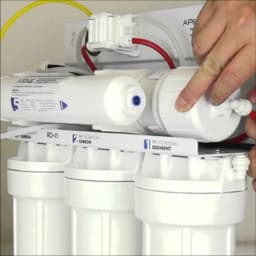
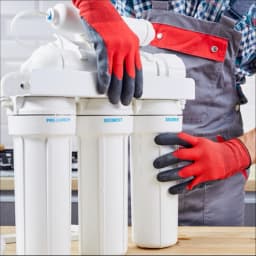
The visit begins with an inspection phase where the technician observes water flow rate, checks for visible leaks, tests the TDS output of your purified water, and listens for unusual sounds from the pump. They'll open the unit and visually assess each filter stage for sediment clogging, discolouration, or bacterial growth. This diagnostic step determines what actually needs replacing rather than assuming a blanket filter change.
Next comes component assessment. The pre-filter gets evaluated for silt saturation, the carbon filter for exhaustion, and the RO membrane for salt passage or fouling. In Cachar environments where sediment is common, the technician should check whether premature membrane fouling has occurred from inadequate pre-filtration — sometimes replacing a neglected pre-filter can recover membrane performance rather than requiring replacement of the expensive RO stage.
The storage tank receives attention once filters are addressed. Cachar's humid climate and borewell water iron content make bacterial or algal growth in tanks more likely than in drier regions. A thorough service includes tank sanitization and cleaning to remove any slime or discolouration, preventing contamination of freshly purified water.
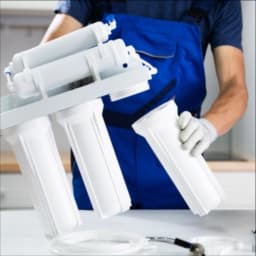
After replacements and cleaning are complete, the technician reassembles the unit and tests everything. Water flow, taste, and TDS readings are all checked to confirm the purifier works correctly post-service. A proper service visit concludes with documentation — a receipt showing what was replaced, labour charges, and the recommended next service date — so you maintain clear records.
A few practical habits extend your purifier's working life and reduce frequency of repairs. In Cachar's monsoon season, when sediment loads in the supply are highest, avoid running the purifier with an inlet valve fully closed or inlet line dry, as this strains the pump without producing purified water. Keep the area around your purifier well-ventilated and dry — Cachar's humidity can promote mold growth and corrosion around connection points if the unit sits in a damp corner. Wipe down the exterior periodically to remove dust and prevent debris from entering during maintenance. If your purifier has indicator lights signalling filter life or tank status, don't ignore them; they exist precisely to alert you before small issues become expensive repairs. And maintain a visible reminder of your last service date — a note on the purifier itself or a phone calendar entry — so you track your maintenance schedule and never lose sight of when the next visit is due.
What makes us different
Cachar's water supply presents distinct challenges that set the region apart from other parts of India. The Barak River, which serves as a primary source, carries seasonal silt loads and fluctuating mineral content that place real strain on reverse osmosis systems. Borewell water in many parts of Cachar contains elevated iron and manganese levels, which accumulate inside filters and membranes much faster than in areas with cleaner groundwater. These regional water characteristics mean that an Eureka Forbes purifier working in Cachar faces heavier filtration demand than the same model might experience elsewhere.
Routine servicing isn't just a maintenance task — it's a necessity to keep your purifier performing safely and efficiently. Filters clogged by silt or mineral deposits reduce water flow, compromise filtration quality, and force internal pumps to work harder than designed. Left unchecked, this accelerates component wear and can eventually push inadequately filtered water into your glass.
Step-by-step guidance
Don't wait! Get the Best water purifier service at the most competitive rates. Contact rocareindia today for a free consultation and quote.

Verified Professionals

Work Assurance

On-Time Support

Covid-19 Safety
Find answers to common questions about our services
Pure water, delivered.