
How to Buy a 100 LPH RO Plant: Complete Purchase Guide
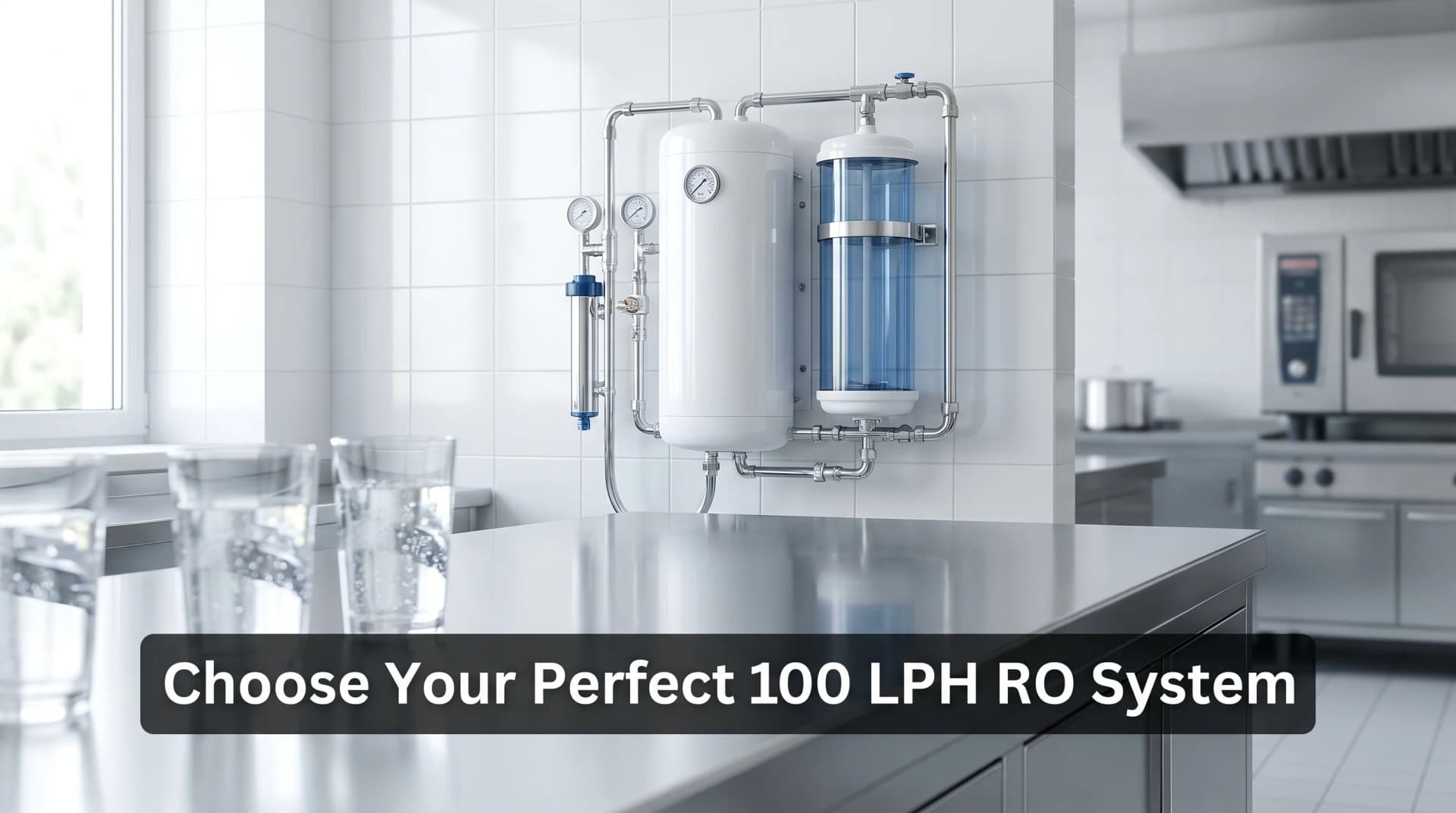
Smart Buyer's Guide to Selecting the Perfect 100 LPH RO Plant for Your Property
Water quality concerns have reached unprecedented levels across Indian cities in 2026, making purification systems more essential than ever. Whether you manage a small office, run a restaurant, operate a clinic, or need purified water for your extended family, understanding how to purchase the right water treatment system can save you thousands of rupees and prevent health hazards. The journey from identifying your needs to enjoying clean drinking water involves several critical decisions that demand careful consideration.
Purchasing a water purification system represents a significant investment in health and wellbeing. Unlike smaller domestic purifiers, commercial-grade systems require thorough research, proper planning, and professional installation. Many buyers make costly mistakes by focusing solely on price or choosing systems incompatible with their water source characteristics. The right approach combines understanding your specific requirements, evaluating technology options, comparing suppliers, and planning for ongoing maintenance needs.
The current market offers overwhelming choices, with numerous manufacturers, varying capacities, different technologies, and confusing technical specifications. This abundance of options often leaves buyers confused and vulnerable to misleading sales tactics. Additionally, post-purchase factors like installation quality, service availability, and spare parts accessibility significantly impact long-term satisfaction. A comprehensive understanding of the entire purchase process helps you make informed decisions that deliver value for years.
This guide walks you through every essential aspect of buying a 100 lph ro plant for residential or commercial applications. From assessing your actual water consumption patterns to negotiating warranties and establishing service agreements, you will discover practical insights that transform this complex purchase into a straightforward process. Whether you are searching for an ro plant in gurgaon or any other Indian city, these principles apply universally to help you select the perfect system.
Understanding Capacity Requirements and Application Scenarios
The 100 liters per hour capacity represents a sweet spot for various applications beyond typical household needs. A standard joint family of eight to twelve members typically consumes between 40 to 60 liters of drinking water daily, making a 100 LPH system ideal with comfortable reserve capacity. Small offices with 20 to 30 employees, boutique hotels with limited rooms, cafes, beauty salons, dental clinics, and small restaurants find this capacity perfectly suited to their operational demands without the expense of larger industrial units.
Calculating your actual requirement involves more than just counting people. Consider peak consumption hours when multiple people might simultaneously need water. A restaurant serving 80 customers during lunch hours needs purified water for drinking, cooking, and food preparation simultaneously. Similarly, a gym with 100 members might experience concentrated demand during morning and evening peak hours. The 100 LPH capacity ensures you never run short during these critical periods while remaining energy efficient during low-demand periods.
Understanding the difference between rated capacity and actual output proves crucial during purchase decisions. Most systems deliver their rated capacity under specific conditions like standard temperature, prescribed inlet pressure, and expected total dissolved solids levels. When your source water has TDS levels exceeding 1000 ppm or experiences seasonal temperature variations, actual output might drop by 15 to 25 percent. Always communicate your worst-case water quality parameters to suppliers for accurate system sizing.
Storage tank integration becomes another vital consideration when planning your purchase. A 100 LPH system produces approximately 2400 liters per day running continuously, but practical operations involve intermittent production cycles. Pairing your system with appropriately sized storage tanks ensures consistent water availability during power cuts, maintenance periods, or unexpected demand spikes. Most installations work optimally with storage capacity equal to 6 to 8 hours of production, translating to roughly 500 to 800 liters for this capacity range.
Evaluating Technology Components and Build Quality
The heart of any ro plant comprises several critical components that directly impact performance, longevity, and maintenance costs. Membrane quality stands paramount, with genuine imported membranes from established manufacturers offering significantly better performance than cheaper alternatives. Premium membranes provide recovery rates between 30 to 50 percent depending on source water quality, while inferior options might barely achieve 20 percent recovery, wasting substantial water and increasing operational costs.
High-pressure pumps represent another major component demanding careful evaluation. The pump must generate sufficient pressure to push water through the semi-permeable membrane effectively, typically requiring 150 to 250 PSI depending on membrane specifications and source water characteristics. Pumps from reputable manufacturers with proven track records in Indian conditions ensure reliable operation and lower maintenance frequencies. Verify whether the supplier provides genuine pumps rather than rebranded generic alternatives that fail prematurely.
Pre-treatment components including sediment filters, activated carbon filters, and anti-scalant dosing systems protect the expensive RO membrane from premature fouling and damage. These elements require regular replacement, making it essential to confirm availability and pricing of consumables before purchasing. Some unscrupulous sellers offer attractive system prices but charge exorbitant rates for proprietary replacement filters, creating long-term financial burdens. Always inquire about standard filter sizes and availability through multiple sources.
Control panel sophistication has evolved dramatically in 2026, with advanced systems offering automated operations, water quality monitoring, filter life indicators, and smartphone connectivity. While these features add convenience, evaluate whether you truly need them or if simpler manual controls suffice for your application. Overly complex systems sometimes create unnecessary technical dependencies and higher repair costs when electronic components fail. Balance technological advancement with practical operational simplicity based on user technical comfort levels.
Identifying Reliable Suppliers and Service Providers
Locating a trustworthy supplier involves research beyond simple internet searches. When looking for an ro plant near me, prioritize vendors with established physical showrooms, service centers, and verifiable customer references. Companies operating solely through online platforms or temporary offices often disappear when warranty claims or service needs arise. Visit potential suppliers personally to assess their infrastructure, inventory levels, and technical staff capabilities before making purchase commitments.
Customer testimonials and reviews provide valuable insights, but approach them critically. Genuine feedback typically includes specific details about installation experiences, service response times, and problem resolution effectiveness. Generic praise lacking concrete examples often indicates fabricated reviews. Request contact information for recent customers in similar applications and personally verify their satisfaction levels. Speaking directly with existing users reveals realistic expectations about performance and service quality.
Comparing multiple quotations helps identify fair market pricing and prevents overpaying. However, the lowest quote rarely represents the best value. Extremely cheap offers typically involve compromised component quality, inexperienced installation teams, or hidden costs emerging later. Request detailed quotations listing every component by brand and model number, installation scope, warranty terms, and included services. This transparency allows meaningful comparisons beyond just the bottom-line price.
Service infrastructure becomes your most critical long-term consideration. The best ro plant service ensures minimal downtime when issues arise. Evaluate whether the supplier maintains adequate technician staff, genuine spare parts inventory, and reasonable response time commitments. Companies offering annual maintenance contracts with clearly defined service schedules and replacement component provisions deliver superior ownership experiences. Confirm service coverage extends to your location, particularly if you operate outside major metropolitan areas.
Installation Planning and Post-Purchase Considerations
Professional installation significantly impacts system performance and longevity. Proper plumbing connections, electrical wiring with appropriate safety devices, strategic placement for easy maintenance access, and correct valve configurations require experienced technicians. Amateur installations often create persistent operational problems, void warranties, and occasionally cause property damage through water leaks. Never compromise on installation quality to save minor costs, as rectifying poor installation typically costs more than doing it right initially.
Regulatory compliance matters more than many buyers realize. In 2026, municipal corporations increasingly enforce water conservation norms, restricting wastewater discharge limits and mandating recovery rate minimums. Ensure your chosen system meets local environmental regulations to avoid penalties or forced modifications later. Some advanced systems incorporate wastewater recycling options that redirect reject water for gardening, floor cleaning, or vehicle washing, reducing environmental impact and operational costs simultaneously.
Documentation collection at the time of purchase protects your interests throughout ownership. Obtain comprehensive installation photographs, detailed warranty certificates with clear terms, product manuals in readable English, genuine component invoices as proof of quality, and written service commitments. This documentation proves invaluable when claiming warranties, selling the property, or engaging different service providers if relationships with the original supplier deteriorate.
Training your staff or family members on basic operations prevents unnecessary service calls and extends equipment life. Understanding how to monitor filter change indicators, perform basic sanitization procedures, identify abnormal sounds or performance, and execute simple troubleshooting saves time and money. Reputable suppliers provide thorough operational training as part of their service, demonstrating commitment to customer success rather than just making sales.
Different System Variants Available in the Market
Single-stage systems represent the most economical option, suitable for source water with TDS below 500 ppm and minimal hardness. These configurations include basic pre-filtration, the RO membrane, and post-carbon polishing, delivering purified water adequate for most applications. Their simplicity means fewer maintenance requirements and lower operational costs, making them popular for budget-conscious buyers with reasonably good input water quality.
Multi-stage systems incorporate additional purification technologies like ultraviolet sterilization, ultrafiltration membranes, or mineralization cartridges. When source water contains biological contamination beyond just dissolved solids, UV treatment provides essential protection against bacteria and viruses that RO alone might not eliminate completely. Mineralization stages add beneficial minerals back into purified water, addressing health concerns about demineralized water consumption over extended periods.
Automated systems feature programmable controls managing production cycles, tank levels, and cleaning sequences without manual intervention. These variants suit commercial applications where dedicated operators are unavailable and reliability cannot depend on human attention. Automatic flushing routines, production scheduling based on consumption patterns, and remote monitoring capabilities justify their higher costs through operational efficiency and reduced maintenance incidents.
Portable or skid-mounted variants offer flexibility for temporary installations, rental applications, or businesses anticipating relocation. These factory-assembled units arrive ready for connection, requiring minimal installation time and simplifying future moves. While typically more expensive than custom-built installations, their convenience and redeployment capability provide value in specific scenarios like construction sites, event venues, or expanding businesses.
Making Your Investment Work Long-Term
Purchasing the right 100 lph ro plant requires balancing immediate costs against long-term value. The cheapest option rarely delivers satisfactory ownership experiences, while the most expensive system might include unnecessary features for your application. Focus on quality core components, reliable service infrastructure, and honest suppliers who prioritize customer relationships over quick sales. Your investment protects health, enhances operational efficiency, and delivers purified water reliably for years when you make informed decisions based on comprehensive research rather than impulsive choices driven by attractive discounts or persuasive sales presentations.
FAQ
Q: What size of establishment is a 100 LPH RO plant best suited for?
A: A 100 liters per hour RO plant works perfectly for joint families with 8-12 members, small offices with 20-30 employees, boutique hotels, cafes, dental clinics, beauty salons, and small restaurants. This capacity provides enough purified water for daily drinking needs plus additional reserve for peak consumption periods. For residential use, it comfortably exceeds the typical 40-60 liters daily requirement of larger families. The system bridges the gap between domestic purifiers and large industrial units, making it cost-effective for these mid-sized applications.
Q: How do I calculate the actual water purification capacity I need for my business?
A: Start by counting the number of people who will consume purified water daily, then identify your peak consumption hours when demand is highest. Consider all uses beyond just drinking water, including cooking, food preparation, or any specific business requirements. A good rule is to calculate expected daily consumption and ensure your system can produce that amount in 6-8 hours rather than 24 hours, accounting for maintenance downtime and peak demand periods. Adding a 30-40% buffer capacity prevents shortages during unexpectedly high usage days.
Q: What are the most common mistakes people make when purchasing commercial RO systems?
A: The biggest mistake is choosing a system based solely on price without considering water source compatibility and local water quality characteristics. Many buyers select systems with inappropriate technology for their specific water contamination issues, leading to poor performance or frequent breakdowns. Neglecting to verify service availability, spare parts accessibility, and installation quality in their area creates long-term maintenance problems. Failing to plan for ongoing operational costs like electricity consumption, filter replacements, and annual maintenance can make an initially affordable system expensive over time.
Q: Does the location where I buy the RO plant matter for long-term service and maintenance?
A: Location significantly impacts your long-term satisfaction with any water purification system. Purchasing from suppliers with local service centers ensures faster response times when issues arise and easier access to genuine spare parts. Local suppliers understand regional water quality challenges and can recommend appropriate pre-treatment solutions specific to your area's contamination patterns. Proximity to the supplier also simplifies warranty claims, annual maintenance scheduling, and emergency repairs. A slightly higher initial purchase price from a reliable local supplier often proves more economical than distant vendors offering lower prices but inadequate after-sales support.
Complete Guide to Purchasing a 100 LPH RO Plant for Your Home or Business
Discover how selecting the right 100 LPH RO plant can transform water quality for your home or business while ensuring long-term cost efficiency. Learn more about capacity requirements, TDS reduction capabilities, membrane technologies, and maintenance schedules that match your specific needs. Explore further into installation considerations, energy consumption patterns, and regulatory compliance standards to make an informed decision that protects health and maximizes value for years ahead.