
Certified RO Technicians for Kent, Aquaguard & Pureit
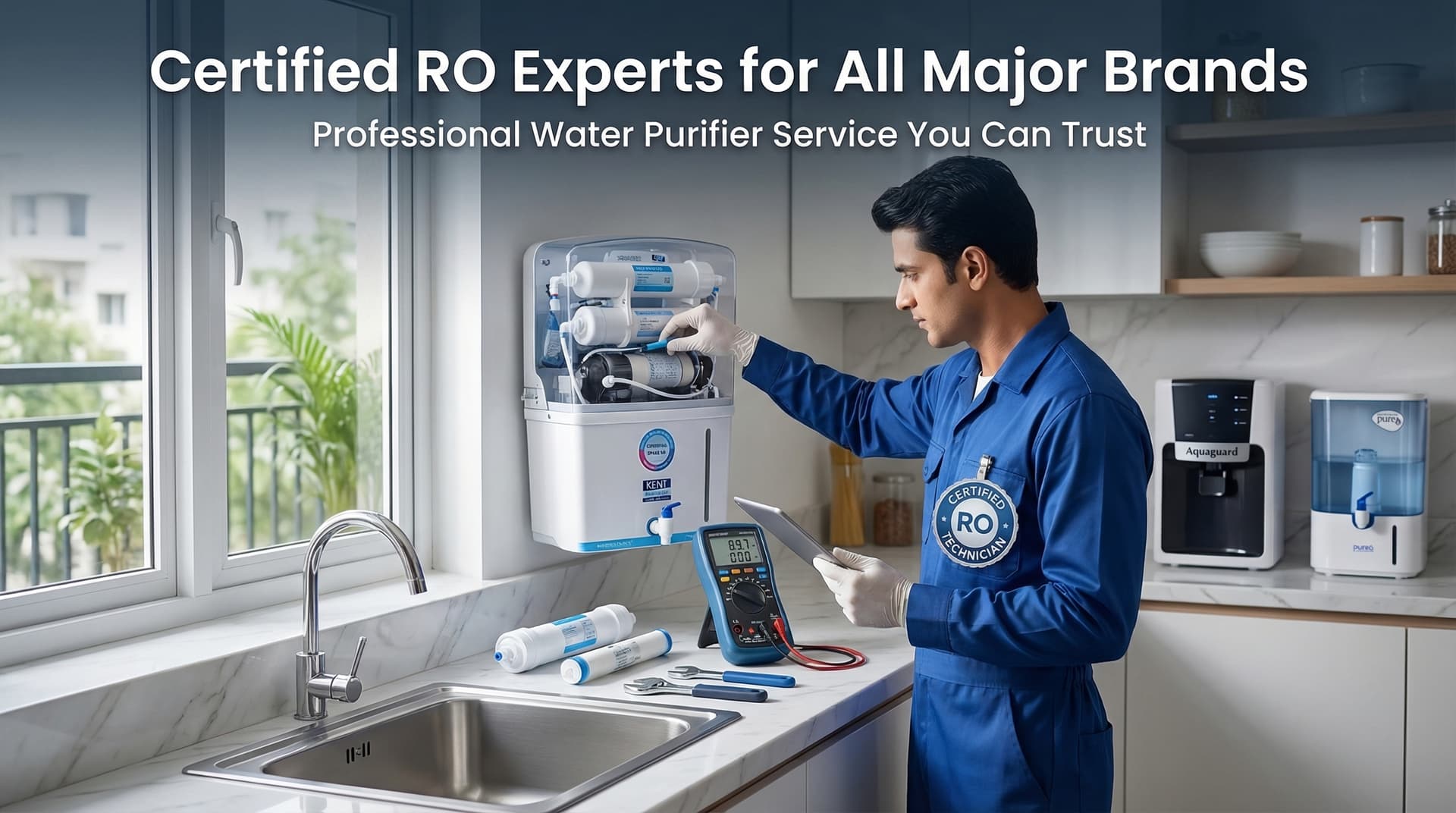
Certified Water Purifier Technicians for All Major Brands in India
Water purification has become an essential aspect of every Indian household, with millions of families relying on advanced filtration systems to ensure safe drinking water. As these sophisticated devices become increasingly complex, the need for skilled professionals who can maintain, repair, and service them has grown exponentially. The quality of service your water purification system receives directly impacts its performance, longevity, and most importantly, the safety of the water your family consumes daily.
The water purifier industry in India has witnessed remarkable growth over the past decade, with households across urban and rural areas investing in various filtration technologies. From reverse osmosis systems to ultraviolet purifiers and multi-stage filtration units, these devices require specialized knowledge for proper maintenance. The difference between an ordinary repair person and a professionally trained technician can mean the difference between a quick fix and a long-lasting solution that ensures continuous access to clean, safe drinking water.
Finding reliable service professionals for water purification equipment has become a significant concern for consumers. Many households have experienced situations where inadequate servicing led to recurring problems, water wastage, or even complete system failure. This challenge has highlighted the importance of choosing service providers who possess proper certification, extensive training, and genuine expertise in handling multiple brands and technologies. The right technician not only fixes immediate problems but also helps prevent future issues through proper maintenance protocols.
Understanding the landscape of professional water purifier servicing in India requires knowledge of what makes a technician truly qualified. Certification, hands-on experience, access to genuine parts, and commitment to customer satisfaction are fundamental qualities that separate exceptional service providers from mediocre ones. As consumers become more aware of these distinctions, they increasingly seek out certified professionals who can deliver reliable, efficient, and comprehensive service for their valuable water purification investments.
Understanding Professional Certification in Water Purifier Servicing
Professional certification in the water purifier industry represents a commitment to excellence and comprehensive training. Certified technicians undergo rigorous programs that cover both theoretical knowledge and practical skills. These programs typically include detailed instruction on water chemistry, understanding various purification technologies, electrical and plumbing components, troubleshooting methodologies, and safety protocols. The certification process ensures that technicians possess the fundamental knowledge required to work on sophisticated purification systems without causing damage or compromising water quality.
The certification process varies across different organizations and manufacturers, but generally includes classroom training, workshop sessions, and field experience. Technicians learn about reverse osmosis membrane technology, understanding how semi-permeable membranes filter contaminants at the molecular level. They study ultraviolet purification systems, learning about lamp replacement, intensity measurement, and ensuring proper disinfection. Training also covers sediment filtration, carbon filtration, and emerging technologies like alkaline and mineral enhancement systems that are becoming increasingly popular in Indian markets.
Beyond technical skills, certified professionals receive training in customer service, diagnostic procedures, and proper documentation. They learn systematic approaches to identifying problems, starting from simple checks and progressing to complex diagnostics. This structured methodology prevents unnecessary part replacements and ensures accurate problem identification. Certified technicians also understand the importance of maintaining service records, which helps track the maintenance history of each unit and provides valuable data for predicting future service needs.
Quality certification programs emphasize continuous learning, recognizing that water purification technology evolves constantly. Certified technicians participate in regular update sessions where they learn about new models, updated components, and improved servicing techniques. This ongoing education ensures they remain current with industry developments and can service both older models and the latest releases with equal competence. The commitment to continuous improvement distinguishes certified professionals from those who rely solely on basic skills acquired years ago.
The Technical Expertise Required for Modern Water Purifiers
Modern water purification systems incorporate multiple technologies and sophisticated components that require specialized knowledge for proper servicing. Reverse osmosis systems, one of the most common types in Indian households, operate through complex mechanisms involving multiple filtration stages, pressure pumps, storage tanks, and electronic controls. A qualified technician must understand how each component functions independently and as part of the integrated system. This knowledge enables them to diagnose issues accurately, whether the problem lies in low water pressure, membrane fouling, or electronic sensor malfunction.
Understanding water quality parameters forms a crucial part of technical expertise. Professional technicians use testing equipment to measure Total Dissolved Solids, pH levels, hardness, and contamination indicators. These measurements help determine whether the purifier is functioning optimally and whether any adjustments are needed. For instance, if TDS levels in purified water are too high, the technician can assess whether the membrane needs replacement, whether pre-filters are saturated, or whether pressure settings require adjustment. This analytical approach ensures comprehensive problem resolution rather than superficial fixes.
Electrical and electronic troubleshooting skills are essential for modern purifiers that incorporate digital displays, automatic shut-off mechanisms, UV lamp monitors, and filter change indicators. Technicians must be comfortable working with circuit boards, sensors, solenoid valves, and control panels. They need to understand voltage requirements, grounding protocols, and safety measures when working with electrical components in wet environments. This expertise prevents electrical hazards and ensures that electronic features continue functioning as designed.
Plumbing expertise complements electrical knowledge, as water purifiers involve intricate tubing connections, fittings, and water flow management. Professional technicians understand pressure dynamics, can identify and fix leaks, know proper tubing installation techniques, and can optimize water flow throughout the system. They recognize when connections need tightening, when tubing requires replacement due to wear, and how to prevent common issues like air locks or water hammer that can damage components over time.
Service Quality Standards and Customer Benefits
Quality service standards in water purifier maintenance encompass several critical aspects that directly benefit consumers. Timeliness stands as a primary consideration, with professional service providers committing to prompt response times for service calls. When a household faces water purifier malfunction, quick resolution becomes essential since families depend on these systems for daily drinking water needs. Professional services typically offer same-day or next-day service appointments, minimizing inconvenience and ensuring families maintain access to safe drinking water.
Genuine replacement parts represent another critical quality standard. Certified technicians have access to authentic components manufactured specifically for each brand and model. Using genuine parts ensures compatibility, maintains warranty validity, and guarantees the same performance standards as original equipment. Counterfeit or generic parts might fit physically but often fail prematurely, use inferior materials, or lack the precise specifications needed for optimal system performance. Professional service providers prioritize genuine parts even when they cost more, recognizing that quality components deliver better long-term value.
Comprehensive service protocols ensure thorough maintenance rather than quick fixes. When professional technicians service a water purifier, they follow systematic checklists that cover all essential components. This includes inspecting and cleaning sediment filters, checking carbon filter saturation, examining membrane condition, testing pressure levels, cleaning storage tanks, sanitizing water pathways, checking for leaks, testing electrical connections, verifying sensor functionality, and conducting final water quality tests. This comprehensive approach identifies potential problems before they cause system failure, extending equipment life and ensuring consistent performance.
Transparent pricing and clear communication distinguish professional services from unscrupulous operators. Quality service providers offer upfront pricing, explain what work needs to be done and why, and seek customer approval before proceeding with repairs. They provide detailed invoices that itemize labor and parts costs, making it easy for customers to understand what they are paying for. This transparency builds trust and helps customers make informed decisions about repairs versus replacement when dealing with older units or extensive damage.
Specialized Training for Different Purification Technologies
Different water purification technologies require distinct expertise, and comprehensive training programs prepare technicians to handle this diversity. Reverse osmosis systems, with their multi-stage filtration and membrane technology, demand understanding of osmotic pressure, membrane permeability, and rejection rates. Technicians learn to calculate recovery ratios, understanding how much water the system wastes versus purifies. They master techniques for membrane cleaning, knowing when chemical cleaning might restore performance and when replacement becomes necessary. Proper Ro Plant service is essential for industrial RO installations.
Ultraviolet purification technology requires specialized knowledge about UV lamp specifications, intensity requirements, and exposure time needed for effective disinfection. Technicians learn to measure UV intensity using specialized meters, ensuring lamps maintain sufficient power to neutralize bacteria, viruses, and other microorganisms. They understand that UV lamps degrade over time even when still producing visible light, requiring replacement based on operational hours rather than visible failure. This knowledge prevents situations where households believe their water is being disinfected when UV intensity has dropped below effective levels.
Gravity-based purifiers, popular in areas without reliable electricity, use different principles requiring different servicing approaches. These systems rely on activated carbon, sediment filters, and sometimes gravity-fed membrane filtration. Technicians trained in these systems understand flow rates, filter capacity, and maintenance schedules specific to non-electric purifiers. They can advise customers on optimal usage patterns and recognize when reduced flow indicates filter saturation rather than mechanical problems.
Emerging technologies like alkaline enhancement, mineral cartridges, and copper infusion systems add another layer of complexity. Professional training programs now include modules on these technologies, teaching technicians about mineral balance, pH adjustment, and the specific maintenance requirements of enhancement cartridges. As consumer preferences evolve toward water that is not just pure but also health-optimized, technician expertise must expand accordingly.
Multi-Brand Expertise and Its Advantages
Technicians trained to service multiple brands offer significant advantages over those specializing in single manufacturers. The Indian water purifier market features numerous brands, each with unique design philosophies, component choices, and assembly methods. Multi-brand expertise means technicians recognize common problems across different manufacturers while also understanding brand-specific quirks and optimal servicing approaches. This breadth of knowledge enables faster diagnosis and more efficient repairs.
Understanding different brands also helps technicians provide objective advice to customers. When a customer asks whether to repair an aging unit or Buy water purifier, a multi-brand technician can offer perspective based on experience with various manufacturers. They can discuss reliability patterns, parts availability, and comparative features without bias toward any single brand. This objectivity helps customers make decisions based on actual performance and value rather than marketing claims.
Multi-brand training exposes technicians to various engineering solutions for similar problems, enriching their troubleshooting toolkit. When faced with an unusual issue, they can draw upon solutions they have encountered across different brands, adapting successful approaches from one manufacturer to solve problems in another. This cross-pollination of knowledge and techniques makes multi-brand technicians particularly effective at resolving complex or unusual problems that might stump brand-specific technicians.
Practical benefits for consumers include convenience and consistency. Households that own multiple water purifiers or switch brands over time can rely on the same trusted service provider rather than establishing new relationships with different technicians. Property managers overseeing multiple units with various brands appreciate having a single service provider capable of maintaining all systems, simplifying logistics and ensuring consistent service quality.
Diagnostic Procedures and Problem-Solving Approaches
Professional diagnostic procedures follow systematic methodologies that ensure accurate problem identification. When responding to a service call, trained technicians begin with a detailed customer interview, understanding symptoms, when problems began, any recent changes to water supply, and the unit's service history. This information provides crucial context that guides subsequent diagnostic steps. A sudden TDS increase might indicate membrane failure, but if it coincided with changes in municipal water supply, the problem might require different solutions.
Visual inspection forms the next diagnostic step, with technicians examining the entire system for obvious issues like leaks, damaged components, loose connections, or signs of electrical problems. They check filter housings for cracks, examine tubing for kinks or wear, inspect electrical connections for corrosion, and look for water stains indicating past or present leaks. This visual survey often reveals problems that customers might not have noticed but could cause issues if left unaddressed.
Systematic testing follows visual inspection, with technicians checking each system component methodically. They measure inlet water pressure, test pump functionality, check valve operation, verify sensor accuracy, measure UV intensity if applicable, and test water quality at various points in the filtration process. This comprehensive testing identifies exactly where problems occur, whether in pre-filtration, primary purification, post-filtration, or storage and dispensing stages.
Documentation of findings and clear communication with customers completes the diagnostic process. Professional technicians explain what they have found, why problems occurred, what repairs are needed, and what preventive measures might avoid future issues. They provide options when multiple solutions exist, discussing trade-offs between different repair approaches. This transparency empowers customers to make informed decisions about their water purifier maintenance.
Preventive Maintenance Programs and Long-Term Benefits
Preventive maintenance programs represent a proactive approach that saves money and ensures consistent water quality over time. Rather than waiting for problems to occur, scheduled maintenance visits allow technicians to inspect systems regularly, replacing consumable filters before they become saturated, cleaning components before buildup affects performance, and identifying wear patterns before they cause failures. This approach minimizes unexpected breakdowns and extends overall system life.
Regular maintenance schedules vary based on water quality, usage patterns, and system type, but typically include quarterly or semi-annual service visits. During these visits, technicians replace sediment and carbon filters, inspect membrane condition, clean storage tanks, sanitize water pathways, check all connections, test sensors and controls, and verify water quality output. They also update service records, noting any concerning trends that might require attention before the next scheduled visit.
Cost benefits of preventive maintenance become apparent over time. While regular service visits involve ongoing costs, they prevent expensive emergency repairs, extend membrane life by preventing premature fouling, maintain optimal performance that reduces water wastage, and catch small problems before they cascade into major system failures. Households enrolled in maintenance programs typically experience fewer service disruptions and lower total ownership costs compared to those who only call for service when problems occur.
Health benefits of regular maintenance are equally important. Properly maintained water purifiers consistently deliver safe drinking water, while neglected systems can develop bacterial growth in storage tanks, allow contaminant breakthrough when filters become saturated, or fail to provide adequate disinfection when UV lamps degrade. Regular professional maintenance ensures that water quality remains consistently safe, protecting family health and providing peace of mind.
Emergency Service Capabilities and Response Systems
Emergency service capabilities distinguish professional water purifier service providers from basic maintenance operations. Water purifier failures often occur unexpectedly, leaving families without access to safe drinking water. Professional service organizations maintain emergency response systems that ensure rapid assistance when urgent problems arise. This includes maintaining adequate technician staffing, stocking commonly needed parts, and implementing dispatch systems that prioritize emergency calls.
Response time commitments vary by service provider and location, but quality organizations typically guarantee service within 24 hours for emergencies, with same-day service often available in urban areas. Emergency situations include complete system failures, significant leaks causing property damage, contamination detected in purified water, or electrical problems presenting safety hazards. Having access to rapid emergency service provides security, knowing that water purifier problems will be addressed quickly without leaving families dependent on bottled water for extended periods.
Mobile service capabilities enhance emergency response effectiveness. Professional technicians arrive equipped with diagnostic tools, common replacement parts, and equipment needed for most repairs. Their service vehicles essentially function as mobile workshops, enabling on-site repairs without delays for parts ordering or return trips. This capability means many emergency situations are resolved in a single visit, restoring water purifier functionality within hours rather than days.
Emergency service also includes after-hours availability, recognizing that water purifier problems do not observe business hours. Quality service providers maintain contact numbers that customers can call during evenings, weekends, and holidays. While emergency service during non-business hours might involve premium charges, having this option available provides valuable insurance against extended disruption of safe water access.
Professional Service Across Multiple Brands
India's water purifier market includes several established manufacturers, each with significant market presence and loyal customer bases. Professional service organizations recognize this diversity and train technicians to work competently across all major brands. Doctor Fresh has built a reputation for reliable service and customer-focused support, with technicians trained in their specific system designs and maintenance requirements. Their service network ensures that customers across various regions can access qualified support when needed.
RO Care India has established itself through specialization in reverse osmosis technology, with deep expertise in membrane systems, pressure management, and water chemistry. Their technicians undergo extensive training in RO system diagnostics and optimization, enabling them to address complex issues that might challenge less specialized service providers. Mannubhai Service Expert brings decades of experience in water treatment and purification, with comprehensive knowledge spanning traditional and modern purification technologies.
Kent maintains a strong market position with innovative products and extensive service infrastructure. Their systems often incorporate proprietary technologies requiring specific training for optimal service delivery. Aquaguard, with its long-standing presence in Indian households, represents another significant service focus, with millions of units requiring ongoing maintenance and support. Aquafresh systems bring their own design characteristics and service requirements that trained technicians must understand thoroughly.
Pureit has captured significant market share through effective marketing and reliable products, creating substantial demand for qualified service professionals familiar with their systems. Blue Star brings industrial-grade engineering to consumer water purifiers, with robust designs that benefit from technically skilled servicing. LG applies its electronics expertise to water purification, creating feature-rich systems that require technicians comfortable with both purification technology and advanced electronics. Professional service organizations ensure their technicians receive training across all these brands, providing comprehensive support regardless of which manufacturer a household has chosen.
Choosing the Right Service Provider for Your Needs
Selecting an appropriate Ro Service for water purifier maintenance requires evaluating several important factors. Certification and training credentials should be primary considerations, with customers asking about technician qualifications, manufacturer certifications, and ongoing training programs. Service providers who invest in continuous technician education demonstrate commitment to quality and staying current with evolving technologies.
Service history and customer reviews provide valuable insights into reliability and quality. Online reviews, customer testimonials, and word-of-mouth recommendations help identify service providers with consistent track records of customer satisfaction. Pay attention to comments about technician professionalism, problem resolution effectiveness, pricing transparency, and post-service support. Patterns in reviews reveal more than individual experiences, highlighting systematic strengths or weaknesses.
Parts availability and pricing transparency separate quality service providers from problematic ones. Ask whether the service provider uses genuine parts, whether they maintain adequate parts inventory for common repairs, and how they handle pricing for parts and labor. Quality providers offer clear pricing structures, provide estimates before proceeding with repairs, and explain what work is necessary and why. Avoid services that pressure customers into unnecessary repairs or cannot clearly explain their charges.
Service area coverage and response time commitments matter, especially for emergency situations. Verify that the service provider operates in your area, understand their typical response times for routine and emergency service, and clarify what support is available during non-business hours. Also consider whether they offer preventive maintenance programs, as these can provide better long-term value than purely reactive service relationships.
Conclusion
Professional water purifier servicing requires specialized knowledge, comprehensive training, and commitment to quality standards that go far beyond basic repair skills. Certified technicians bring expertise in multiple purification technologies, understanding of water chemistry, diagnostic capabilities, and systematic maintenance approaches that ensure optimal system performance and water safety. The difference between qualified professionals and inexperienced service providers directly impacts water quality, system longevity, and overall value from water purification investments.
The water purifier service landscape in India has matured significantly, with professional organizations now offering comprehensive support across all major brands. This multi-brand expertise benefits consumers through greater convenience, objective advice, and access to broad technical knowledge that comes from working with diverse systems and technologies. Quality service providers distinguish themselves through certified technicians, genuine parts, transparent pricing, comprehensive service protocols, and commitment to customer satisfaction.
Choosing professional service for water purifier maintenance represents an investment in family health and system longevity. While professional service might cost more than informal alternatives, the benefits of expert diagnosis, quality repairs, genuine parts, and systematic maintenance deliver superior long-term value. Regular professional maintenance prevents expensive failures, ensures consistent water quality, extends equipment life, and provides peace of mind knowing that drinking water safety is protected by qualified expertise.
As water purification technology continues advancing and consumer expectations for service quality rise, the role of certified, professionally trained technicians becomes increasingly important. Households that prioritize quality service and establish relationships with reliable, certified professionals ensure their water purification systems deliver safe, clean drinking water consistently for years to come, protecting both health and investment in these essential household systems.
As water purification technology continues advancing and consumer expectations for service quality rise, the role of certified, professionally trained technicians becomes increasingly important. Households that prioritize quality service and establish relationships with reliable, certified professionals ensure their water purification systems deliver safe, clean drinking water consistently for years to come, protecting both health and investment in these essential household systems.
Frequently Asked Questions
Q - What qualifications should I look for when hiring a water purifier technician?
A - Look for technicians with formal certification from recognized training programs that cover water purification technologies, electrical systems, and plumbing. Certified professionals should have completed rigorous training in reverse osmosis, ultraviolet purification, and multi-stage filtration systems. Verify their experience with diagnostic procedures, water quality testing, and systematic troubleshooting methodologies. Additionally, ensure they participate in ongoing education programs to stay current with evolving technologies and can demonstrate multi-brand expertise rather than specialization in just one manufacturer.
Q - How often should I schedule professional maintenance for my water purifier?
A - Most water purification systems benefit from professional maintenance every three to six months, depending on water quality, usage patterns, and system type. Regular service visits allow technicians to replace consumable filters before saturation, inspect membranes for fouling, clean storage tanks, and sanitize water pathways before problems develop. Preventive maintenance prevents unexpected breakdowns, extends system life, maintains optimal performance, and ensures consistent water quality. Households with particularly hard water or heavy usage may require more frequent service intervals for best results.
Q - What are the advantages of using a multi-brand certified technician versus a single-brand specialist?
A - Multi-brand certified technicians offer broader perspective and problem-solving capabilities drawn from experience across different manufacturers' designs and technologies. They can provide objective advice without bias toward specific brands, adapt successful solutions from various systems, and serve households with multiple or changing purifier brands over time. This expertise means faster diagnosis through recognition of common issues across platforms while understanding brand-specific requirements. Multi-brand certification also ensures consistent service quality regardless of which manufacturer you choose, providing long-term flexibility and convenience.
Q - How can I tell if my water purifier needs immediate professional attention versus routine maintenance?
A - Immediate professional attention is needed for complete system failure, significant leaks causing property damage, unusual tastes or odors in purified water, visible contamination, electrical problems, or dramatic changes in water flow or quality. Warning signs include consistently high Total Dissolved Solids readings, frequent system shutdowns, unusual noises from pumps or valves, or error indicators on digital displays. Routine maintenance addresses gradual performance decline, scheduled filter replacements, and preventive inspections. When in doubt, contact a certified technician for assessment, as some seemingly minor issues can indicate serious underlying problems requiring prompt resolution.