
DM Plant vs RO Plant: Complete Water Treatment Guide
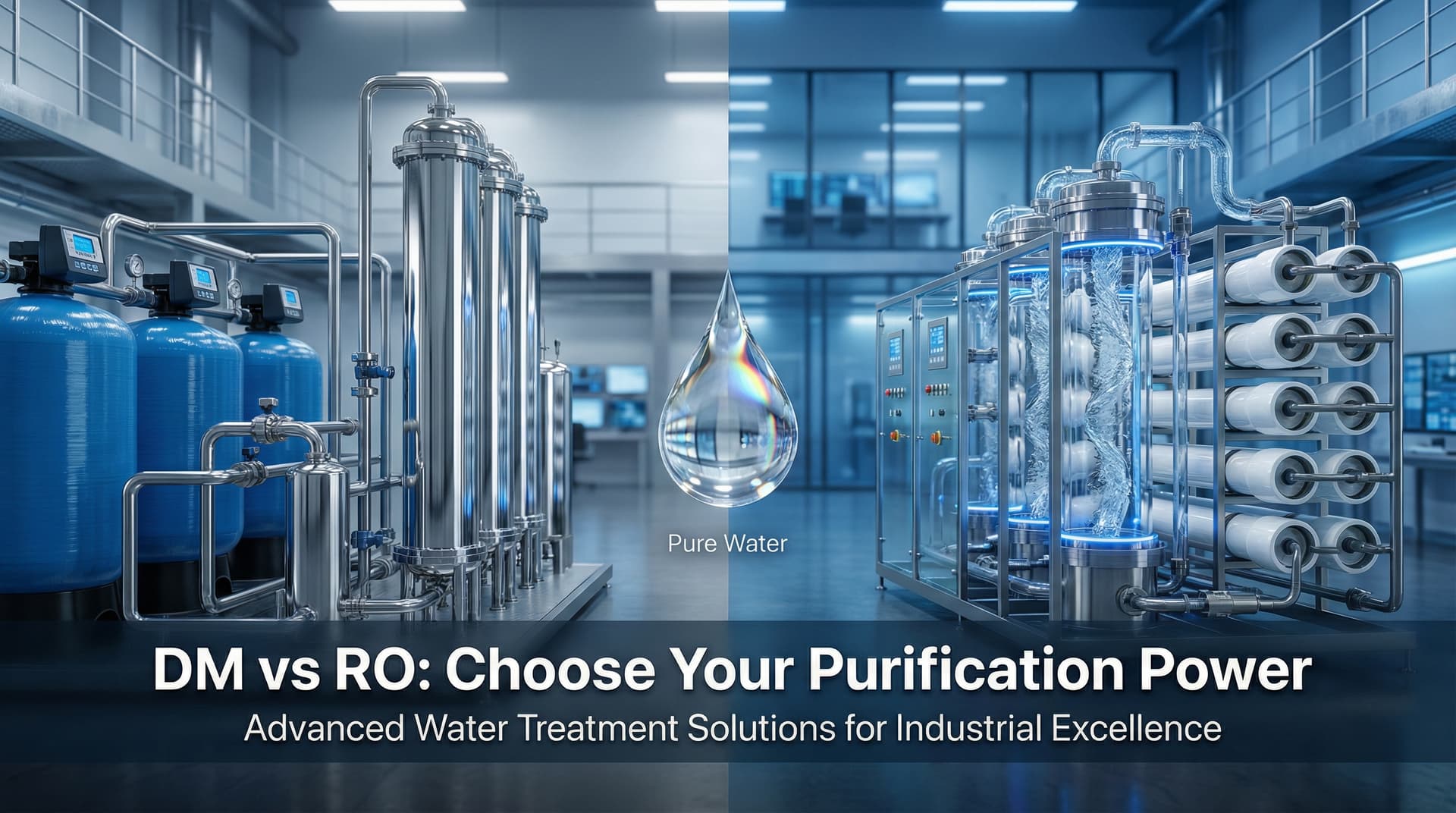
Water treatment has become an essential requirement for industries and commercial establishments worldwide. The quality of water directly impacts production processes, equipment longevity, and product quality across various sectors. Among the numerous purification methods available, two technologies stand out for their effectiveness and widespread adoption in industrial applications. These sophisticated systems serve different purposes and employ distinct mechanisms to achieve water purification goals.
Industrial facilities face unique challenges when selecting appropriate water treatment solutions. The choice between various purification technologies depends on multiple factors including water source quality, end-use requirements, operational costs, and maintenance considerations. Understanding these technologies helps facility managers and business owners make informed decisions that align with their specific needs and budget constraints.
The manufacturing sector, pharmaceutical industry, power generation facilities, and commercial establishments all require treated water that meets stringent quality standards. Some applications demand water with minimal dissolved solids, while others need specific quality parameters for safe and efficient operations. The selection process involves careful evaluation of input water characteristics and desired output specifications.
Modern water treatment facilities must balance efficiency, cost-effectiveness, and environmental responsibility. Both demineralization and reverse osmosis represent advanced purification approaches that have revolutionized how industries manage their water requirements. Each technology offers distinct advantages and serves particular applications where its strengths can be maximized for optimal performance and economic viability.
Understanding Demineralization Plants
Dm Plant operate through ion exchange processes that remove mineral salts from water. This technology uses specialized resins that attract and capture dissolved ions, replacing them with hydrogen and hydroxide ions that combine to form pure water. The process effectively eliminates calcium, magnesium, sodium, chloride, sulfate, and other ionic impurities from the water supply.
The system comprises multiple treatment stages including cation exchange units, anion exchange units, and mixed bed polishers. Cation resins remove positively charged ions while anion resins capture negatively charged particles. This comprehensive approach produces water with extremely low conductivity levels, often below one microsiemens per centimeter, making it suitable for applications requiring ultrapure water.
Demineralization systems require periodic regeneration using acids and alkalis to restore resin capacity. The regeneration process involves flushing the exhausted resins with chemical solutions that remove accumulated ions and recharge the resin beads. This maintenance requirement adds to operational costs but ensures consistent water quality over extended periods.
These plants excel in applications where complete mineral removal is essential. Boiler feed water preparation represents a primary application, as dissolved minerals cause scaling and corrosion in high-pressure steam generation systems. The technology also serves pharmaceutical manufacturing, electronics production, and laboratory applications where mineral-free water is mandatory for process reliability and product quality.
Reverse Osmosis Technology Explained
Ro Plant employs semi-permeable membranes that separate dissolved solids, organic compounds, and microorganisms from water. This physical separation process applies pressure to overcome natural osmotic pressure, forcing water molecules through microscopic membrane pores while rejecting larger contaminant particles. The technology removes up to ninety-nine percent of dissolved solids and virtually all microbiological contaminants.
The membrane system consists of pre-treatment stages, high-pressure pumps, membrane modules, and post-treatment components. Pre-treatment removes suspended particles, chlorine, and other substances that could damage delicate membranes. The pressurized water then flows through spiral-wound or hollow-fiber membrane elements that perform the actual separation.
Membrane fouling represents a significant operational challenge requiring careful monitoring and periodic cleaning. Scaling, biological growth, and particulate accumulation reduce membrane efficiency and lifespan. Regular cleaning with specialized solutions and proper pre-treatment extend membrane life and maintain system performance at optimal levels. For maintenance, Ro Plant service providers offer membrane cleaning and replacement.
This technology proves ideal for applications requiring high-quality water with moderate to low dissolved solids content. Drinking water production, food and beverage processing, and general industrial applications benefit from reverse osmosis capabilities. The system produces water suitable for most commercial and industrial purposes while operating continuously without chemical regeneration cycles.
Performance Characteristics and Output Quality
Demineralization achieves superior removal of ionic contaminants, producing water with conductivity levels approaching theoretical purity. The ion exchange process removes dissolved minerals almost completely, making it the preferred choice for applications demanding ultrapure specifications. This level of purification supports sensitive manufacturing processes and critical equipment protection.
Reverse osmosis provides excellent overall contaminant reduction including dissolved solids, organic compounds, bacteria, and viruses. While not achieving the same ionic purity as demineralization, it delivers water quality sufficient for most industrial applications. The technology offers broader contaminant removal capabilities, addressing both ionic and non-ionic impurities in a single process.
Water recovery rates differ significantly between these technologies. Reverse osmosis systems typically recover seventy to eighty-five percent of feed water, with the remainder discharged as concentrated reject stream. Demineralization plants can achieve higher recovery rates as they process all incoming water through the resin beds, though this advantage diminishes when considering regeneration wastewater.
Energy consumption patterns also vary considerably. Reverse osmosis requires substantial electrical power for high-pressure pumping, with energy costs representing a significant operational expense. Demineralization plants consume less electricity for water movement but require chemicals for regeneration, presenting different cost structures and environmental considerations.
Operational Requirements and Maintenance Considerations
Demineralization plants demand regular chemical regeneration, creating operational complexity and chemical handling requirements. Facilities must maintain adequate supplies of regenerant acids and bases, manage chemical storage safely, and handle neutralization of spent regenerant solutions. This chemical dependency creates ongoing procurement and disposal responsibilities.
Monitoring resin exhaustion requires careful tracking of water quality parameters and processing volumes. Automated systems can trigger regeneration cycles based on conductivity measurements or treated water volumes, ensuring consistent output quality. Manual monitoring demands skilled operators who understand ion exchange chemistry and recognize performance indicators.
Reverse osmosis systems require less chemical intervention but demand meticulous attention to membrane condition. Pre-treatment system performance directly affects membrane longevity and separation efficiency. Regular membrane cleaning, pressure monitoring, and permeate quality testing ensure reliable operation and early detection of performance degradation.
Replacement schedules differ substantially between technologies. Demineralization resins typically last three to five years before requiring replacement, depending on water quality and operational conditions. Reverse osmosis membranes generally need replacement every two to five years, with lifespan heavily influenced by feed water characteristics and maintenance practices.
Application Suitability and Industry Preferences
Power generation facilities predominantly rely on demineralization for boiler feed water preparation. The extremely low dissolved solids required for high-pressure steam generation make ion exchange the logical choice. These applications cannot tolerate even trace minerals that reverse osmosis might allow through membranes.
Pharmaceutical manufacturing often employs both technologies in sequence, using reverse osmosis for initial purification followed by demineralization for final polishing. This combined approach balances operational efficiency with stringent quality requirements, leveraging the strengths of each technology for optimal results.
Food and beverage industries favor reverse osmosis for process water and ingredient preparation. The technology removes contaminants while preserving some mineral content that may benefit product characteristics. Beverage manufacturers particularly value the consistency and microbiological safety that membrane filtration provides.
Electronics manufacturing requires ultrapure water for semiconductor fabrication and component cleaning. These applications typically specify demineralization or combined systems to achieve the sub-microsiemens conductivity levels essential for preventing electrical interference and product defects during manufacturing processes.
Cost Analysis and Economic Considerations
Initial capital investment varies based on system capacity and complexity. Reverse osmosis installations generally require higher upfront costs due to expensive membrane modules and high-pressure pumping systems. Demineralization plants have lower equipment costs but require substantial space for resin vessels and regeneration equipment.
Operational expenses follow different patterns for each technology. Reverse osmosis incurs continuous electricity costs for pressure maintenance, while demineralization bears recurring chemical expenses for regeneration. Total cost of ownership calculations must consider water quality, recovery rates, and local utility costs to determine economic viability.
Wastewater management represents a significant cost factor for both technologies. Reverse osmosis produces concentrated reject streams requiring disposal or further treatment. Demineralization generates spent regenerant solutions needing neutralization and disposal. Environmental regulations and local discharge limitations affect these costs substantially.
Labor requirements differ based on automation levels and system complexity. Modern installations of either technology can operate with minimal supervision when properly automated. However, demineralization systems typically require more operator attention during regeneration cycles compared to continuously operating reverse osmosis installations.
Water Treatment Solutions from Leading Providers
Several established manufacturers supply both demineralization and reverse osmosis systems for industrial applications. Doctor Fresh offers comprehensive water treatment solutions designed for various industrial requirements, with technical support throughout the installation and operational phases. Their systems incorporate modern control technology for reliable performance.
RO Care India specializes in reverse osmosis installations across multiple capacity ranges. Their service network provides maintenance support and membrane replacement services for commercial and industrial clients. The company emphasizes water conservation and energy-efficient designs in their product offerings.
Mannubhai Service Expert delivers customized water treatment systems including both ion exchange and membrane technologies. Their engineering team designs solutions matching specific industrial requirements and local water conditions. Installation and commissioning services ensure proper system performance from startup.
Kent produces residential and commercial water purification equipment utilizing reverse osmosis technology. Their product range includes compact systems suitable for smaller commercial applications and distributed installations. Aquaguard similarly offers membrane-based purification systems for various commercial sectors.
Aquafresh, Pureit, Blue Star, and LG manufacture water treatment equipment primarily focused on commercial and light industrial applications. These brands provide standardized systems with established service networks, offering convenient solutions for facilities with moderate water quality requirements.
Environmental Impact and Sustainability Factors
Water conservation becomes increasingly important as freshwater resources face growing pressure. Reverse osmosis reject streams contain elevated dissolved solids but remain relatively clean compared to other industrial wastewaters. Some facilities implement recovery systems that further treat reject water for non-critical applications, improving overall water efficiency.
Demineralization regeneration creates concentrated chemical solutions requiring careful handling and treatment before discharge. Neutralization processes consume additional chemicals and generate salt-laden wastewater. Environmental regulations in many regions mandate treatment of these streams before release to municipal systems or natural waterways.
Energy consumption contributes to environmental footprint through greenhouse gas emissions associated with electricity generation. Facilities powered by renewable energy sources minimize this impact, while those relying on fossil fuel electricity must account for carbon emissions in sustainability assessments. Energy recovery devices can reduce reverse osmosis power requirements substantially.
Chemical usage in demineralization raises concerns about resource consumption and environmental impact of chemical production. Manufacturers continue developing more environmentally friendly regenerant formulations and alternative resin technologies. Some advanced systems reduce chemical consumption through optimized regeneration sequences and counter-current flow designs.
System Selection Criteria and Decision Framework
Feed water analysis provides the foundation for technology selection. Comprehensive testing reveals dissolved solids levels, specific ion concentrations, organic content, microbiological parameters, and physical characteristics. This data guides engineers in determining which technology best addresses the specific contaminants present.
End-use requirements establish target water quality specifications. Applications demanding ultrapure water with minimal conductivity necessitate demineralization or hybrid approaches. General industrial processes accepting moderate dissolved solids can utilize reverse osmosis effectively, achieving acceptable quality at lower operational complexity.
Site-specific factors influence implementation feasibility. Available space, electrical capacity, chemical storage capabilities, and wastewater discharge options all affect technology selection. Urban facilities may face stricter environmental regulations favoring technologies with reduced chemical usage and wastewater generation.
Future expansion plans should inform current decisions. Modular reverse osmosis systems allow capacity increases through additional membrane vessels. Demineralization plants require proportional increases in resin volume and regeneration equipment. Scalability considerations prevent costly redesigns when operational demands grow.
Conclusion
Selecting between demineralization and reverse osmosis technologies requires thorough understanding of each system's capabilities, limitations, and operational characteristics. Demineralization plants excel in producing ultrapure water through ion exchange chemistry, serving applications where complete mineral removal is essential. These systems suit power generation, pharmaceutical manufacturing, and electronics production where water quality directly impacts process reliability and product integrity.
Reverse osmosis provides versatile water treatment handling diverse contaminants through physical membrane separation. This technology serves food and beverage industries, general manufacturing, and commercial applications requiring consistent quality with moderate purity levels. The continuous operation and reduced chemical handling make it attractive for many industrial facilities.
Economic analysis must consider capital costs, operational expenses, maintenance requirements, and total lifecycle ownership. Neither technology universally outperforms the other across all metrics. Specific facility requirements, local conditions, and application demands determine the optimal choice for each situation.
Many industrial facilities benefit from hybrid approaches combining both technologies sequentially. This strategy leverages reverse osmosis for bulk contaminant removal followed by demineralization for final polishing, balancing operational efficiency with water quality requirements. Such systems optimize performance while managing costs and environmental impacts effectively.
FAQ
Q: What are the main differences between demineralization plants and reverse osmosis systems for industrial water treatment?
A: Demineralization plants use ion exchange resins to remove mineral salts by replacing dissolved ions with hydrogen and hydroxide ions, producing ultrapure water with extremely low conductivity. Reverse osmosis employs semi-permeable membranes that physically separate contaminants by applying pressure to force water molecules through microscopic pores while rejecting larger particles. Demineralization excels at removing ionic contaminants and producing water with near-theoretical purity, while reverse osmosis provides broader contaminant removal including dissolved solids, organic compounds, bacteria, and viruses. The key operational difference is that demineralization requires periodic chemical regeneration cycles, whereas reverse osmosis operates continuously but demands careful membrane maintenance and pre-treatment.
Q: Which water treatment technology is more cost-effective for industrial applications?
A: Cost-effectiveness depends on specific application requirements and operational factors rather than one technology universally being cheaper. Reverse osmosis typically requires higher initial capital investment due to expensive membrane modules and high-pressure pumping systems, but demineralization plants need substantial space for resin vessels and regeneration equipment. Operational costs differ significantly: reverse osmosis incurs continuous electricity expenses for pressure maintenance, while demineralization bears recurring chemical costs for regeneration. Total ownership calculations must consider feed water quality, desired output specifications, water recovery rates, energy costs, chemical prices, and wastewater disposal requirements. Many facilities find that matching the technology to their specific purity requirements rather than over-specifying treatment provides the best economic outcome.
Q: Can demineralization and reverse osmosis systems be used together, and what advantages does this provide?
A: Combining both technologies in a sequential hybrid system offers significant advantages for facilities requiring high-purity water. This approach typically uses reverse osmosis as the primary treatment stage to remove bulk contaminants, followed by demineralization for final polishing to achieve ultrapure specifications. The combination reduces the contaminant load on ion exchange resins, extending regeneration cycles and reducing chemical consumption. Pharmaceutical manufacturing and electronics production frequently employ this strategy to balance operational efficiency with stringent quality requirements. The hybrid approach optimizes performance by leveraging reverse osmosis for its broad contaminant removal capabilities and continuous operation, while utilizing demineralization for its superior ionic purification, resulting in better overall water quality management and potentially lower total operational costs.
Understanding water treatment technologies helps facilities optimize operations and maintain consistent quality standards. Exploring the technical specifications, operational requirements, and economic factors of different purification methods enables better planning for current and future water treatment needs across industrial applications.