
RO Plant Selection Guide for Restaurants & Hotels 2026
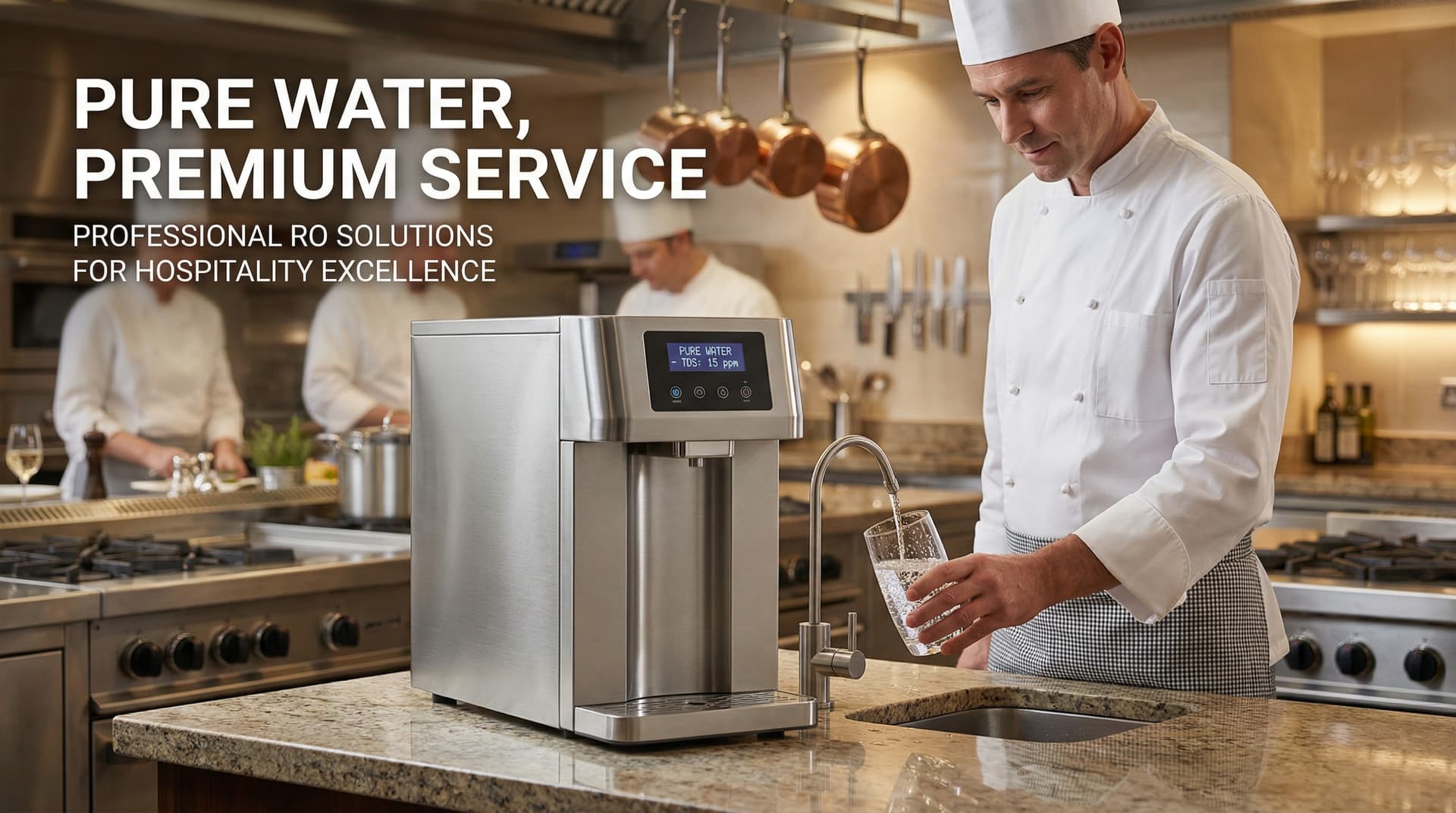
Water quality stands as a fundamental requirement for any establishment serving food and beverages or providing accommodation services.
The safety and purity of water directly impacts guest health, operational efficiency, and overall business reputation. For restaurants, hotels, resorts, and paying guest accommodations, installing a reliable water purification system is not merely a regulatory requirement but a critical investment in customer satisfaction and business sustainability.
The hospitality industry faces unique challenges when it comes to water supply management. Unlike residential properties, commercial establishments handle significantly higher volumes of water daily, requiring robust purification solutions that can maintain consistent output without compromising quality. The selection process involves careful consideration of multiple factors including daily water consumption patterns, peak usage hours, available installation space, and budget constraints. Making an informed decision requires understanding the technical specifications, operational requirements, and long-term maintenance implications of commercial water purification systems.
Modern water treatment technology has evolved considerably, offering sophisticated solutions designed specifically for high-capacity applications. These systems incorporate multiple filtration stages, advanced membrane technology, and automated monitoring features that ensure consistent water quality even during demanding operational hours. The right purification system becomes an invisible yet essential component of hospitality operations, working continuously to deliver safe drinking water for cooking, beverage preparation, and direct consumption.
This comprehensive analysis examines the critical aspects of selecting appropriate water purification solutions for commercial hospitality applications. From small cafes and guest houses to large hotels and sprawling resort properties, understanding the nuances of system sizing, technology selection, and operational considerations will empower business owners and facility managers to make decisions that protect both their guests and their investments.
Understanding Commercial Water Purification Requirements
Commercial establishments operate under different parameters compared to residential settings. A restaurant preparing hundreds of meals daily requires substantially more purified water than a typical household. Similarly, hotels with multiple floors, room service operations, kitchen facilities, and beverage stations need centralized purification systems capable of delivering consistent quality throughout the property. The purification capacity must align with actual consumption patterns while maintaining adequate reserve capacity for peak demand periods.
Water quality assessment forms the foundation of system selection. Different geographical locations present varying water challenges, from high mineral content and hardness to bacterial contamination and chemical pollutants. Conducting comprehensive water testing before system selection ensures that the chosen technology addresses the specific contaminants present in the source water. This scientific approach prevents both over-engineering, which increases unnecessary costs, and under-specification, which fails to deliver acceptable water quality.
Installation space and infrastructure considerations significantly influence system design. Compact establishments with limited storage areas require space-efficient configurations, potentially involving vertical mounting or modular designs. Larger properties can accommodate centralized purification plants with substantial storage tanks, distribution pumps, and dedicated utility rooms. The plumbing infrastructure must support the flow rates required by the purification system, and electrical supply should match the power consumption of pumps, control panels, and optional features like ultraviolet sterilization.
Regulatory compliance represents another essential dimension. Health departments and food safety authorities establish minimum standards for water quality in commercial food service and hospitality operations. These regulations often specify acceptable levels of dissolved solids, bacterial counts, and specific contaminants. Selecting systems that consistently meet or exceed these standards protects establishments from compliance issues while demonstrating commitment to guest safety.
Capacity Calculation and System Sizing
Determining the appropriate system capacity requires analyzing both average daily consumption and peak demand periods. A restaurant serving 200 customers daily might use between 500 and 1000 liters of purified water depending on menu complexity, dishwashing practices, and beverage offerings. Hotels must calculate consumption based on occupancy rates, with estimates typically ranging from 30 to 50 liters per occupied room per day, plus additional requirements for restaurants, kitchens, and other facilities.
Peak hour analysis prevents system bottlenecks during critical service periods. Breakfast service at hotels, lunch rush at restaurants, and evening check-in periods create temporary surges in water demand. The purification system must either produce water fast enough to meet these peaks or work in conjunction with adequately sized storage tanks that accumulate purified water during off-peak hours. Many commercial installations utilize storage capacity equivalent to three to four hours of peak consumption.
Growth projections influence sizing decisions for establishments planning expansion. Adding dining capacity, opening additional floors, or increasing room counts all increase water requirements. Building modest excess capacity during initial installation costs less than replacing an undersized system later. Industry professionals often recommend selecting systems rated at 120 to 150 percent of current calculated requirements to accommodate gradual business growth.
Seasonal variations affect establishments in tourist destinations and seasonal markets. Resorts experiencing dramatic occupancy fluctuations between peak and off-peak seasons need systems capable of handling maximum capacity while operating efficiently during quieter periods. Variable speed pumps, modular system designs, and staged purification banks allow operations to scale output according to actual demand, improving energy efficiency and reducing wear on components.
Technology Components and Filtration Stages
Multi-stage filtration represents the industry standard for commercial applications. Preliminary sediment filters remove particles, sand, and suspended solids that could damage delicate membrane surfaces. These pre-filters extend the life of downstream components while improving overall system efficiency. Activated carbon filters follow, addressing chlorine, organic compounds, and chemicals that affect taste and odor. This stage proves particularly important for establishments serving beverages where water quality directly impacts customer experience.
Reverse osmosis membranes form the heart of modern purification systems. These semi-permeable barriers remove dissolved salts, heavy metals, bacteria, and microscopic contaminants through a pressure-driven process. Commercial-grade membranes designed for continuous operation withstand the demands of high-volume applications while maintaining consistent rejection rates. Membrane configuration varies from single large-capacity elements to multiple smaller units arranged in parallel, with selection depending on total capacity requirements and redundancy preferences.
Post-purification treatment enhances water quality and safety. Ultraviolet sterilization provides an additional barrier against microbial contamination without adding chemicals or affecting taste. Mineral addition stages can reintroduce beneficial minerals removed during reverse osmosis, improving taste profiles for drinking water applications. pH adjustment systems ensure water neither corrodes distribution plumbing nor leaves mineral deposits in equipment like coffee machines and steam tables.
Automation and monitoring systems distinguish commercial installations from basic residential units. Automatic flush cycles clean membrane surfaces, preventing buildup and maintaining efficiency. Water quality sensors continuously monitor output, triggering alerts if purity falls below acceptable thresholds. Digital displays provide operators with real-time information about production rates, filter life remaining, and system status, enabling proactive maintenance rather than reactive repairs.
Space Planning and Installation Considerations
Physical footprint varies dramatically based on system capacity and design philosophy. Compact units designed for small restaurants or guest houses might occupy just a few square feet of wall space, utilizing vertical orientation and integrated storage. Large hotel installations require dedicated mechanical rooms housing multiple purification units, storage tanks holding thousands of liters, and associated distribution equipment. Advance planning during building design or renovation ensures adequate space allocation with proper access for maintenance activities.
Plumbing integration demands professional expertise to ensure proper flow rates and pressure management. Feed water supply lines must deliver adequate volume and pressure to support system operation, sometimes requiring booster pumps if municipal pressure proves insufficient. Distribution plumbing carries purified water to points of use throughout the facility, with pipe sizing calculated to maintain pressure and flow while minimizing dead legs where water stagnates. Drain connections must handle reject water from the purification process, which typically represents 30 to 50 percent of feed water volume.
Environmental controls protect system components and optimize performance. Purification equipment performs best within specific temperature ranges, generally between 15 and 35 degrees Celsius. Installation locations should avoid temperature extremes, direct sunlight, and excessive humidity. Adequate ventilation prevents heat buildup from pumps and motors while allowing dissipation of any minor water vapor. Protection from freezing is essential in properties located in cold climates or utilizing outdoor installation spaces.
Electrical requirements extend beyond simple power supply. Most commercial systems need dedicated circuits rated for continuous operation, with amperage matching motor and pump specifications. Control panels require clean, stable power, sometimes benefiting from dedicated circuits or voltage regulation. Emergency backup considerations include whether the system should connect to standby generators, ensuring continued purification capability during power outages that might affect food safety or guest services.
Water Treatment Needs Across Different Hospitality Segments
Restaurant applications prioritize water quality for cooking, beverage preparation, and ice making. The purification system for a restaurant must deliver consistent quality that enhances rather than detracts from food and drink flavors. Coffee shops and cafes particularly benefit from low mineral content water that allows bean characteristics to shine without interference from dissolved solids. High-end restaurants serving fine wines and craft cocktails recognize that water quality affects every aspect of the dining experience, from cooking pasta to mixing drinks.
Hotel requirements encompass diverse applications across multiple departments. Guest rooms need purified water for mini-bars and in-room coffee makers. Housekeeping departments utilize quality water to prevent mineral staining on fixtures and fabrics. Engineering teams appreciate reduced scaling in heating equipment and plumbing systems. The centralized system supporting a hotel Ro Plant must consider this variety of uses, potentially incorporating different distribution points with varying quality standards depending on application criticality.
Resort properties face additional complexity due to expansive grounds and scattered facilities. Beach resorts, mountain lodges, and destination properties might need water purification serving restaurants, spas, swimming pools, and scattered accommodation buildings. Some resorts implement multiple smaller systems rather than single large installations, placing purification capacity near major consumption points to reduce distribution complexity and minimize water age in pipes. Others prefer centralized plants with extensive distribution networks, depending on property layout and operational philosophy.
Paying guest accommodations, hostels, and budget hotels optimize for cost efficiency while maintaining adequate safety standards. These establishments typically select robust, straightforward systems emphasizing reliability and low operating costs over advanced features. Common area kitchens, water dispensers, and basic room amenities consume moderate water volumes, allowing installation of mid-capacity systems that balance initial investment against operational requirements. Durability and minimal maintenance needs take priority for properties operating on tighter budgets with limited technical staff.
Operational Efficiency and Running Costs
Energy consumption represents a significant ongoing expense for commercial purification systems. High-pressure pumps driving water through reverse osmosis membranes consume substantial electricity during operation. Energy-efficient motor designs, variable speed drives that adjust output to actual demand, and proper system sizing all contribute to minimizing power costs. Properties paying premium electricity rates or operating in regions with time-of-use pricing can schedule production during off-peak hours, filling storage tanks for use during expensive peak periods.
Water wastage requires consideration both for environmental responsibility and utility costs. Reverse osmosis inherently produces reject water containing concentrated contaminants removed from the purified stream. Modern systems achieve recovery ratios between 50 and 70 percent, meaning every 100 liters of feed water produces 50 to 70 liters of purified water. Some properties recover reject water for non-critical applications like landscape irrigation or toilet flushing, improving overall efficiency. High-efficiency membranes and proper system tuning maximize recovery ratios within equipment capabilities.
Consumable replacement follows predictable schedules based on water quality and production volume. Sediment filters typically require replacement every one to three months depending on source water conditions. Carbon filters last three to six months in most applications. Reverse osmosis membranes represent the most expensive consumable, generally requiring replacement every 18 to 36 months. Establishing service contracts with reliable suppliers ensures timely replacement before filter exhaustion compromises water quality or damages system components.
Labor costs for operation and maintenance vary with system complexity and property staffing. Simple installations with automated controls require minimal daily attention beyond periodic visual inspections. Complex multi-unit systems benefit from dedicated technical staff or regular service visits from specialized technicians. Training existing maintenance personnel in basic troubleshooting, filter replacement, and system monitoring reduces dependency on external service providers while lowering long-term operational costs. Establishing service contracts for Ro Service ensures timely consumable replacement and rapid response when issues arise.
Brand Options and Market Landscape
The commercial water purification market includes both specialized industrial brands and consumer brands offering commercial products. Doctor Fresh provides solutions targeting hospitality applications with emphasis on reliability and service support. RO Care India focuses on commercial installations with comprehensive maintenance programs. Mannubhai Service Expert delivers custom-engineered systems for unique property requirements. These specialized providers understand hospitality industry needs and offer products designed for demanding commercial environments.
Established consumer brands extend their offerings into commercial territory. Kent manufactures systems across capacity ranges, from compact restaurant units to substantial hotel installations. Aquaguard leverages extensive service networks to support properties in diverse locations. Aquafresh balances cost and performance for budget-conscious establishments. Pureit offers straightforward systems emphasizing ease of operation. Blue Star and LG bring decades of water treatment experience to commercial applications, providing engineered solutions backed by comprehensive warranties. Many properties choose to Buy water purifier units from trusted suppliers to ensure consistent performance and service coverage.
Selecting between brands involves evaluating not just the equipment but the complete ownership experience. Service availability in the property's location ensures rapid response when issues arise, minimizing downtime that could affect guest services. Spare parts inventory and supply chain reliability prevent extended outages waiting for components. Technical support quality, including remote diagnostics and troubleshooting assistance, adds value beyond the hardware itself. Warranty terms protecting against premature failure provide financial security during the critical early years of system operation.
Reputation within the hospitality industry offers valuable guidance. Properties facing similar water challenges and operating requirements provide the most relevant reference points. Industry forums, professional associations, and facility manager networks share experiences with different brands and models. Site visits to similar establishments using specific systems reveal real-world performance beyond manufacturer specifications. This research investment pays dividends through higher confidence in selection decisions and reduced risk of costly mistakes.
Maintenance Protocols and Service Requirements
Preventive maintenance prevents minor issues from escalating into system failures or water quality problems. Regular inspection schedules examine pressure gauges, flow meters, and system controls for abnormal readings indicating developing problems. Visual checks identify leaks, corrosion, or damage requiring attention. Cleaning protocols maintain system hygiene, particularly in storage tanks and distribution lines where stagnation could allow bacterial growth. Many properties implement weekly walkthroughs by maintenance staff supplemented by monthly detailed inspections by specialized technicians.
Filter replacement constitutes the most frequent maintenance activity. Establishing reminder systems based on operating hours, water volume processed, or calendar intervals ensures timely replacement before exhausted filters compromise performance. Keeping adequate spare parts inventory prevents delays when replacement becomes necessary. Documentation of filter changes, including dates, models installed, and any observations about system behavior, builds historical records useful for optimizing replacement intervals and identifying recurring issues.
Membrane cleaning and servicing extends the useful life of these expensive components. Chemical cleaning removes mineral scaling, biological fouling, and organic buildup that gradually reduces membrane efficiency. Some operations perform quarterly cleanings as preventive maintenance, while others clean only when performance monitoring indicates declining efficiency. Professional membrane service includes physical inspection for damage, performance testing, and sometimes individual membrane replacement within multi-element housings, salvaging useful components while replacing failed units.
Annual comprehensive service provides opportunity for thorough system evaluation. Complete disassembly, cleaning, and inspection of all components reveals wear patterns and developing issues. Calibration of monitors and sensors ensures accurate readings for operational decisions. Performance testing under controlled conditions establishes baseline measurements for comparison in future evaluations. This intensive service often coincides with slow business periods, minimizing impact on operations while preparing the system for upcoming peak seasons.
Water Quality Monitoring and Testing
Continuous monitoring systems provide real-time assurance of water safety. Total dissolved solids meters measure the primary indicator of purification effectiveness, with sudden increases signaling membrane problems or system malfunctions. Conductivity monitors offer similar information using different measurement principles, sometimes detecting issues missed by other instruments. Flow meters track production rates, identifying capacity degradation or unusual consumption patterns. Pressure sensors throughout the system reveal developing blockages, pump wear, or membrane fouling requiring attention.
Periodic laboratory testing validates monitor accuracy and screens for contaminants not addressed by continuous instruments. Comprehensive water analysis examines bacterial counts, specific minerals, heavy metals, and organic compounds. Testing frequency depends on regulatory requirements and property policies, typically ranging from monthly to quarterly. Some establishments test more frequently following maintenance activities, after extended shutdowns, or when guest complaints suggest water quality concerns. Maintaining relationships with certified testing laboratories ensures rapid turnaround when results are needed quickly.
Record keeping demonstrates compliance and supports quality management. Documentation includes continuous monitor readings, laboratory test results, maintenance activities, and any corrective actions taken in response to problems. Digital systems simplify data collection and analysis, generating trend reports that identify gradual performance degradation before reaching critical thresholds. These records prove invaluable during health inspections, insurance evaluations, and quality certification processes, demonstrating commitment to guest safety through objective data.
Response protocols define actions when monitoring reveals quality issues. Clear procedures specify who receives alerts, what immediate actions protect guests, and how investigations proceed to identify root causes. Backup plans might include switching to bottled water for consumption while continuing to use purified water for cooking and cleaning, or isolating affected distribution zones in large properties with multiple systems. Well-designed protocols minimize guest impact while addressing problems systematically rather than through improvised responses during crises.
Financial Considerations and Investment Analysis
Initial investment varies dramatically based on system capacity and sophistication. Small restaurant installations might require 50,000 to 150,000 rupees for equipment and installation. Mid-sized hotel systems typically range from 200,000 to 500,000 rupees. Large resort properties with multiple systems or high-capacity centralized plants could invest several million rupees. These figures include equipment, installation labor, plumbing integration, electrical work, and initial commissioning, though exact costs depend on site-specific factors and chosen specifications.
Operating cost projections inform long-term financial planning. Annual expenses include electricity consumption, replacement filters and membranes, periodic maintenance, water testing, and repair contingencies. For typical installations, these ongoing costs might represent 15 to 25 percent of initial system cost annually. Properties with expensive electricity or challenging water quality face higher operating expenses. Accurate projections require considering local utility rates, water analysis data, and equipment specifications rather than relying solely on generic estimates.
Return on investment calculations compare purification systems against alternatives like purchasing bottled water. High-volume establishments often achieve payback within one to three years through eliminated bottled water costs. Additional benefits including reduced equipment scaling, improved coffee and beverage quality, and enhanced guest satisfaction provide value difficult to quantify financially but real nonetheless. The analysis should consider both direct cost savings and indirect benefits contributing to overall property operations and guest experience.
Financing options make quality systems accessible even for properties with limited capital. Equipment leasing spreads costs over several years while providing tax benefits in some jurisdictions. Service contracts bundling equipment, installation, and maintenance into monthly payments convert large capital expenses into predictable operating costs. Some suppliers offer financing programs tailored to hospitality industry customers. Evaluating total cost of ownership across the expected system lifespan provides clearer comparison than focusing exclusively on initial purchase price.
Future Trends and Technology Evolution
Smart systems incorporating internet connectivity and remote monitoring represent the emerging standard. Property managers can check system status, receive alerts, and review performance data from smartphones or central management software. Predictive maintenance algorithms analyze operating patterns to forecast component failures before they occur, scheduling service during convenient periods rather than responding to emergency breakdowns. Integration with building management systems coordinates water purification with other facility operations for comprehensive property oversight.
Water conservation technologies address both environmental concerns and operating costs. Advanced membrane materials achieve higher recovery ratios, producing more purified water from each liter of feed water. Energy recovery devices capture pressure from concentrate streams, reducing overall power consumption. Intelligent controls optimize production schedules, matching output to actual demand patterns and minimizing waste from unnecessary operation or excessive storage that allows water quality degradation.
Sustainability certifications increasingly influence purchasing decisions as properties pursue green building standards and environmental credentials. Energy-efficient systems, water conservation features, and environmentally responsible consumable disposal contribute to certification requirements. Some brands emphasize sustainable manufacturing, recyclable components, and reduced packaging. Properties marketing environmental responsibility to guests find alignment between operational choices and brand positioning, making system selection part of broader sustainability initiatives.
Modular and scalable designs accommodate changing needs without complete system replacement. Growing properties can add purification capacity by installing additional modules that integrate with existing equipment. Seasonal operations can activate or deactivate sections based on occupancy levels. Technology upgrades become possible without discarding functional components, extending system useful life while incorporating new capabilities. This flexibility reduces long-term costs while adapting to business evolution.
Bringing Together Safe Water Solutions
Selecting appropriate water purification systems for restaurants, hotels, resorts, and paying guest accommodations requires balancing multiple technical, operational, and financial factors. Successful installations begin with thorough assessment of actual water quality, consumption patterns, and property-specific requirements rather than generic assumptions. Proper system sizing accounts for peak demand periods while maintaining efficiency during normal operations, with modest excess capacity accommodating gradual business growth.
The technology selected must address specific contaminants present in source water while meeting regulatory standards and property quality expectations. Multi-stage filtration, reliable membrane technology, and appropriate post-treatment ensure consistent water safety across diverse applications from cooking to direct consumption. Installation planning considers available space, infrastructure capabilities, and access requirements for ongoing maintenance activities that protect system investment and ensure continued performance.
Operational success depends on establishing clear maintenance protocols, monitoring procedures, and response plans that maintain water quality while minimizing costs and system downtime. Relationship with suppliers and service providers proves as important as equipment selection, providing access to expertise, parts, and support throughout system lifespan. Financial analysis examining both initial investment and long-term operating expenses guides decisions that protect guest safety while supporting business objectives.
The commitment to water safety through reliable purification systems demonstrates hospitality industry professionalism and guest care. Whether serving meals to local diners or hosting international resort guests, providing consistently safe drinking water represents a fundamental responsibility that supports health, satisfaction, and business reputation. Thoughtful system selection, proper installation, and diligent maintenance create the foundation for this essential service, working invisibly but critically behind every successful hospitality operation.
FAQ
Q - How do I calculate the right water purification capacity for my restaurant or hotel?
A - Calculate capacity based on your daily water consumption patterns and peak demand periods. For restaurants, estimate 3-5 liters per customer served. Hotels typically require 30-50 liters per occupied room daily, plus additional amounts for kitchens and common areas. Always include storage capacity equivalent to 3-4 hours of peak usage and consider selecting systems rated at 120-150% of current requirements to accommodate future growth and seasonal variations.
Q - What are the main ongoing costs associated with commercial water purification systems?
A - Primary ongoing expenses include electricity for pump operation, replacement filters every 1-3 months, carbon filters every 3-6 months, and membrane replacements every 18-36 months. Additional costs cover periodic maintenance, water quality testing, and occasional repairs. Annual operating costs typically represent 15-25% of the initial system investment, varying based on local utility rates, water quality conditions, and system efficiency features.
Q - How often should commercial water purification systems undergo maintenance and testing?
A - Implement weekly visual inspections by maintenance staff and monthly detailed examinations by specialized technicians. Replace filters according to manufacturer schedules or operating hours. Conduct quarterly membrane cleaning and annual comprehensive service during slow business periods. Perform laboratory water testing monthly to quarterly depending on regulatory requirements, with continuous monitoring of dissolved solids, flow rates, and pressure readings to ensure consistent water quality.
Q - What space and infrastructure requirements should I plan for when installing a commercial purification system?
A - Space requirements vary significantly with capacity—small installations may need only a few square feet of wall space, while large hotel systems require dedicated mechanical rooms. Ensure adequate plumbing infrastructure to support required flow rates, dedicated electrical circuits for continuous operation, and proper environmental controls maintaining temperatures between 15-35 degrees Celsius. Plan for maintenance access, drain connections for reject water, and adequate ventilation to prevent heat buildup from pumps and motors.
Call to Action
Understanding water purification requirements represents just the beginning of ensuring guest safety and operational excellence. The hospitality industry continues evolving with new technologies, regulatory updates, and efficiency innovations that impact system performance and cost-effectiveness. Stay informed about emerging filtration technologies, maintenance best practices, and industry standards that help optimize your water treatment investment while protecting guests and enhancing service quality across your establishment.