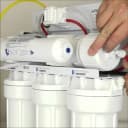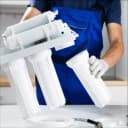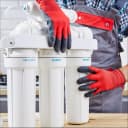
Neemuch's water supply faces unique challenges that directly affect how your Eureka Forbes purifier performs. The region's reliance on borewell and groundwater sources means higher mineral content and TDS levels compared to many other parts of Madhya Pradesh. When your RO system works harder to filter water with elevated hardness and dissolved solids, the internal components wear out faster — making timely service not a luxury, but a practical necessity.
Understanding this reality helps explain why a Eureka Forbes RO purifier in Neemuch may need more frequent attention than the same model in another city. A well-maintained unit adapts to local water conditions and keeps delivering safe drinking water without breakdowns that leave your household without clean water for days.
Select Service

.webp&w=256&q=75)
Everything you need to know
The groundwater here contains significant levels of dissolved minerals — calcium, magnesium, and other salts that contribute to hardness. During the pre-monsoon months when borewell levels drop, this mineral concentration becomes even more pronounced. Your Eureka Forbes RO membrane is specifically designed to remove these compounds, but when the inlet water is particularly hard, the membrane's workload increases substantially.
This isn't a fault with the purifier itself. Rather, it means the membrane accumulates sediment and mineral scale more rapidly than it would in areas with softer water sources. Technicians familiar with Neemuch's water patterns recognize these pressure points and adjust service schedules accordingly. Many households here benefit from more frequent pre-filter and membrane inspections than standard recommendations suggest.
Instead of waiting for obvious breakdowns, learn to spot these warning signs that your purifier is struggling with local water conditions:
In Neemuch's climate and water environment, catching these signs early and booking a Eureka Forbes repair visit prevents small issues from cascading into costlier component failures.
Not all Eureka Forbes systems require the same service rhythm. The frequency depends on how you source your water:
If you use borewell water: This is common in Neemuch, and borewell water typically has TDS levels in the range of 600–1200 mg/L. Households on private borewells should plan for pre-filter replacement every 2 to 3 months, carbon filter changes every 4 months, and RO membrane replacement every 10 to 14 months. These intervals are shorter than areas with municipal supply, but they reflect the reality of high-mineral groundwater.
If you use municipal water: Neemuch's public supply goes through treatment, but hardness remains moderate to high. Service intervals here fall somewhere between borewell users and those in very soft-water areas — typically pre-filter replacement every 3 to 4 months and membrane change every 14 to 18 months.
If you blend both sources: Some households draw from multiple sources seasonally. In that case, work with your technician to adjust the service calendar based on which source is active.
Cost transparency matters when you're budgeting for ongoing maintenance. Several factors influence what you'll pay for a service visit:
Always request a written estimate before work begins. A good technician breaks down the visit charge, parts cost, and labor separately so there's no confusion when the bill arrives.
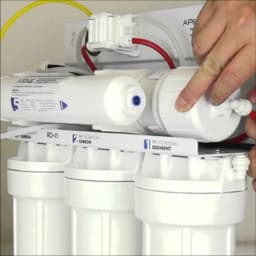
Filters are the core of RO maintenance, and in Neemuch they deserve particular attention:
Pre-filter (sediment filter): This catches sand, rust, and suspended particles from borewell or municipal water. In high-hardness areas like Neemuch, replacement every 2.5 to 3 months keeps the system running smoothly. Ignoring a clogged pre-filter increases pressure on downstream components and shortens overall system life.
Carbon filter: Removes chlorine, taste, and odor. Plan for replacement every 4 to 5 months under Neemuch's typical usage patterns.
RO membrane: This is the workhorse. In areas with TDS above 800 mg/L, membranes typically need replacement every 12 to 15 months rather than the 18–24 months quoted for softer-water regions. Using hard water pushes the membrane harder, so it accumulates scale faster and loses efficiency sooner.
Post-carbon and mineralizer filters: These final-stage filters usually last 10 to 12 months and improve taste after RO filtration is complete.
The key insight is that Neemuch's water chemistry means shorter filter life than the standard recommendations printed in most purifier manuals. Setting service reminders based on local conditions rather than generic timelines prevents the situation where a membrane continues filtering poorly for weeks before you realize it needs replacing.
An Annual Maintenance Contract pools scheduled service visits, filter replacements, and minor repairs into one yearly fee. For Neemuch households, the math often favors an AMC plan because water conditions demand more frequent visits than in softer-water areas.
Benefits specific to Neemuch: If you're replacing filters every 2.5 to 3 months and the membrane every 12 to 15 months, paying per visit quickly adds up. An AMC plan that covers four or five scheduled visits annually, with filters and basic labor included, typically costs less than the sum of individual visits. You also get priority booking during peak seasons like the pre-monsoon months when more households experience purifier issues simultaneously.
When to skip an AMC plan: If your household uses very little water, or if you're planning to upgrade your purifier within the next year, a pay-per-visit arrangement might be cheaper. Similarly, if your unit is brand new and still covered by the manufacturer's warranty, an AMC plan duplicates coverage you already have.
What to check in the fine print: Some AMC tiers cover unlimited visits but ask you to pay extra for filters. Others bundle filters into the annual fee but limit the number of visits. Read carefully so you understand whether a particular plan suits your expected service frequency.
When you need service, speed and local expertise matter. A technician who knows Neemuch's water conditions doesn't waste time guessing why your purifier is underperforming — they've already serviced dozens of systems here and recognize the patterns.
Have this information ready when you contact a service provider: your purifier's model number (found on a sticker on the unit), when it was last serviced, what problem you're experiencing, and your water source (borewell, municipal, or mixed). This helps the technician bring the right parts and give you an accurate estimate over the phone before arriving at your door.
Response time varies by season. During monsoon months or peak summer when more purifiers face stress, waiting periods stretch longer. Booking service as soon as you notice a problem — rather than waiting to see if it resolves itself — improves the chances of getting a same-day or next-day visit.
Understanding the process helps you evaluate the quality of work:
A thorough visit takes 45 minutes to an hour. If a technician finishes in 15 minutes, they've likely skipped several steps, and you're at risk of problems recurring quickly.
A few habits reduce strain on your Eureka Forbes system and help it perform better:
Thinking of water purification as an investment rather than an expense changes how you approach maintenance. The upfront cost of an Eureka Forbes RO system is significant, but regular service protects that investment. Skipping service to save money on a few hundred rupees now often leads to a thousand-rupee repair bill later — or worse, replacement of a membrane or pump that could have lasted much longer with proper care.
Households that stay on top of filter changes and schedule annual or semi-annual professional checks report fewer breakdowns, better water quality, and longer overall system lifespan. The most economical approach is not the cheapest service visit, but the service provider who keeps your purifier running reliably with transparent costs and genuine expertise in your area's water conditions.
What makes us different
Neemuch's water supply faces unique challenges that directly affect how your Eureka Forbes purifier performs. The region's reliance on borewell and groundwater sources means higher mineral content and TDS levels compared to many other parts of Madhya Pradesh. When your RO system works harder to filter water with elevated hardness and dissolved solids, the internal components wear out faster — making timely service not a luxury, but a practical necessity.
Understanding this reality helps explain why a Eureka Forbes RO purifier in Neemuch may need more frequent attention than the same model in another city. A well-maintained unit adapts to local water conditions and keeps delivering safe drinking water without breakdowns that leave your household without clean water for days.
Step-by-step guidance
Don't wait! Get the at the most competitive rates. Contact rocareindia today for a free consultation and quote.
Real repairs · Real customers · Real results

Verified Professionals

Work Assurance

On-Time Support

Covid-19 Safety
Find answers to common questions about our services
Find our nearby franchise stores in your city
Pure water, delivered.