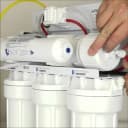
Hoshangabad's proximity to the Narmada River means that municipal water supply and borewell sources both carry higher mineral loads than many other Indian cities. During summer months, when river levels drop and water concentration increases, TDS levels spike significantly. This rapid seasonal shift in water quality directly affects how often your Eureka Forbes purifier needs servicing and what components wear out fastest.
Homeowners in areas like Pipariya, Itarsi, and central Hoshangabad who rely on local borewells face even steeper mineral challenges. A purifier that runs smoothly in the monsoon may struggle by April or May without timely maintenance. Understanding this local pattern — and planning your Eureka Forbes service schedule around it — is the difference between consistent water quality year-round and unexpected breakdowns during peak summer demand.
Select Service


.webp&w=256&q=75)
Everything you need to know
The Narmada feeds most of Hoshangabad's water supply, and while this is a reliable source, it brings challenges that aren't present in cities drawing from cleaner municipal systems. The river water carries suspended sediment, especially during and after the monsoon, and high dissolved mineral content from geological layers along its course. Borewell water in the district shows similarly elevated hardness and TDS readings, particularly in summer.
This water chemistry means your Eureka Forbes RO unit works harder than it would in a low-mineral-content city. Pre-filters clog faster because of sediment load. The RO membrane — the core filtration stage — faces constant pressure from dissolved salts and minerals, shortening its effective life. A purifier that might run 18 months between membrane replacements in a city like Bangalore may need a fresh membrane every 12 months or even sooner in Hoshangabad, depending on your specific water source.
When you schedule Eureka Forbes service, communicating your water source (municipal supply, borewell, hand pump) helps the technician anticipate which components are at highest risk and plan the service accordingly.
In Hoshangabad's climate and water conditions, several warning signs appear more frequently than in other regions. Being alert to these can prevent days without safe drinking water during the hot season:
Hoshangabad residents who've used Eureka Forbes for a full year or more typically develop a feel for their purifier's normal rhythm. Deviations from that pattern warrant a service call rather than waiting for a complete breakdown.
Budget-conscious households sometimes stretch the interval between service visits to save money in the short term. In Hoshangabad, this approach often backfires because of the aggressive water chemistry. A skipped service in a high-TDS environment doesn't mean your purifier will last longer — it means components deteriorate faster and fail more completely.
When an RO membrane operates past its effective lifespan in mineral-heavy water, it accumulates salt deposits (scaling) that become difficult to reverse. A technician might be able to clean a lightly scaled membrane with a chemical flush, but heavily scaled membranes often require replacement. Similarly, a pre-filter that's overdue for change allows sediment to reach the carbon filter and even touch the membrane edges, reducing the membrane's lifespan even further.
The practical result: skipping one scheduled service might save money now, but it often forces you into a costly membrane replacement or even a full unit overhaul sooner than if you'd maintained the original schedule. For Eureka Forbes customers in Hoshangabad, regular service isn't an optional expense — it's the most cost-effective way to avoid catastrophic repair bills.
Unlike cities with more stable water quality year-round, Hoshangabad benefits from deliberate service timing. Most Eureka Forbes technicians recommend scheduling appointments during these windows:
June-July (post-monsoon): After heavy rains, sediment levels remain high even as they begin to settle. A service at this point clears accumulated sediment and resets all filters, preparing the purifier for the long summer demand period ahead.
September-October (transition to winter): This is often the best time for a full check-up, when TDS levels have peaked and are beginning to drop. Technicians can assess any damage from the summer rush and prepare the unit for stability during winter.
March-April (pre-summer): As temperatures rise and water demand increases, scheduling a service before peak summer ensures components are fresh and efficient. This is especially important if your water source is a borewell that shows higher TDS in summer.
If your purifier is under an active Eureka Forbes AMC plan, the contract typically specifies visit frequency. For those paying per service, planning around these seasonal windows often aligns with when the purifier actually needs attention most urgently.
Eureka Forbes purifiers use several distinct filtration stages, and Hoshangabad's water conditions create specific replacement patterns:
Sediment or sand filters (Stage 1): In Hoshangabad, these filters accumulate visible grit quickly, especially during monsoon and immediately after. Most technicians recommend replacement every 3 to 4 months rather than the standard 4 to 6 months quoted in other regions. Cost is typically lower than other filters, so changing them more frequently is economical insurance against downstream damage.
Carbon filter (Stage 2): This removes chlorine, odor, and some organic compounds. High mineral water doesn't degrade carbon filters faster, but sediment bypass (from an overdue Stage 1 filter) can clog them. Regular replacement every 6 months maintains flow and taste.
RO membrane (core stage): The membrane is where high TDS water takes its toll. Hoshangabad residents typically see effective membrane life of 12 to 18 months depending on borewell versus municipal water. Borewell water, with its higher mineral concentration, often shortens this to 10 to 12 months. Budget accordingly and don't wait for a visible drop in output to replace it.
Post-carbon filter (Stage 4): This polishing stage extends membrane life by catching any small sediment particles that might otherwise reach the membrane. Annual replacement is standard, but in high-load conditions, consider every 8-9 months.
A competent Eureka Forbes technician will test your water's TDS and hardness during each service visit and use those readings to predict when components will need replacement next. This data-driven approach beats guessing and helps you plan the maintenance budget.
Hoshangabad is not a mega-city, so Eureka Forbes service options may be more limited than in larger metros. This makes it essential to evaluate any available provider carefully before booking:
Local water knowledge: Ask the technician whether they're familiar with Narmada water characteristics and high-TDS challenges. A provider who's worked on dozens of purifiers in Hoshangabad understands seasonal patterns and will suggest realistic maintenance intervals rather than generic advice.
Parts availability: Confirm that the technician stocks genuine Eureka Forbes filters and membranes suited to your model and that they don't charge inflated prices due to distance from major supply hubs. If they have to order parts from outside Hoshangabad, find out how long that takes and whether they offer a temporary solution while waiting.
Response time: During summer, when demand for RO service spikes across the city, providers get backlogged. Choose one that commits to a specific response window and ask how they handle emergency calls during peak season.
Service documentation: A reliable provider gives you a written record of what was serviced, which parts were replaced, and when the next service is due. This documentation helps you track patterns and protects you if a dispute arises about what was or wasn't done.
Warranty and guarantee: Ask whether they stand behind their work with a short-term guarantee on replaced parts, and whether they're authorized by Eureka Forbes (which affects warranty claim eligibility if a problem arises later).
An Annual Maintenance Contract bundles several service visits and filter replacements into a single yearly cost. For Hoshangabad residents, the calculation is different than it might be in a low-mineral-content city because the number of visits needed is higher.
When an AMC plan makes sense: If you're drawing water from a borewell or if your municipal supply has consistently high TDS, an AMC plan often pays for itself within 3 or 4 visits. You avoid surprise bills during summer when service demand peaks and prices may rise. The plan also ensures scheduled maintenance, which prevents the false economy of skipping services. Most plans include 2 to 4 visits yearly plus filter replacements; in high-mineral water, you'll likely use all of them.
When paying per visit is better: If your purifier is brand new, still under manufacturer warranty, or if you have exceptionally low water consumption, an AMC plan is an unnecessary expense. Also, if you're uncertain about staying in Hoshangabad long-term, committing to a yearly contract may not make sense.
What to confirm before signing: Read whether the AMC plan covers all filters and the RO membrane or whether large replacements (like a new membrane) incur additional charges. Ask whether the plan covers accidental damage and what isn't covered. A plan that covers routine maintenance but excludes electrical faults or leaks isn't as valuable as it sounds.
Once you've decided to schedule service, a few steps ensure the visit goes smoothly:
Before calling: Note down your purifier model (usually found on a label on the unit's side or back), your purchase date or service history if available, and a clear description of any problems — slow flow, unusual taste, leaks, noise. This information helps the technician prepare and estimate how long the visit will take.
During booking: Confirm the service date and time window, ask whether the technician will need you to turn off the inlet water supply before arrival, and clarify the payment method (many technicians accept cash or UPI). Also ask the expected duration so you know when to expect service resumption.
Before the technician arrives: Ensure the purifier is accessible and that the area around it is clear. If you have a storage tank, know where the inlet and outlet valves are. If your purifier is installed in an awkward location (like a high shelf or cupboard), mention this during booking so the technician knows whether to bring extra tools.
During the visit: Stay present and ask the technician to explain what they're doing, especially if parts are being replaced. This builds your understanding of the unit and helps you spot issues faster in the future. Request a summary of work done and advice on the next service date before they leave.
Service intervals matter, but so do habits that reduce wear and tear. Hoshangabad's hot climate and mineral-rich water make a few precautions especially valuable:
Check the inlet water pressure: High water pressure (common when borewell pumps are strong) can stress the purifier's internal components. If water rushes out of a tap with unusual force, ask the technician to install a pressure regulator to protect the purifier.
Keep the unit out of direct sunlight: Hoshangabad's summer heat can degrade plastic components and hoses faster. Ensure your purifier is installed in a shaded area or inside a cupboard, away from direct sun exposure.
Monitor the storage tank: If your model includes a storage tank, occasionally open the tank lid and visually check for sediment or discoloration. This gives you early warning that sediment is bypassing the pre-filters and that service is needed sooner than scheduled.
Run the purifier at least once every two days: If you travel or have periods of non-use, stagnant water in the pipes and tank can promote bacterial growth. Even a small flush keeps water moving and prevents biofilm buildup, which is particularly problematic in warm climates.
Note your last service date: Write it down or take a photo of the service receipt and keep it somewhere visible. This prevents losing track of when components were last replaced and helps you plan the next service before problems arise.
What makes us different
Hoshangabad's proximity to the Narmada River means that municipal water supply and borewell sources both carry higher mineral loads than many other Indian cities. During summer months, when river levels drop and water concentration increases, TDS levels spike significantly. This rapid seasonal shift in water quality directly affects how often your Eureka Forbes purifier needs servicing and what components wear out fastest.
Homeowners in areas like Pipariya, Itarsi, and central Hoshangabad who rely on local borewells face even steeper mineral challenges. A purifier that runs smoothly in the monsoon may struggle by April or May without timely maintenance. Understanding this local pattern — and planning your Eureka Forbes service schedule around it — is the difference between consistent water quality year-round and unexpected breakdowns during peak summer demand.
Step-by-step guidance
Don't wait! Get the at the most competitive rates. Contact rocareindia today for a free consultation and quote.
Real repairs · Real customers · Real results

Verified Professionals

Work Assurance

On-Time Support

Covid-19 Safety
Find answers to common questions about our services
Find our nearby franchise stores in your city
Pure water, delivered.