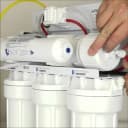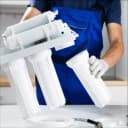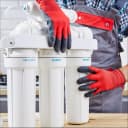
Water quality in Navsari varies depending on whether you're drawing from municipal supply, borewell, or community sources, and each comes with its own challenges. High hardness and elevated TDS levels are common across Gujarat's coastal regions, and these mineral loads place sustained stress on your Eureka Forbes water purifier's internal components. Regular servicing isn't optional — it's the foundation that ensures your system removes harmful contaminants, maintains safe drinking water standards, and avoids costly breakdowns.
This guide explains how Eureka Forbes RO service works in Navsari, what repair costs typically involve, and how to decide whether an AMC plan makes sense for your household.
Select Service

.webp&w=256&q=75)
Everything you need to know
Navsari's location in Gujarat means water handling varies from ward to ward. Some areas receive municipal piped supply, while others depend on borewell extraction or mixed sourcing during seasonal transitions. Each source carries different mineral loads and contamination profiles, which directly affects how hard your Eureka Forbes system works and how often components wear out.
Borewell water in Gujarat routinely carries TDS levels above 600 ppm, and hardness often exceeds 300 ppm — both well above safe drinking water standards. When your purifier processes water this mineral-rich, the RO membrane accumulates dissolved solids faster, filters clog more quickly, and pre-treatment stages bear extra load. A household drawing from a private borewell will require more frequent Eureka Forbes filter replacement and membrane servicing than one on municipal supply. Seasonal changes also matter: the post-monsoon period often brings higher suspended solids into local water sources, pushing purifier filters to capacity within weeks rather than months.
Before booking a technician, understanding your water source helps you communicate maintenance needs accurately and set realistic expectations for service intervals. If you've recently switched water sources or noticed a change in water appearance or taste, mentioning this during your service call ensures the technician recommends the right replacement schedule.
Your Eureka Forbes purifier doesn't announce its problems politely — you have to stay alert to subtle shifts in performance. Catching these early saves far more than ignoring them until failure forces an emergency call:
Any of these signs warrant a service call rather than waiting for the situation to worsen. A technician can diagnose the root cause and propose a straightforward repair rather than letting damage cascade into more expensive failures.
Service costs in Navsari depend on what actually needs fixing, not just a flat rate. Breaking down the cost structure helps you understand why different calls carry different prices:
Visit and diagnostic charges: A technician typically charges a call-out fee to arrive, inspect the unit, and identify problems. This is separate from any repair work.
Filter and component costs: Sediment filters, carbon filters, and RO membranes each carry distinct price points. The more components needing replacement during a single visit, the higher the overall cost. High-quality Eureka Forbes genuine filters cost more upfront than aftermarket alternatives, but they last longer and deliver better water quality.
Labour and specialization: Certain repairs — like pump replacement or storage tank cleaning — require more time and expertise than a straightforward filter swap. Technicians typically charge differently based on repair complexity.
Water source considerations: Households running their purifier on borewell water often face higher component costs because mineral-heavy water causes faster filter saturation and membrane scaling. The service provider should acknowledge this when quoting repair costs.
A reputable Eureka Forbes service provider in Navsari will provide a written quote or estimate before beginning any paid work, breaking down visit charges, parts, and labour separately. This transparency lets you decide whether to proceed or ask about alternatives like AMC plans that lock in costs.
An AMC plan bundles regular servicing and most component replacements into a single annual fee. For many Navsari households, particularly those on borewell supply or with high water consumption, this structure proves considerably cheaper than paying for each repair individually.
You pay a fixed annual fee, and the provider includes a set number of service visits (usually 2 to 4 per year), filter replacements as part of the schedule, and priority repair booking when breakdowns occur. Parts and labour are covered up to the plan's terms. Once the contract year ends, you renew at a similar or slightly adjusted rate.
If your Eureka Forbes purifier is past the manufacturer's warranty period, if you run the unit daily on high-TDS borewell water, or if your household consumes large quantities of filtered water, the predictable costs and regular maintenance visits of an AMC plan usually work out cheaper over twelve months than ad-hoc service calls. The added benefit of priority booking during peak seasons — when technicians are booked solid and you're most likely to face unexpected downtime — is particularly valuable in Gujarat's summer months.
If your purifier is brand new and covered under the manufacturer's warranty, adding an AMC immediately may be redundant. Similarly, light users in small households, or anyone planning to replace their unit within a year, might find that pay-per-visit servicing costs less overall.
Before committing to an AMC plan, confirm exactly what it covers and what costs extra. Some plans cap the number of filter replacements per year, while others charge separately for specific components or emergency visits outside business hours.
Filter replacement is the backbone of Eureka Forbes RO maintenance. Knowing when to replace each stage helps you avoid performance drops and contamination risks:
Sediment pre-filter (first stage): In Navsari's high-TDS water environment, this filter typically needs replacement every 3 to 5 months. It traps sand, rust particles, and visible impurities before they reach finer stages. High borewell water loads accelerate this timeline significantly.
Carbon filter (second stage): Replace every 5 to 7 months. This component removes chlorine (if your water is municipally treated), odors, and organic compounds. Water from mineral-rich sources may need more frequent carbon filter changes to maintain taste quality.
RO membrane (core filtration): The critical component that removes dissolved salts and contaminants. Expected lifespan ranges from 12 to 18 months for typical Navsari borewell water conditions, but can shorten to 8 to 12 months if TDS levels are exceptionally high. This is where costs add up fastest because a quality RO membrane is expensive to replace.
Post-carbon filter (final stage): Usually replaced every 10 to 12 months. It polishes water one last time before delivery to your tap.
Staying ahead of filter replacement schedules isn't just about keeping water clean — it's also cheaper. A membrane that operates past its effective life eventually allows dissolved solids to breakthrough, degrading your water quality without you realizing it immediately. Regular replacement prevents this silent failure mode.
Once you've decided to schedule service, a few steps make the visit efficient and productive:
Contact a service provider by phone or through their booking app or website. Be prepared to describe your symptoms — slow flow, taste changes, leaks, or unusual sounds — and mention your water source if you know it (municipal, borewell, mixed). This helps the technician arrive with the right parts or at least set expectations about what might be needed.
If you're unsure when the purifier was last serviced, try to locate the service receipt or invoice from the previous visit. Technicians use this information to assess whether maintenance is overdue and whether to recommend an additional cleaning or deeper inspection. Even an approximate date — "sometime last monsoon" — provides useful context.
Ensure the technician has access to the unit and adequate space to work. The purifier should have inlet water available for testing after repairs, so avoid turning off your water supply during the appointment.
Stay present during the visit if possible. This lets you ask questions about what's being replaced, understand the root cause of any issues, and confirm the purifier is functioning correctly before the technician leaves. A good Eureka Forbes service provider welcomes this engagement and explains findings without technical jargon.
Service visits focus on fixing immediate problems, but several habits between calls protect your investment and reduce future repair frequency:
Avoid letting the purifier run when inlet pressure is very low or absent. This strains the pump and can cause premature wear. During water supply interruptions — common in some Navsari areas — it's wise to switch off the unit or close the inlet valve to prevent dry running.
Keep the area around your Eureka Forbes system clean and well-ventilated. Dust and debris accumulating around the unit can block air intake, causing internal components to overheat. This is particularly important during Navsari's hot summer months when ambient temperatures are already elevated.
The storage tank benefits from occasional external cleaning. Over months of operation, sediment can settle in the tank bottom even with good pre-filtration. A technician can drain and flush the tank during a service visit, but checking the tank visually once or twice a year helps you catch excessive buildup early.
If your purifier has indicator lights or a digital display showing filter life, TDS levels, or tank status, take these seriously. These features exist specifically to flag maintenance needs before problems become visible.
At some point, an aging purifier reaches a threshold where repair costs approach the price of buying new. Understanding this helps you make a rational decision rather than throwing money at a failing unit.
If your Eureka Forbes system is over 8 to 10 years old and requires a major component replacement — particularly a new pump or a complete membrane assembly plus extensive cleaning — adding that cost to your existing AMC fees or accumulated service bills over the years should prompt a replacement conversation. Newer models often come with better membrane efficiency, lower water wastage, and improved filtration stages suited to contemporary water quality challenges in Gujarat.
Conversely, a purifier that's 3 to 5 years old and needs a membrane replacement is almost certainly worth fixing. Membrane cost, while significant, is predictable and the unit has years of useful life remaining. The repair math works in your favor.
Your service provider can help frame this decision by providing honest information about repair likelihood going forward. If they tell you that a particular component failure often signals broader system aging and further expensive issues are likely soon, that's valuable input for your replacement decision.
What makes us different
Water quality in Navsari varies depending on whether you're drawing from municipal supply, borewell, or community sources, and each comes with its own challenges. High hardness and elevated TDS levels are common across Gujarat's coastal regions, and these mineral loads place sustained stress on your Eureka Forbes water purifier's internal components. Regular servicing isn't optional — it's the foundation that ensures your system removes harmful contaminants, maintains safe drinking water standards, and avoids costly breakdowns.
This guide explains how Eureka Forbes RO service works in Navsari, what repair costs typically involve, and how to decide whether an AMC plan makes sense for your household.
Step-by-step guidance
Don't wait! Get the at the most competitive rates. Contact rocareindia today for a free consultation and quote.
Real repairs · Real customers · Real results

Verified Professionals

Work Assurance

On-Time Support

Covid-19 Safety
Find answers to common questions about our services
Find our nearby franchise stores in your city
Pure water, delivered.