Kachchh's groundwater comes with inherent challenges. Borewell water in the region carries elevated Total Dissolved Solids (TDS) — often well above 1500 ppm in many areas — and significant mineral hardness, particularly calcium and magnesium salts. This is not a weakness of any single household's well; it's a characteristic of the region's geology and proximity to saline influences. An Eureka Forbes RO purifier working in these conditions faces far more mineral load than units operating on municipal supply in other cities.
Monsoons introduce another layer of stress. During the rainy season, borewell water turbidity increases sharply, and pre-filters clog faster than they would in drier months. Between seasonal water-table fluctuations and the accumulated salt residue from Kachchh's arid climate, a purifier that might run for months without attention elsewhere needs more frequent checks and filter replacements here. Ignoring this leads to scale buildup inside the RO membrane, reduced flow, and in severe cases, complete system failure during peak usage in summer.
Select Service

.webp&w=256&q=75)
Everything you need to know
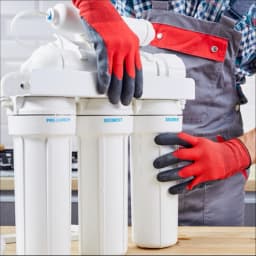
When TDS levels are consistently high, every stage of your Eureka Forbes water purifier works harder than standard design assumptions. The sediment pre-filter, which would normally last 5–6 months on municipal supply, can become saturated in 3–4 months on high-TDS borewell water. The carbon filter, designed to improve taste and remove chlorine, also captures some of the mineral and salt particles in hard water — accelerating its depletion. Most critically, the RO membrane itself becomes the bottleneck. Over months of forcing saline-heavy water through microscopic pores, scale deposits form. The membrane's rejection rate drops, output water flow diminishes, and eventually, the unit produces water that's only marginally better than the source.
This is not a defect in the purifier. It's the inevitable outcome of high-TDS operation without appropriate servicing intervals. Households across Kachchh that maintain regular Eureka Forbes RO service see their units perform consistently. Those that skip service face sharp drops in water quality, increased waste (RO creates reject water, and high TDS means higher reject ratios), and the prospect of membrane replacement — one of the most expensive maintenance steps — much sooner than expected.
Unlike cities with year-round stable municipal supplies, Kachchh experiences marked seasonal variation. Understanding this pattern helps you schedule maintenance strategically:
Planning your Eureka Forbes service around these seasonal windows reduces the chance of urgent breakdowns and helps the technician prioritize your call when multiple households need attention simultaneously.
High-TDS and hard-water environments produce diagnostic clues that differ slightly from what other regions might see. Watch for these indicators:
Any of these signs warrant a prompt call to an Eureka Forbes service provider, rather than waiting to see if the problem resolves on its own.
The cost of servicing your Eureka Forbes purifier depends on several factors that are particularly relevant in Kachchh's context:
Parts replacement frequency. High-TDS water means pre-filters and carbon filters wear out faster here than in other regions. A technician may need to replace two or three filter stages in a single visit, whereas in lower-TDS areas, only one stage might need changing. This increases the parts cost per visit.
Membrane replacement cycles. Standard guidance is that an RO membrane lasts 12–24 months. In Kachchh, where TDS levels are extreme and seasonal turbidity spikes occur, membranes often need replacement every 12–18 months, or even sooner if pre-filter maintenance has slipped. Membrane replacements are among the higher-cost service items.
Tank sanitization and scale removal. If the purifier has been running for extended periods on high-TDS water, mineral scale accumulates inside the storage tank and distribution lines. Removing this buildup requires additional labor and sometimes chemical cleaning, which is a separate charge from routine filter replacement.
Service visit location. Kachchh is geographically dispersed. A technician traveling from Bhuj to a remote village household may charge a higher visit fee or travel surcharge than a call within city limits. Confirm this detail with the service provider when you book.
Warranty status and AMC coverage. If your Eureka Forbes purifier is under active AMC coverage or manufacturer warranty, most filter replacements and routine repairs are either free or charged at a flat rate, regardless of local cost variations.
Request a written quote that itemizes visit charges, parts costs, and labor before the technician begins work. This is especially important in Kachchh, where service costs can vary due to local geography and water conditions.
An Annual Maintenance Contract (AMC) restructures the costs of owning an Eureka Forbes purifier in a high-TDS region from unpredictable to predictable. Here's why it matters:
For most Kachchh households drawing on borewell water with high TDS, an AMC plan becomes cost-effective within the first 18–24 months. Compare plans based on the number of included service visits, whether filter replacements are unlimited or capped, and whether tank cleaning is included. A plan specifying quarterly visits makes sense here; a plan with only two visits annually may leave you between scheduled services during critical monsoon or summer months.
Filter replacement is where theory meets practice in Kachchh's water conditions. Generic timelines published by manufacturers assume average water hardness and TDS. Your timeline will likely be more aggressive:
Sediment pre-filter (Stage 1). Standard guidance is 5–6 months. In Kachchh, plan for replacement every 3–4 months during monsoon season and every 4–5 months during other months. If your borewell water is particularly silty (common after monsoon), you may need replacement even sooner. Ignoring a saturated pre-filter puts excessive load on downstream stages and accelerates membrane wear.
Carbon filter (Stage 2). Usually recommended at 6–8 months. In high-TDS borewell water, carbon filters become exhausted within 5–6 months because they're absorbing mineral particles and sediment, not just chlorine. You'll notice taste degradation as a signal that this stage is due for replacement.
RO membrane (Stage 3). This is the critical component. Standard membrane life is 12–24 months; in Kachchh, estimate 12–18 months for normal usage on high-TDS water. If your pre-filters have been neglected and the membrane has been exposed to excess sediment and mineral load, lifespan may be as short as 10–12 months. Membrane replacement is a significant cost, so staying on top of pre-filter maintenance directly protects this expensive component.
Post-carbon filter (Stage 4, if your model has one). Typically annual replacement. This filter does final polishing and is less stressed than earlier stages, so annual replacement usually holds true even in Kachchh.
Set calendar reminders based on your last service date, not on the purifier's indicator lights alone. High-TDS environments mean indicator lights can be misleading — they may suggest a filter is still usable when local water conditions actually demand earlier replacement. A conservative approach (replacing filters slightly ahead of the standard timeline) costs less than a reactive approach (waiting for water quality to degrade, then rushing a technician call).
When you need to book a service appointment, several options are available. The official Eureka Forbes customer care number is useful for warranty-related queries, product registration, and checking coverage before you pay for a repair. However, for routine maintenance and filter replacements in Kachchh, independent technicians who specialize in Eureka Forbes systems often provide faster response times. These technicians typically hold service authorization and can perform AMC-covered work just as effectively as official channels.
The key is to clarify upfront whether your issue is warranty-related (which should go through official support) or routine maintenance (which can be handled by authorized independent technicians). Knowing this distinction speeds up the booking process and ensures you're routed to the right provider. During peak monsoon season, when multiple households experience simultaneous pressure or flow issues, authorized technicians may have longer wait times regardless of the channel — another reason why scheduling preventive service before these periods becomes attractive.
Understanding the service process helps you evaluate quality and spot any steps that are skipped:
Water testing and initial assessment. The technician measures TDS levels and flow rate before any work begins. This baseline helps identify whether the issue is pre-filter saturation, membrane fouling, or something else entirely. In Kachchh, TDS testing is especially important — it tells you whether the purifier is still effectively reducing your borewell water's salinity.
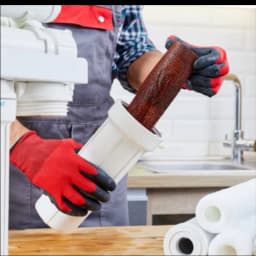
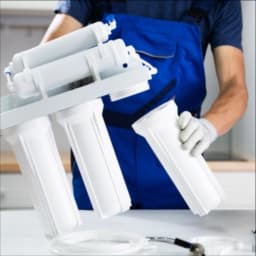
Visual inspection of all stages. The technician opens the purifier and examines each filter cartridge and the membrane for discoloration, mineral deposits, or visible clogging. High-TDS systems often show white or yellowish scale deposits on the membrane surface; this is a clear signal that mineral buildup has occurred. At this stage, the technician explains what they're seeing and what needs replacement.
Tank and line sanitization. Before installing new filters, the internal tank and distribution lines are rinsed and sanitized. This step is critical in Kachchh because the combination of high TDS and warm temperatures creates conditions where bacterial colonies can form. Skipping this step means fresh filters sit in a contaminated tank, which defeats the purpose of service.
Component replacement with customer approval. New filters and any other parts are installed only after you've approved the list. This prevents surprise charges and ensures you're not paying for parts you don't need.
Final quality check. After reassembly, the technician runs the purifier for several minutes, measures flow rate and TDS again, and confirms that water taste is neutral. This final step confirms that the service actually improved your water quality, not just ticked off a checklist.
Documentation and next service date. A receipt and service record should be provided, including the date of service, what was replaced, and when you should next expect a visit. Keep this somewhere visible — it's your reference for staying on schedule.
Kachchh's water is harder and saltier than most of India. This is simply the reality of the region's geology, and it requires a different approach to purifier maintenance than cities with municipal supply. An Eureka Forbes system installed here needs more frequent filter changes, more vigilant tank sanitization, and a service plan that accounts for seasonal stress. The upside is that this level of attention is entirely manageable. Hundreds of Kachchh households maintain consistent access to clean, low-TDS drinking water by staying proactive about servicing.
Choose a service provider — whether an authorized Eureka Forbes channel or a qualified independent technician — based on their understanding of local water conditions and their willingness to explain what they're seeing inside your unit. Ask whether they regularly service Eureka Forbes purifiers on borewell water with high TDS. If they hesitate or brush off the question, look elsewhere. A technician who understands Kachchh's specific challenges will diagnose faster, recommend appropriate service intervals, and help you avoid the cycle of neglect-and-breakdown that plagues many households here.
What makes us different
Kachchh's groundwater comes with inherent challenges. Borewell water in the region carries elevated Total Dissolved Solids (TDS) — often well above 1500 ppm in many areas — and significant mineral hardness, particularly calcium and magnesium salts. This is not a weakness of any single household's well; it's a characteristic of the region's geology and proximity to saline influences. An Eureka Forbes RO purifier working in these conditions faces far more mineral load than units operating on municipal supply in other cities.
Monsoons introduce another layer of stress. During the rainy season, borewell water turbidity increases sharply, and pre-filters clog faster than they would in drier months. Between seasonal water-table fluctuations and the accumulated salt residue from Kachchh's arid climate, a purifier that might run for months without attention elsewhere needs more frequent checks and filter replacements here. Ignoring this leads to scale buildup inside the RO membrane, reduced flow, and in severe cases, complete system failure during peak usage in summer.
Step-by-step guidance
Don't wait! Get the at the most competitive rates. Contact rocareindia today for a free consultation and quote.

Verified Professionals

Work Assurance

On-Time Support

Covid-19 Safety
Find answers to common questions about our services
Find our nearby franchise stores in your city
Pure water, delivered.