Select Service

.webp&w=256&q=75)
Everything you need to know
Water drawn from borewells in and around Dahod typically carries high dissolved solids and mineral hardness. Unlike surface water treatment plants that centralize filtration, borewell water comes directly to your home with all its mineral load intact. This means the filters and membrane in your Eureka Forbes purifier work harder than in areas with municipal supply, and they wear out more quickly as a result.
During the monsoon season, water turbidity increases — rain runoff carries silt and organic matter into the groundwater. Many households in Dahod notice their purifiers slowing down or their water taking on a faint color during these months. These aren't signs of purifier failure; they're signals that filter saturation is happening faster than it would under normal conditions. Understanding this relationship between local water and purifier performance helps you schedule maintenance correctly and avoid unnecessary panic calls.
The sediment and carbon filters that come before the RO membrane do most of the heavy lifting in a hard-water environment. They trap minerals, salts, and particulates that would otherwise clog the membrane and reduce its lifespan dramatically. In Dahod's water conditions, these pre-filters don't last as long as the manufacturer's standard estimates suggest.
A purifier in Delhi or Bangalore might get 6 months from a sediment filter in normal tap water. In Dahod, with borewell sourcing and higher TDS levels, that same filter might need replacement after 4 to 5 months. The RO membrane — the most expensive component — faces similar acceleration. Where a membrane might typically last 18 to 24 months, hard water can shorten that to 12 to 18 months or less if the pre-filters aren't changed on schedule.
This isn't a defect in Eureka Forbes purifiers. It's a straightforward consequence of treating harder water. Planning your service visits and budget around this reality prevents surprise breakdowns and keeps costs manageable.
Watch for these specific signals that Eureka Forbes RO service is due sooner rather than later:
Any of these warrants calling an Eureka Forbes technician. Waiting for the purifier to stop working entirely usually means a more expensive repair than catching the issue early.
When you need an Eureka Forbes RO repair, several factors determine whether you get a quick, fair-priced service visit or a frustrating experience:
Finding a technician who knows hard water issues: Not every repair person understands how Dahod's mineral-heavy borewell water affects purifier maintenance differently than softer water regions. A technician familiar with local water conditions can diagnose problems faster and recommend the right service schedule rather than guessing.
Proximity and response time: The Dahod area has neighborhoods spread across different zones. A service provider with technicians distributed across the city can often reach you within 24 hours. Providers based outside the city may take 2 to 3 days, which leaves your household without safe drinking water for longer.
Quality of spare parts: Genuine Eureka Forbes filters and membranes cost more upfront but last longer and protect water quality better than third-rate alternatives. Ask whether the technician carries stock that matches your specific purifier model, not just generic "RO filters" that might not fit properly.
Transparent billing: A trustworthy provider gives you an estimate before starting work and explains why each part is needed. This approach avoids surprise bills and lets you decide whether to proceed with repairs or seek a second opinion.
Service costs vary based on what actually needs fixing. A simple sediment filter replacement differs greatly from a full membrane change or a pump repair, and local labor rates affect pricing as well.
Typically, a service visit charge covers the technician's time for diagnosis and basic work. Filter replacements are then billed separately — sediment and carbon filters are cheaper than an RO membrane. If the technician discovers internal wear, corrosion, or leaking seals, those repairs add to the total. Asking for an itemized bill before and after the work protects you from confusion.
For households with Eureka Forbes purifiers still under manufacturer warranty, many repairs are subsidized or covered entirely, which significantly reduces out-of-pocket cost. Always confirm warranty status before booking a paid service visit, since checking this up front saves money.
An AMC plan bundles routine servicing and filter replacements into a single annual fee. For Dahod households, this often pays for itself because the hard water conditions mean more frequent maintenance is actually necessary — not optional.
Reasons to choose an AMC: You get scheduled visits every 3 to 4 months instead of waiting for a breakdown. Filter replacement happens on schedule rather than delayed by cost concerns. You avoid the uncertainty of not knowing when the next service bill is coming. During peak demand periods like monsoon, AMC members often get priority booking.
Reasons to skip an AMC: If your purifier is brand new and covered by manufacturer warranty, you probably don't need an AMC yet. If you use the unit very lightly (single person living alone, for instance), or if you're planning to replace it within a year, separate pay-per-visit servicing might work better financially.
The key is reading what an AMC actually covers. Some plans include unlimited service visits and filter replacements up to a certain value per year. Others charge separately for parts. Clarifying this before signing prevents disappointment when you actually need work done.
In Dahod's mineral-heavy water environment, standard filter replacement timelines need adjustment:
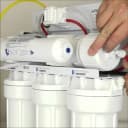
Sediment pre-filter: Typically 4 months instead of the standard 6 months. This filter protects everything downstream, and in hard water it saturates faster.
Carbon filter: Every 5 to 6 months. It removes not just chlorine but also some dissolved minerals that would otherwise damage the membrane.
RO membrane: Every 12 to 18 months depending on water TDS readings. Hard water accelerates mineral scaling on the membrane, so replacing it more frequently than the textbook suggests is realistic for Dahod.
Post-carbon filter: Every 8 to 10 months. This polishing stage works harder in mineral-rich water environments.
Keeping a simple record of your last service date helps you stay on schedule. Delaying any of these replacements in hopes of saving money usually backfires — a membrane damaged by overuse costs far more to replace than staying ahead of the maintenance calendar.
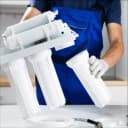
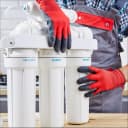
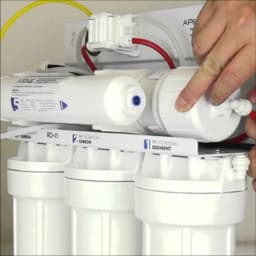
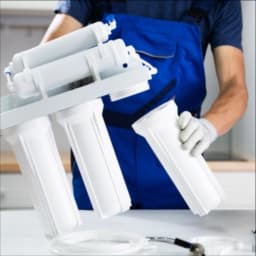
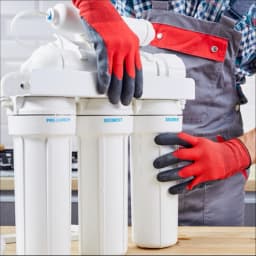
A thorough Eureka Forbes technician follows a structured process rather than just replacing whatever seems most likely to be faulty:
A complete visit typically takes 1 to 2 hours. If the technician is in and out in 15 minutes, they're probably not doing a thorough job.
For warranty-related queries or to register your purifier, the Eureka Forbes customer care line can answer most questions. However, this official line often experiences delays during peak seasons. For urgent repairs, same-day or next-day service, and routine filter changes, many Dahod households find independent trained technicians faster to reach.
The best approach is knowing which channel serves which need: contact official customer care for warranty claims and product registration; reach out to local technicians for routine servicing and filter replacements. This way you get professional help where it's most efficient.
An Eureka Forbes purifier remains reliable in Dahod if you stay disciplined about maintenance. The hard water doesn't break the system — neglect does. Following the maintenance schedule for hard water areas, choosing a trustworthy technician who understands local water challenges, and not delaying filter replacements because of cost are the three habits that pay back directly in purifier lifespan and water quality.
Planning ahead — whether that's setting a reminder for filter changes, budgeting for an AMC plan, or keeping a trusted technician's contact information handy — costs far less than dealing with emergency repairs when your purifier suddenly stops working and your household is left without safe drinking water.
What makes us different
Dahod's groundwater presents specific challenges — high mineral content and fluctuating quality during monsoon months put extra stress on RO systems. Eureka Forbes water purifiers handle these conditions well, but only when they receive consistent, proper maintenance suited to local water characteristics.
This guide explains how to maintain your Eureka Forbes unit in Dahod, what service actually costs, how to recognize when your purifier needs professional attention, and whether an AMC plan makes sense for your household.
Step-by-step guidance
Don't wait! Get the Best water purifier service at the most competitive rates. Contact rocareindia today for a free consultation and quote.

Verified Professionals

Work Assurance

On-Time Support

Covid-19 Safety
Find answers to common questions about our services
Pure water, delivered.