
RO Plant vs Water Purifier: Best Choice for Your Needs
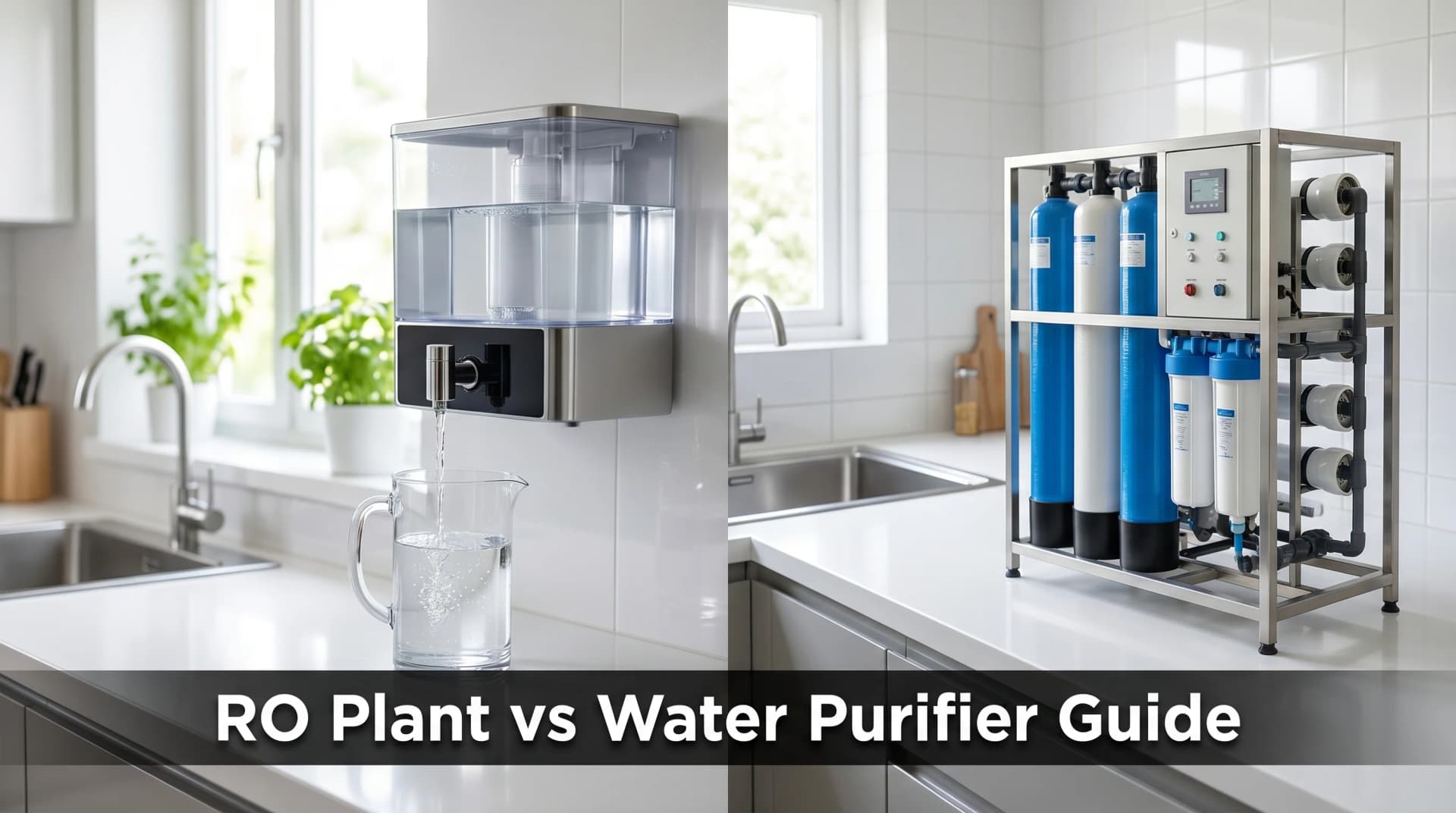
Understanding the Right Water Purification Solution for Your Requirements
Clean drinking water remains one of the most critical necessities for every household and business establishment across India. With increasing concerns about water contamination and the presence of dissolved impurities, choosing an appropriate purification system has become more important than ever. Many people find themselves confused between installing a standard water purifier or opting for a larger capacity RO plant system. This decision significantly impacts not just the quality of water you consume but also influences operational costs, maintenance requirements, and overall convenience.
The fundamental difference between these two options lies primarily in their capacity, application scope, and the scale of purification they offer. While a conventional water purifier typically serves individual households with limited daily water requirements, an ro plant caters to commercial establishments, residential societies, and larger families requiring substantial volumes of purified water throughout the day. Understanding these distinctions helps you make an informed decision that aligns perfectly with your specific consumption patterns and budget considerations.
In metropolitan areas like Gurgaon, where water quality varies considerably across different sectors and the demand for purified water continues rising, selecting the appropriate system becomes even more crucial. Whether you are managing a corporate office, running a restaurant, overseeing a housing society, or simply managing a large household, the choice between these systems will determine your water security for years to come. Each option brings distinct advantages, challenges, and service requirements that deserve careful evaluation.
This comprehensive guide walks you through everything you need to know about both water purification options. By examining capacity considerations, maintenance needs, cost implications, and service availability, you will gain clarity on which system best serves your requirements. The insights shared here draw from real-world experiences of thousands of users across India who have navigated this decision and discovered solutions that work perfectly for their unique situations.
Capacity Considerations and Daily Water Requirements
The most significant factor distinguishing a standard water purifier from an ro plant is the volume of water each system can process daily. Typical household water purifiers produce anywhere between 10 to 20 litres per hour, which adequately serves families of four to six members. These compact units fit conveniently under kitchen counters or mount on walls, providing purified water primarily for drinking and cooking purposes. However, when your daily consumption exceeds 200 litres, these standard units struggle to keep pace with demand, leading to waiting times and potential inconvenience.
A 500 lph ro plant, conversely, processes approximately 500 litres every hour, translating to roughly 12,000 litres daily when operated continuously. This substantial capacity makes it ideal for commercial kitchens, hospitals, educational institutions, hotels, corporate cafeterias, and residential complexes housing multiple families. The system ensures a constant supply of purified water without the frequent refilling cycles that smaller purifiers require. For businesses in Gurgaon's commercial hubs, where employee strength often exceeds 100 people, such high-capacity systems become essential rather than optional.
Space requirements also differ dramatically between these options. While home purifiers occupy minimal space, a 500 lph ro plant demands a dedicated installation area, often requiring a small room or designated section of a utility area. The system includes multiple filtration stages, storage tanks, booster pumps, and control panels that collectively require professional installation and proper ventilation. This spatial consideration becomes particularly relevant in urban settings where every square foot carries premium value.
Maintenance frequency and service requirements vary proportionally with capacity. Standard purifiers typically need filter changes every six to twelve months, a task many homeowners manage independently or with quick technician visits. An ro plant service, however, demands more comprehensive attention, including membrane cleaning, multi-stage filter replacements, sanitization protocols, and performance monitoring. Establishing a relationship with reliable service providers ensures uninterrupted operation and maintains water quality standards consistently.
Technology and Purification Efficiency Comparison
Both systems employ reverse osmosis technology as their core purification method, forcing water through semi-permeable membranes that remove dissolved salts, heavy metals, bacteria, viruses, and other contaminants. However, the sophistication level and additional features differ considerably. Home purifiers often combine RO with UV purification and activated carbon filters, creating a multi-barrier approach suitable for moderately contaminated municipal water supplies. These systems typically achieve TDS reduction from input levels of 500-2000 ppm down to safe drinking levels of 50-150 ppm.
An ro plant incorporates more advanced pre-treatment stages, including sand filters, carbon filters, and sometimes water softeners that protect the expensive RO membranes from premature fouling. The system operates with industrial-grade components designed for continuous operation rather than intermittent use. Automated controls monitor inlet water quality, adjust pressure levels, and trigger cleaning cycles based on performance parameters. This automation ensures consistent output quality regardless of variations in source water characteristics.
Recovery rates present another critical distinction. Standard purifiers typically recover about 25 to 30 percent of input water as purified output, rejecting the remainder as waste containing concentrated impurities. While this ratio remains acceptable for household use, commercial applications demand better efficiency. Modern ro plant installations achieve recovery rates of 40 to 50 percent through optimized membrane configurations and proper pre-treatment, significantly reducing water wastage while maintaining purification standards. For establishments in water-scarce regions, this improved efficiency translates directly into cost savings and environmental responsibility.
The lifespan of major components also varies between these systems. Home purifier membranes typically last two to three years with proper maintenance, while industrial ro plant membranes, though more expensive, often function effectively for four to six years when supported by adequate pre-treatment and regular cleaning protocols. This extended operational life, combined with modular design allowing component-level replacements, makes larger systems more economical over extended periods despite higher initial investments.
Cost Analysis and Economic Viability
Initial investment forms the first consideration in any purchasing decision. Standard water purifiers for homes range between 8,000 to 25,000 rupees depending on brand, capacity, and features included. Installation typically requires minimal professional assistance, and many users complete setup independently following manufacturer instructions. These modest upfront costs make purifiers accessible to most households, explaining their widespread adoption across Indian homes.
A 500 lph ro plant represents a substantially larger investment, typically ranging from 2,50,000 to 6,00,000 rupees based on configuration, automation level, and additional features like online monitoring or storage capacity. Professional installation adds another 50,000 to 1,00,000 rupees, covering civil work, electrical connections, plumbing, and commissioning. While these numbers might seem daunting initially, calculating the per-litre cost over the system's operational lifetime often reveals surprising economics favouring larger installations for high-consumption scenarios.
Operating costs include electricity consumption, consumables, and periodic maintenance. Home purifiers consume approximately 25 to 60 watts during operation, adding negligible amounts to monthly electricity bills. Annual maintenance, including filter replacements and service visits, typically costs between 3,000 to 6,000 rupees. An ro plant consumes considerably more power, often requiring 3 to 5 kilowatts for pumps and controls, translating to significant electricity expenses. However, when divided across thousands of litres produced daily, the per-litre cost often remains competitive with bottled water or multiple smaller purifiers.
Service accessibility constitutes another economic consideration often overlooked during initial evaluations. Finding ro plant service providers becomes easier in metropolitan areas like Gurgaon where commercial installations are common. These cities host trained technicians familiar with industrial water treatment systems, ensuring prompt response during breakdowns and regular preventive maintenance. Smaller towns might face challenges accessing qualified service personnel, potentially increasing downtime and operational disruptions. Evaluating local service infrastructure before committing to larger systems prevents future frustrations and ensures system reliability.
Types of Water Purification Systems Available
Water purifiers come in several configurations suited to different water quality conditions and household preferences. RO purifiers dominate markets where TDS levels exceed 500 ppm, effectively removing dissolved salts along with microbiological contaminants. UV purifiers work best with low TDS water, using ultraviolet radiation to kill bacteria and viruses without altering mineral content. Combination RO plus UV systems offer comprehensive protection, addressing both dissolved and microbiological impurities simultaneously. Gravity-based purifiers, though less common now, still serve areas without reliable electricity, using activated carbon and UF membranes for basic purification.
Industrial ro plant installations vary based on application requirements and scale. Packaged ro plant systems arrive as pre-assembled units requiring minimal site work, ideal for businesses needing quick deployment. Custom-designed plants incorporate specific pre-treatment stages, storage capacities, and distribution networks tailored to unique requirements. Containerized plants house complete systems within shipping containers, offering portability for temporary installations or remote locations. Each configuration addresses specific operational challenges while delivering consistent purification performance.
Specialized variants address particular water quality challenges prevalent in different regions. Iron removal plants incorporate oxidation and filtration stages eliminating ferrous contamination common in groundwater sources. Brackish water plants handle high TDS levels found in coastal and arid regions, employing energy recovery devices improving efficiency. Ultrapure water systems serve pharmaceutical and electronics manufacturing facilities requiring exceptionally low conductivity levels. Understanding these specialized options helps businesses select systems matching their precise water quality objectives.
Making the Right Choice for Your Situation
Selecting between a standard purifier and an ro plant ultimately depends on accurately assessing your daily water consumption patterns, available space, budget constraints, and long-term requirements. Households consuming less than 50 litres daily for drinking and cooking find standard purifiers perfectly adequate and economical. Joint families, guest houses, small offices, or cafes with consumption between 100 to 500 litres daily might consider multiple purifiers or small-capacity commercial systems. Establishments requiring over 1,000 litres daily definitely benefit from dedicated ro plant installations offering economies of scale.
Water quality testing provides essential data guiding this decision. Obtaining comprehensive analysis reports from certified laboratories reveals TDS levels, hardness, bacterial contamination, and presence of specific contaminants like arsenic, fluoride, or nitrates. This information determines the purification technology needed and helps estimate operational costs accurately. Many ro plant in gurgaon installations begin with detailed water audits ensuring the proposed system addresses actual contamination challenges rather than applying generic solutions.
Future scalability deserves consideration during initial planning. Businesses experiencing growth might initially install a 500 lph ro plant while preparing infrastructure for capacity expansion later. Modular systems allow adding parallel treatment trains doubling or tripling capacity without replacing existing equipment. This phased approach manages capital expenditure while ensuring water supply keeps pace with organizational growth. Residential societies might start with smaller capacity plants, expanding as more residents connect to centralized purified water distribution networks.
Professional consultation from water treatment specialists helps navigate these complex decisions. Experienced consultants assess your specific situation, conduct site surveys, recommend appropriate systems, and connect you with reliable suppliers and service providers. Their expertise proves invaluable, especially for first-time commercial installations where mistakes prove costly. Investing time in proper planning and expert guidance ensures your chosen system delivers safe, adequate water supplies reliably for years ahead.
FAQ
Q - What is the main difference between a household water purifier and an RO plant for commercial use?
A - The primary difference lies in their processing capacity and intended application scale. A household water purifier typically produces 10-20 litres per hour, suitable for families of 4-6 members for drinking and cooking needs. An RO plant, on the other hand, can process 500 litres or more per hour, making it ideal for commercial establishments, residential societies, restaurants, or large families requiring substantial daily volumes. The RO plant also requires more space, professional installation, and regular maintenance compared to compact household units that can be wall-mounted or placed under kitchen counters.
Q - How do I determine whether my water consumption needs require a standard purifier or an RO plant?
A - Start by calculating your daily purified water requirement across all uses. If your household consumes less than 200 litres of purified water daily (primarily for drinking and cooking), a standard household purifier will suffice. However, if you run a business, manage a residential society, operate a restaurant, or have a large joint family consuming more than 200 litres daily, an RO plant becomes necessary. Consider peak demand periods as well – commercial establishments often need continuous supply throughout working hours, which only higher-capacity systems can provide without interruption.
Q - Are maintenance requirements significantly different between these two water purification systems?
A - Yes, maintenance requirements differ considerably based on capacity and usage intensity. Household purifiers typically need filter replacements every 6-12 months and annual servicing, which homeowners can often schedule easily with local service providers. RO plants require more frequent professional attention due to higher water processing volumes, including regular membrane cleaning, pre-filter replacements, and monitoring of water quality parameters. Commercial RO plants often benefit from annual maintenance contracts to ensure uninterrupted operation and maintain water quality standards consistently.
Q - Does water quality in my area affect which purification system I should choose?
A - Absolutely, your local water quality is a crucial factor in system selection. If your water source has high total dissolved solids (TDS), hardness, or specific contaminants like heavy metals, you need to match the purification technology to these challenges regardless of choosing a household unit or RO plant. Areas with extremely poor water quality may require multi-stage purification, which both system types can offer but at different scales. It's advisable to get your water tested before making a purchase decision, as this helps you select a system with appropriate purification stages and capacity that addresses your specific water quality issues effectively.