
500 LPH RO Plant Buying Guide: Cost & Service in Gurgaon
How to Choose the Right Commercial Water Purification System for Your Gurgaon Business
Water quality concerns have reached critical levels across India's commercial sector, with businesses increasingly recognizing that inadequate water treatment can affect everything from employee health to product quality. In Gurgaon, where rapid industrialization and urbanization have placed tremendous pressure on water resources, commercial establishments face unique challenges in ensuring access to pure, safe drinking water. The groundwater in many parts of Gurgaon contains excessive dissolved solids, heavy metals, and microbial contamination that make advanced filtration systems not just desirable but absolutely essential.
For medium-sized commercial establishments, restaurants, corporate offices, educational institutions, and healthcare facilities, finding the right balance between capacity and efficiency becomes paramount. A system that processes too little water creates bottlenecks during peak usage hours, while oversized installations waste energy and increase operational expenses unnecessarily. Understanding your specific requirements, the local water quality parameters, and the long-term implications of your investment decision can mean the difference between a solution that serves your needs seamlessly and one that becomes a constant source of frustration.
The commercial water purification market in Gurgaon has evolved significantly in recent years, with technologies becoming more sophisticated and service networks expanding across the city. However, this abundance of options also creates confusion for buyers who must navigate technical specifications, varying price points, and conflicting claims from different providers. Making an informed decision requires understanding not just the immediate purchase price but the total cost of ownership, including installation, maintenance, consumable replacements, and the reliability of after-sales support.
This comprehensive guide walks you through everything you need to know about selecting, purchasing, and maintaining a commercial-grade water purification system suitable for establishments serving 200 to 400 people daily. Whether you are setting up a new facility or upgrading an existing system, the information presented here will help you make decisions that balance performance, reliability, and cost-effectiveness while ensuring compliance with drinking water safety standards.
Understanding Commercial Water Purification Capacity Requirements
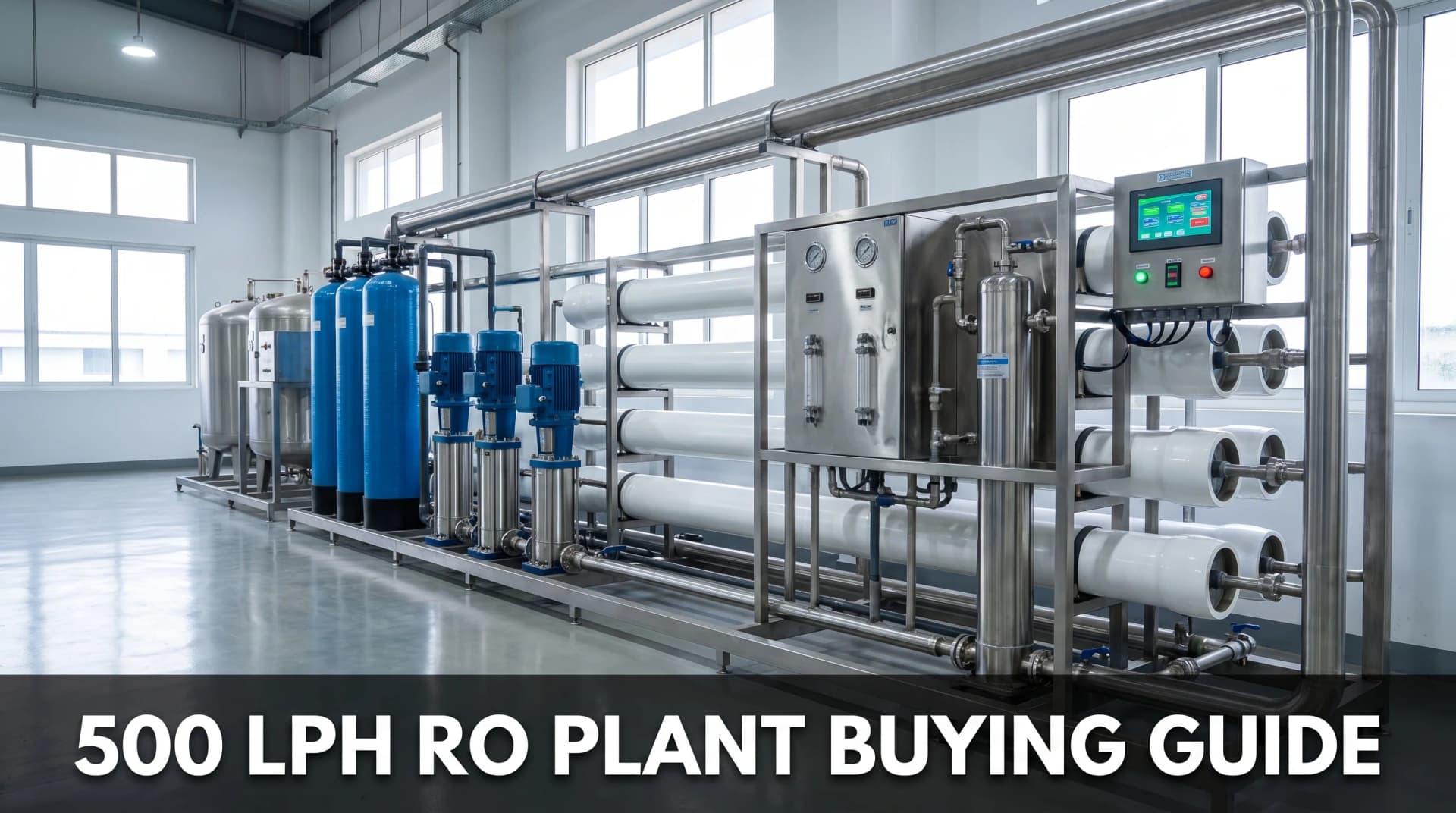
A ro plant designed for commercial applications differs fundamentally from residential systems in terms of capacity, build quality, and operational demands. The 500 lph ro plant represents a sweet spot for many medium-sized establishments, capable of producing approximately 8.3 liters per minute or 12,000 liters over a 24-hour operational cycle. This capacity typically serves businesses with 200 to 400 daily users comfortably, assuming average consumption patterns of 25 to 30 liters per person daily.
When evaluating your capacity needs, consider not just the number of people but usage patterns throughout the day. Restaurants experience sharp demand spikes during lunch and dinner hours, while corporate offices see concentrated usage during breaks and shift changes. Educational institutions need sufficient capacity to handle the rush between classes, and healthcare facilities require consistent availability around the clock. A properly sized system should handle peak demand without compromising water quality or creating waiting times that frustrate users.
The recovery ratio of your chosen system significantly impacts actual usable output. Most commercial systems operate at 30 to 40 percent recovery, meaning a 500 lph system actually processes considerably more raw water to produce the stated purified output. Understanding this relationship helps you calculate actual input water requirements and waste water management needs. In Gurgaon, where water conservation has become a regulatory concern, choosing systems with better recovery ratios can reduce both your environmental footprint and operational costs.
Storage capacity complements production capacity in determining overall system effectiveness. Most commercial installations include storage tanks ranging from 500 to 1000 liters, providing a buffer that handles demand fluctuations and maintains consistent supply even during maintenance windows. The combination of adequate purification capacity and properly sized storage ensures uninterrupted availability during operating hours.
Investment Considerations for Commercial RO Systems in Gurgaon
The ro plant cost in gurgaon varies significantly based on multiple factors including system capacity, component quality, automation level, and installation complexity. For a properly configured commercial system with 500 LPH capacity, buyers should expect investment ranging from 1,85,000 to 3,75,000 rupees in 2026. This wide range reflects differences in membrane quality, pump specifications, automation features, pre-treatment components, and the reputation of the supplier providing installation and support.
Entry-level systems in the lower price bracket typically feature basic components with manual controls and minimal automation. These systems require more operator attention, have shorter service intervals, and may use imported components of moderate quality. Mid-range options incorporate semi-automatic controls, better quality membranes with longer lifespans, and more robust pre-treatment systems that extend component life. Premium installations feature fully automatic operation with digital monitoring, high-efficiency pumps that reduce electricity consumption, and industrial-grade components designed for continuous operation.
Installation costs typically add 15,000 to 35,000 rupees to the base system price, depending on site preparation requirements, plumbing complexity, electrical work needed, and distance from the supplier's service center. Locations requiring extensive civil work, elevated tank installations, or integration with existing building management systems naturally incur higher installation expenses. When evaluating the ro plant in gurgaon market, request detailed quotations that separately itemize equipment, installation, commissioning, and initial consumables to enable accurate comparisons.
Beyond the initial purchase, consider the total cost of ownership over the system's expected lifespan of 7 to 10 years. Annual maintenance contracts typically cost 18,000 to 45,000 rupees depending on system complexity and service frequency. Membrane replacements every 2 to 3 years add 25,000 to 55,000 rupees per cycle. Pre-filter cartridges require replacement every 3 to 6 months at costs ranging from 3,500 to 8,000 rupees per set. Electricity consumption varies with system efficiency but averages 3 to 5 units per 1000 liters produced. Calculating these ongoing expenses helps you understand the true financial commitment beyond the initial purchase price.
Essential Features and Technical Specifications
Modern commercial water purification systems incorporate multiple stages of treatment to address the diverse contaminants found in Gurgaon's water supply. A complete system typically includes sediment pre-filters that remove suspended particles, activated carbon filters that eliminate chlorine and organic compounds, and the reverse osmosis membrane that removes dissolved salts, heavy metals, and microbiological contamination. Post-treatment often includes UV sterilization that provides an additional microbial safety barrier and pH adjustment to ensure the treated water meets palatability standards.
Automation level significantly impacts operational convenience and water quality consistency. Basic systems require manual monitoring of input water quality, production rates, and filter replacement timing. Semi-automatic systems incorporate automatic shut-off when storage tanks fill, low-pressure cut-offs that protect pumps, and production meters that track output. Fully automatic installations add real-time TDS monitoring, automatic membrane flushing cycles that extend membrane life, remote monitoring capabilities, and data logging that helps optimize operations and demonstrates compliance with safety standards.
Component quality determines reliability and longevity. High-pressure pumps should deliver consistent pressure across the operating range with minimal maintenance requirements. Membranes from reputable manufacturers provide specified rejection rates, predictable lifespans, and consistent performance. Food-grade materials throughout the system prevent contamination and ensure safety. Adequately sized pre-treatment protects expensive RO membranes from premature fouling, while properly designed post-treatment ensures the final product meets both safety and taste expectations.
Energy efficiency deserves careful consideration given the continuous operation typical in commercial settings. Variable frequency drives on high-pressure pumps can reduce electricity consumption by 20 to 30 percent compared to constant-speed motors. High-efficiency membranes reduce the pressure required for effective separation, lowering energy requirements. Smart controls that adjust production based on actual demand rather than running continuously provide additional savings. Over a system's operational lifetime, efficiency improvements often justify higher initial investment through reduced utility costs.
Maintenance and Service Support Infrastructure
The importance of reliable ro plant service cannot be overstated for commercial installations where water availability directly impacts business operations. Service requirements fall into three categories: routine maintenance that users can perform, scheduled professional service, and emergency repairs. Understanding what each entails helps you budget appropriately and select suppliers with adequate support infrastructure.
Routine maintenance includes daily visual inspections of pressure gauges and production rates, weekly cleaning of external surfaces and storage tanks, and monthly checking of connection points for leaks. Users should also monitor input water quality changes that might require adjusting pre-treatment protocols. Most commercial operators maintain a basic logbook tracking these parameters, helping identify developing issues before they cause system failures.
Scheduled professional service typically occurs quarterly or semi-annually depending on water quality and usage intensity. Technicians perform comprehensive system checks including membrane performance evaluation, pressure testing throughout the system, calibration of automated controls, replacement of pre-filter cartridges, sanitization of storage tanks, and verification that product water meets specified quality parameters. These visits provide opportunities to identify components approaching end-of-life and plan replacements before failures occur.
Emergency service availability becomes critical when systems experience unexpected failures during business hours. Suppliers with service centers in Gurgaon and adequate spare parts inventory can often restore operation within hours, while those operating from distant locations may require days to respond. When evaluating suppliers, inquire about guaranteed response times, spare parts availability, technician training levels, and after-hours support options. The cost differential between suppliers often reflects these service capabilities, with premium providers offering faster, more reliable support that minimizes costly downtime.
Conclusion
Selecting the right commercial water purification system requires balancing immediate costs against long-term performance, reliability, and operating expenses. The water purification market in Gurgaon offers numerous options across price points and capability levels, making informed decision-making essential for obtaining value from your investment. By carefully assessing your capacity requirements, understanding total ownership costs beyond purchase price, evaluating technical features that impact reliability and efficiency, and ensuring access to competent service support, you position your establishment for years of trouble-free operation. The initial effort invested in thorough evaluation and supplier selection pays dividends through consistent water quality, minimized downtime, controlled operating costs, and the peace of mind that comes from knowing your water supply meets the highest safety and quality standards.
FAQ
Q - What is the ideal daily water consumption capacity needed for a medium-sized office in Gurgaon?
A - For a medium-sized office with 200 to 400 employees, you typically need a system that can produce 12,000 liters per day, which translates to approximately 8.3 liters per minute. This capacity accounts for standard consumption patterns of 25 to 30 liters per person daily, including drinking water, pantry use, and other requirements. A 500 lph system operates efficiently for such establishments, ensuring adequate supply during peak usage hours without unnecessary energy waste. It's important to assess your specific usage patterns, including peak hours and seasonal variations, to ensure the system you choose matches your actual requirements.
Q - How does Gurgaon's water quality affect the choice of commercial water purification systems?
A - Gurgaon's groundwater often contains excessive dissolved solids, heavy metals, and microbial contamination due to rapid urbanization and industrial activity, making advanced filtration essential for commercial establishments. The specific contaminants in your area determine the type of pre-treatment stages and membrane quality your system needs. Water with high TDS levels requires more robust purification technology and may need additional pre-filters to protect the main purification membranes. Getting a detailed water quality test done before purchasing helps you select a system specifically configured to handle local water conditions, ensuring optimal performance and longer membrane life.
Q - What are the main ongoing costs beyond the initial purchase price of a commercial water system?
A - Beyond the initial purchase, you need to budget for regular filter replacements, membrane changes (typically every 2-3 years), electricity consumption, and periodic servicing. Pre-filters generally need replacement every 3-6 months depending on input water quality, while annual maintenance contracts typically cost 10-15% of the system price. Electricity costs vary based on operational hours and system efficiency, but modern systems are designed to minimize power consumption. It's also wise to factor in costs for water quality testing and potential membrane cleaning services to maintain optimal performance and ensure compliance with safety standards.
Q - Why is local service support important when purchasing a commercial water purification system in Gurgaon?
A - Local service support is critical because commercial systems require prompt attention when issues arise to avoid disrupting business operations and affecting employee health or customer service. A provider with established service presence in Gurgaon can respond quickly to breakdowns, provide timely consumable replacements, and conduct regular preventive maintenance. The availability of trained technicians who understand local water conditions ensures problems are diagnosed and resolved efficiently. Additionally, local providers can offer better warranty support, emergency assistance, and guidance on system optimization based on seasonal water quality variations specific to the region.
Related Blogs
Top RO Plant Solutions in Gurgaon | Expert Installation & Service
Which is the Best 250 LPH RO Plant for Home & Commercial Use in 2026