
Which is the best 250 LPH RO Plant
Best 250 LPH RO Plant for Commercial and Industrial Use in Gurgaon: Complete Buying Guide
Clean and safe drinking water is no longer a luxury but an essential requirement for every commercial establishment, industrial unit, and institutional facility in India. With Gurgaon's rapid urbanization and the presence of hundreds of corporate offices, manufacturing units, hospitals, and educational institutions, the demand for high-capacity water purification systems has skyrocketed. If you are searching for a reliable RO plant in Gurgaon that can cater to the water needs of 50 to 150 people daily, a 250 lph RO plant stands as the perfect solution. These commercial-grade reverse osmosis systems offer consistent water quality, lower operational costs, and ensure compliance with health standards. Understanding what makes a 250 lph RO plant suitable for your specific requirements can help you make an informed decision that protects both health and investment.
Gurgaon's groundwater contains elevated levels of total dissolved solids, hardness, and various contaminants due to industrial discharge and over-extraction. Municipal water supply, while treated, often travels through aging pipelines that introduce secondary contamination. For businesses operating in sectors like hospitality, healthcare, food processing, and corporate offices, providing safe drinking water to employees, customers, and patients becomes a critical responsibility. A properly installed RO plant near me not only addresses these water quality challenges but also demonstrates corporate social responsibility and care for stakeholder wellbeing.
The 250 liters per hour capacity represents a sweet spot for medium-sized commercial applications. This output translates to approximately 6000 liters per day when operated for 24 hours, which adequately serves office spaces with 100-150 employees, small restaurants, clinics, educational institutions, and manufacturing facilities with moderate workforce. Unlike smaller domestic systems that struggle under commercial load or larger industrial plants that prove economically unviable for medium operations, the 250 lph configuration delivers optimal performance without oversizing or undersizing the infrastructure.
Choosing the right RO plant requires understanding not just the capacity but also the technology, component quality, maintenance requirements, and after-sales support available in your area. This comprehensive guide explores everything you need to know about selecting, installing, and maintaining a 250 lph RO plant in Gurgaon for commercial and industrial applications in 2026.
Understanding the 250 LPH RO Plant Technology and Components
A 250 lph RO plant operates on the principle of reverse osmosis, where water is forced through semi-permeable membranes under high pressure to remove dissolved salts, heavy metals, bacteria, viruses, and other contaminants. The system consists of multiple pre-treatment stages, high-pressure pumps, RO membranes, post-treatment filters, and storage tanks that work in coordination to deliver purified water consistently.
The pre-treatment stage typically includes sediment filters that remove suspended particles, activated carbon filters that eliminate chlorine and organic compounds, and anti-scalant dosing systems that prevent membrane fouling. These pre-filters are crucial because they protect the expensive RO membranes from premature damage and extend their operational life from 2-3 years to 4-5 years when properly maintained. The quality of pre-treatment directly impacts the total cost of ownership for any RO plant.
The heart of the system comprises multiple membrane elements, usually 2 to 4 membranes of 4040 size for a 250 lph capacity. These membranes reject 95-98 percent of dissolved solids while allowing pure water molecules to pass through. The rejected concentrate containing dissolved impurities is drained away, though modern systems often incorporate concentrate recovery mechanisms to improve water efficiency. A high-pressure pump rated between 5-15 horsepower maintains the necessary pressure of 150-250 PSI required for effective reverse osmosis.
Post-treatment includes ultraviolet sterilization to eliminate any residual microbiological contamination, mineralizer cartridges to add essential minerals back into purified water, and pH correction systems to neutralize acidity. The treated water is stored in food-grade storage tanks with capacities ranging from 500 to 2000 liters, depending on peak demand patterns. An automated control panel with sensors monitors water quality parameters like TDS, pressure, and flow rate while providing alerts for filter replacement and system maintenance.
Key Factors for Selecting the Right RO Plant in Gurgaon
When evaluating options for a commercial RO plant, the first consideration should be a comprehensive water quality analysis of your raw water source. Gurgaon's different sectors and localities have varying water quality profiles. Areas like DLF Phase 1-5, Golf Course Road, and Sohna Road may have different TDS levels ranging from 500 to 2000 PPM. A professional water test revealing TDS, hardness, iron content, bacterial contamination, and pH levels determines the specific pre-treatment and post-treatment requirements for your RO plant.
Space availability and installation requirements constitute another critical factor. A 250 lph RO plant typically requires 80-120 square feet of floor space with proper ventilation, electrical connections with stabilized power supply, and drainage facilities for reject water. The installation area should be protected from direct sunlight and extreme temperatures. Many commercial establishments in Gurgaon opt for terrace installations or dedicated plant rooms on ground floors. Ensure your chosen location allows easy access for technicians during routine maintenance and emergency repairs.
Component quality and technology standards separate reliable systems from problematic ones. Look for plants equipped with membranes from reputable manufacturers, food-grade pipelines and fittings, corrosion-resistant frames made of powder-coated mild steel or stainless steel, and electronic control panels with digital displays. The pumps should be energy-efficient models from established manufacturers with service networks in Gurgaon. Inferior components might reduce initial costs by 20-30 percent but result in frequent breakdowns, higher maintenance expenses, and compromised water quality.
Operational efficiency and water recovery rates directly impact running costs. A well-designed RO plant near me should achieve water recovery rates of 40-50 percent, meaning for every 1000 liters of raw water, the system produces 400-500 liters of purified water. Systems with lower recovery waste more water and increase operational costs. Energy consumption is another consideration, with efficient plants consuming 2-3 units of electricity per 1000 liters of purified water. Calculate the monthly operational costs including electricity, pre-filter replacements, membrane cleaning chemicals, and technician visits before finalizing your purchase.
Comparison of Different 250 LPH RO Plant Configurations
| Configuration Type | Price Range (INR) | Water Recovery | Ideal Applications | Maintenance Frequency |
|---|---|---|---|---|
| Basic Manual Model | 180000-225000 | 35-40% | Small offices, Clinics | Monthly |
| Semi-Automatic System | 225000-285000 | 40-45% | Restaurants, Schools | Quarterly |
| Fully Automatic Plant | 285000-375000 | 45-50% | Hospitals, Hotels | Bi-annually |
| Advanced IoT-Enabled | 375000-475000 | 50-55% | Corporate offices, Industries | Annually |
The pricing variations reflect differences in automation levels, component quality, and technological features. Basic manual models require operator intervention for startup, shutdown, and monitoring, making them suitable for applications with dedicated staff. Semi-automatic systems offer programmable timers and auto-shutoff features that reduce labor requirements while maintaining reliability.
Fully automatic commercial RO plant configurations include automatic flush valves, pressure sensors, TDS monitors, and remote alert systems that minimize manual intervention. These systems automatically shut down when storage tanks are full and restart when water levels drop, optimizing energy consumption and component life. The higher initial investment is recovered through reduced labor costs and improved operational efficiency within 18-24 months for most commercial applications.
Advanced IoT-enabled plants represent the future of commercial water purification, offering real-time monitoring through smartphone apps, predictive maintenance alerts, water consumption analytics, and remote troubleshooting capabilities. For multi-location businesses or facilities management companies operating across Gurgaon, these systems provide centralized monitoring and control that significantly reduces operational complexity.
Installation and Maintenance Best Practices for Commercial RO Systems
Professional installation by certified technicians ensures optimal performance and longevity of your 250 lph RO plant. The process begins with site preparation including civil work for foundation, electrical wiring with proper earthing, and plumbing connections for inlet, outlet, and drain lines. The raw water storage tank should be positioned to provide consistent pressure to the feed pump, while the purified water storage should be elevated if gravity-fed distribution is planned.
Commissioning involves multiple stages of flushing, pressure testing, membrane conditioning, and water quality verification. Initial startup requires running the system for 2-3 hours with reject water discarded to remove preservatives from membranes and flush system pipelines. TDS levels of purified water should be tested and documented to establish baseline parameters. Many service providers in Gurgaon offer annual maintenance contracts ranging from 18000 to 45000 rupees depending on system capacity and service inclusions.
Regular maintenance schedules must be strictly followed to ensure consistent water quality and prevent costly breakdowns. Sediment and carbon pre-filters typically need replacement every 2-3 months depending on raw water quality and usage volume. Membrane cleaning using food-grade chemicals should be performed every 6 months to remove scaling and biological growth. The UV lamp has a defined life of 9000-10000 hours and must be replaced annually regardless of whether it appears functional, as UV intensity diminishes over time even when the lamp glows.
Monitoring reject water TDS helps assess membrane health and cleaning requirements. When reject TDS drops below expected levels or purified water TDS increases beyond acceptable limits, membrane cleaning or replacement becomes necessary. Maintaining a logbook documenting daily TDS readings, filter replacement dates, and service visits helps identify performance trends and schedule preventive maintenance effectively. Many businesses searching for RO plant near me overlook these operational aspects and face unexpected downtimes that could have been prevented through systematic maintenance.
Types and Variants of Commercial RO Plants Available in Gurgaon Market
Floor-mounted RO plants represent the most common configuration for 250 lph capacity systems. These units feature a sturdy powder-coated or stainless steel frame housing all components in a compact footprint. The modular design allows easy access to filters, membranes, and pumps during maintenance. Most suppliers in Gurgaon stock floor-mounted models with delivery times of 7-15 days, making them ideal for urgent requirements.
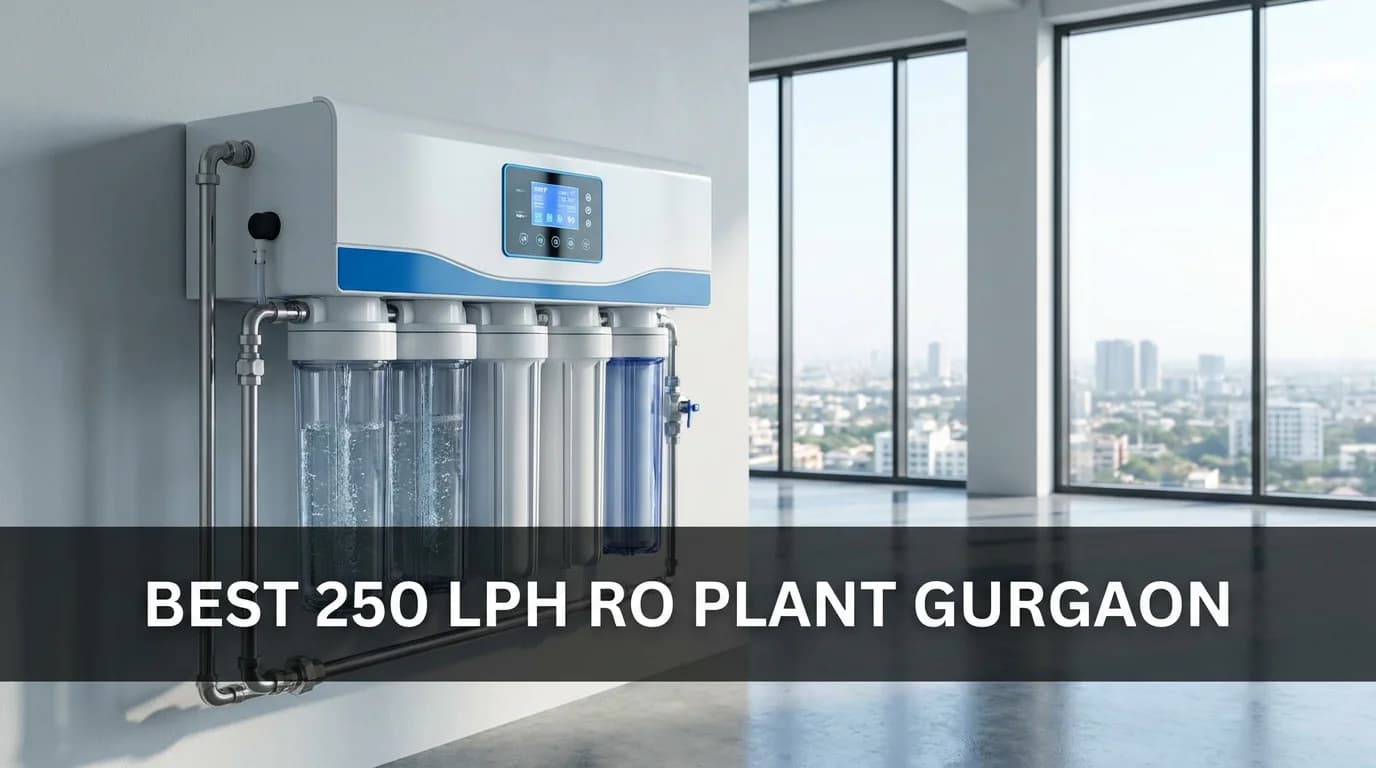
Wall-mounted and compact designs cater to space-constrained commercial premises where floor space carries premium value. These systems vertically stack components and utilize wall space efficiently, though they may require more complex installation. Retail outlets, small restaurants, and professional service offices in Gurgaon's commercial complexes often prefer these space-saving configurations despite slightly higher costs.
Containerized RO plants offer mobility and weather protection for outdoor installations or temporary setups. The entire system is housed within a weatherproof container with insulation, ventilation, and access doors. Construction sites, event venues, and temporary camps frequently deploy containerized solutions. While not the primary choice for permanent commercial establishments, these systems provide flexibility for businesses with changing locations or seasonal operations.
Customized industrial-grade plants with specialized features serve unique requirements like specific TDS targets, mineral retention, alkaline water production, or integration with existing building management systems. Manufacturing facilities producing beverages, pharmaceuticals, or processed foods often need customized configurations meeting industry-specific standards. Leading suppliers in Gurgaon offer engineering and customization services with design-to-delivery timelines of 30-45 days.
Choosing Reliable Suppliers and Service Providers in Gurgaon
The commercial water treatment market in Gurgaon has matured significantly with dozens of suppliers offering RO plant installations and maintenance services. When evaluating potential partners, prioritize those with established presence in Gurgaon for at least 5-7 years, as newer entities may lack the infrastructure for long-term support. Visit their office or showroom to assess their professional setup and inventory of spare parts.
Service response time becomes critical when your RO plant experiences breakdown affecting water supply to employees or customers. Reliable service providers maintain technician teams based in different parts of Gurgaon ensuring response within 4-6 hours of service calls. Verify their service coverage area, especially if your facility is located in peripheral areas like Manesar, Pataudi Road, or New Gurgaon. A supplier with comprehensive service network across Delhi NCR provides better support than one operating from a single location.
Warranty terms and annual maintenance contract options reveal the supplier's confidence in their product quality. Standard warranties cover 1 year for electrical components and pumps, 2 years for control panels, and 3 years for membrane elements under normal operating conditions. Evaluate AMC packages based on inclusions like number of preventive maintenance visits, free spare parts coverage, emergency breakdown support, and water quality testing frequency. Transparent pricing without hidden charges indicates professional business practices.
Customer references from similar businesses provide valuable insights into real-world performance and service quality. Request contact details of 3-4 existing clients who installed comparable systems and inquire about their satisfaction with water quality, system reliability, and after-sales support. Online reviews and ratings on business directories help identify consistently performing suppliers, though verify the authenticity of testimonials through direct conversations whenever possible.
Conclusion
Investing in a reliable 250 lph RO plant represents a strategic decision that impacts the health and satisfaction of everyone within your commercial or industrial facility in Gurgaon. The right system delivers consistent water quality, minimizes operational disruptions, and proves economically viable over its 10-12 year operational life. By understanding the technology, evaluating key selection criteria, comparing available configurations, and partnering with reputable suppliers, you ensure that your RO plant in Gurgaon meets both immediate needs and long-term requirements. Whether you operate a corporate office, healthcare facility, educational institution, or manufacturing unit, clean drinking water forms the foundation of operational excellence and stakeholder welfare. Take time to conduct thorough water analysis, assess multiple supplier options, and choose a RO plant near me that combines quality components, efficient design, and dependable after-sales support. The investment in proper water purification infrastructure pays dividends through improved health outcomes, enhanced reputation, and regulatory compliance in 2026 and beyond.
Discover How Advanced RO Technology Transforms Water Quality for Gurgaon's Growing Businesses
Learn more about how 250 LPH reverse osmosis plants deliver consistent, purified water for offices, factories, and institutions across Gurgaon. Explore further to understand the key features, filtration stages, and performance metrics that make these systems ideal for handling high TDS levels in municipal and borewell water. Stay informed about maintenance requirements, energy efficiency standards, and compliance certifications that ensure your commercial facility receives safe drinking water daily. Discover how proper system selection based on water source quality and daily consumption patterns can optimize operational costs while meeting health and safety regulations.