
How to Purchase 100 LPH RO Plant
Complete Guide to Purchasing a 100 LPH RO Plant: Everything You Need to Know Before Buying
Access to clean and safe drinking water is no longer a luxury but an essential requirement for every household and commercial establishment across India. With increasing water contamination issues in urban and semi-urban areas, investing in a reliable water purification system has become crucial. A RO plant designed to handle medium to high water consumption needs offers the perfect solution for small offices, restaurants, educational institutions, and large families. Whether you are searching for an ro plant in gurgaon or any other Indian city, understanding the technical specifications, features, and maintenance requirements will help you make an informed purchasing decision.
The demand for commercial-grade water purification systems has witnessed remarkable growth in recent years, particularly in metro cities and tier-two towns. A 100 lph ro plant strikes the ideal balance between capacity and affordability, making it suitable for establishments requiring approximately 2400 liters of purified water daily. This capacity meets the drinking water needs of roughly 250-300 people per day, assuming average consumption patterns. As you explore options for ro plant near me, it becomes essential to evaluate multiple factors including water quality in your area, total dissolved solids levels, installation space, and ongoing operational costs.
Purchasing a reverse osmosis purification system involves more than just comparing prices online. The quality of components, efficiency of the membrane technology, rejection ratio, recovery rate, and availability of reliable ro plant service in your locality all play significant roles in determining long-term satisfaction. Many buyers focus solely on upfront costs while overlooking the importance of after-sales support, warranty coverage, and the availability of genuine replacement parts. This comprehensive guide will walk you through every aspect of purchasing a commercial-grade water purification unit, ensuring you select a system that delivers consistent performance for years.
Understanding the importance of professional installation, regular maintenance schedules, and water quality testing cannot be overstated when investing in industrial water purification equipment. The wrong choice can lead to frequent breakdowns, poor water quality, and ultimately higher operational expenses. By the end of this guide, you will possess the knowledge required to evaluate different models, negotiate better prices, and identify reputable service providers in your area.
Understanding 100 LPH RO Plant Specifications and Technical Features
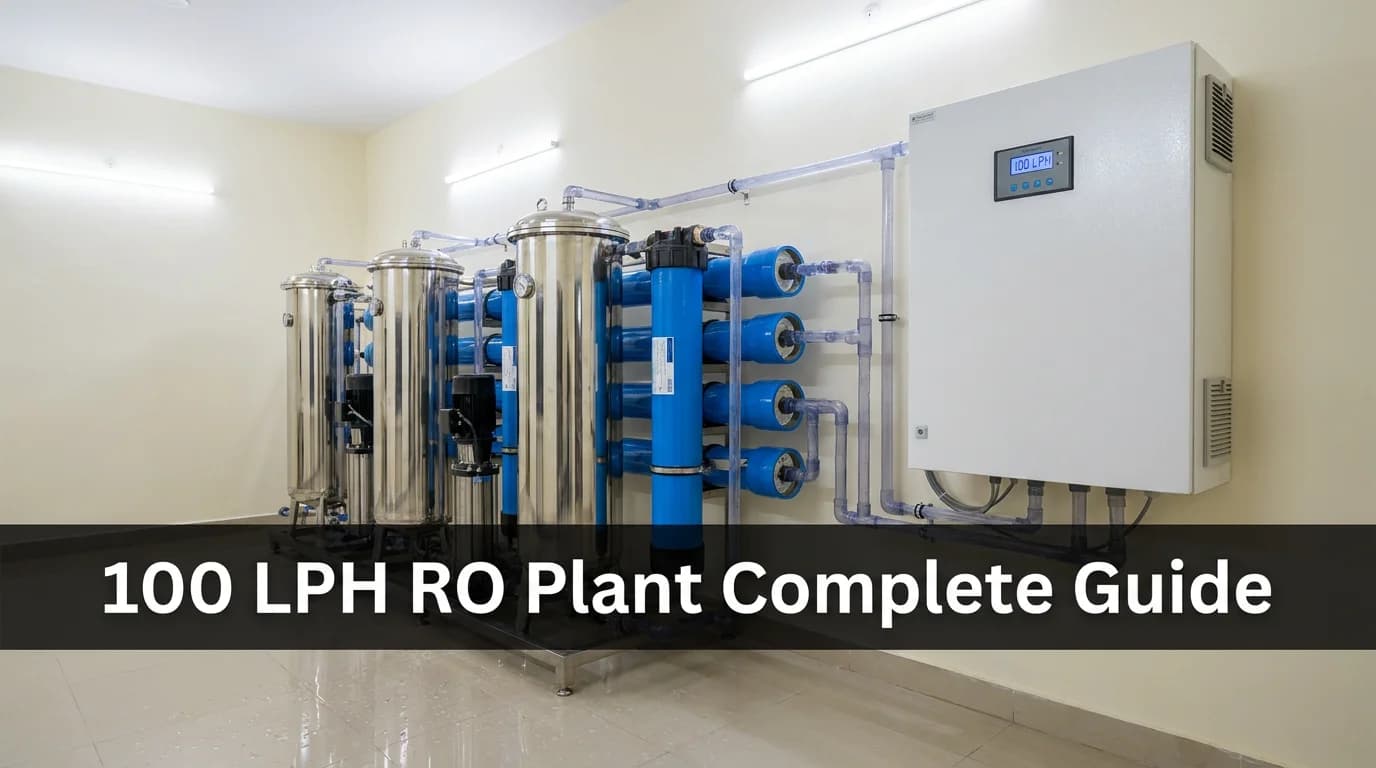
A 100 lph ro plant refers to a reverse osmosis water purification system capable of producing 100 liters of purified water per hour under standard operating conditions. These systems typically operate on commercial-grade components including high-pressure pumps, pre-filtration stages, RO membranes rated for commercial use, and post-treatment filters. The hourly production capacity translates to continuous operation potential, though most systems run intermittently based on water demand and storage tank capacity.
The core technology involves forcing water through semi-permeable membranes under pressure, removing dissolved salts, heavy metals, bacteria, viruses, and other contaminants. Quality systems achieve rejection rates of 90-95 percent for total dissolved solids, ensuring output water meets Bureau of Indian Standards specifications for drinking water. The multi-stage filtration process typically includes sediment filters to remove suspended particles, activated carbon filters for chlorine and organic compound removal, and the RO membrane for dissolved impurities elimination.
When evaluating technical specifications, pay attention to the recovery ratio, which indicates the percentage of input water converted to purified output. Efficient commercial systems maintain recovery ratios between 30-40 percent, balancing water conservation with membrane lifespan. Systems with very high recovery rates may experience premature membrane fouling, while those with low recovery waste excessive water. The operating pressure requirement usually ranges from 150-250 PSI, necessitating adequate input water pressure or booster pump installation.
Power consumption represents another critical specification, with most units requiring 1-2 kilowatts for continuous operation. Annual electricity costs should factor into your total ownership calculations. Additionally, verify the system includes essential features like automatic shut-off when storage tanks fill, low-pressure cutoff to protect the pump, and high-pressure switches to prevent membrane damage. Quality manufacturers incorporate these safety features as standard components rather than optional upgrades.
Factors Affecting 100 LPH RO Plant Pricing in Indian Markets
The price range for commercial water purification systems varies considerably based on component quality, brand reputation, and included features. In the current Indian market, expect to invest between 45,000 to 150,000 rupees for a complete 100 lph ro plant installation. This variation reflects differences in membrane technology, pump quality, automation level, and construction materials used in system assembly.
Basic models utilizing standard components and minimal automation occupy the lower price bracket, typically ranging from 45,000 to 65,000 rupees. These systems provide reliable purification but may require more manual monitoring and maintenance intervention. Mid-range options priced between 70,000 to 95,000 rupees incorporate better quality membranes with longer lifespans, superior pumps with reduced noise levels, and enhanced automation features including digital displays and remote monitoring capabilities.
Premium systems commanding prices above 100,000 rupees offer advanced features such as multi-stage UV sterilization, mineralization cartridges for taste enhancement, fully automated operations with minimal human intervention, and IoT-enabled monitoring allowing remote system status checks via smartphone applications. For businesses requiring consistent water quality with minimal downtime, investing in higher-tier options often proves cost-effective over the system's operational lifespan.
| Price Range | Features | Ideal For |
|---|---|---|
| 45,000 - 65,000 INR | Basic filtration, manual controls, standard membranes | Small restaurants, offices with 50-100 employees |
| 70,000 - 95,000 INR | Better automation, digital displays, quality pumps | Medium establishments, schools, clinics |
| 100,000 - 150,000 INR | IoT monitoring, UV sterilization, mineralization | Premium applications, hospitals, hotels |
Geographic location significantly influences pricing, with ro plant in gurgaon and other metro areas typically commanding 10-15 percent higher prices compared to tier-two cities. This premium reflects higher transportation costs, elevated real estate expenses for service centers, and increased demand in urban markets. However, metro locations often provide better access to qualified technicians and genuine spare parts, potentially offsetting initial cost differences through reduced maintenance expenses.
Installation Requirements and Space Considerations
Proper installation forms the foundation of reliable long-term performance for any commercial water purification system. Before purchasing, assess the available installation space, ensuring adequate room for the main unit, storage tanks, and necessary plumbing connections. A typical ro plant requires approximately 4-6 square feet of floor space, with additional overhead clearance of at least 6 feet for filter cartridge replacement and maintenance access.
The installation location should provide protection from direct sunlight, extreme temperatures, and excessive humidity which can accelerate component degradation. Ground-floor or basement installations work ideally, minimizing the pumping distance required to distribute purified water to consumption points. Ensure the location offers proximity to electrical outlets providing stable power supply, as voltage fluctuations can damage sensitive electronic components and pumps.
Water supply considerations include verifying adequate input pressure, ideally between 40-60 PSI for optimal system performance. Insufficient pressure necessitates booster pump installation, adding 8,000-15,000 rupees to total project costs. Drainage arrangements for reject water disposal must comply with local regulations, with some establishments utilizing reject water for gardening, floor cleaning, or toilet flushing to minimize waste.
Professional installation typically costs between 5,000 to 12,000 rupees depending on complexity, distance from water sources, and electrical work requirements. While some buyers attempt self-installation to reduce expenses, improper setup can void warranties and create performance issues. Qualified technicians ensure correct plumbing connections, proper electrical grounding, initial system sanitization, and comprehensive operational training for staff members responsible for daily monitoring.
Ongoing Maintenance and Service Requirements
Regular maintenance determines the longevity and consistent performance of commercial water purification equipment. Establishing a relationship with reliable ro plant service providers before purchase ensures access to qualified technicians when issues arise. Preventive maintenance schedules typically include quarterly filter replacements, semi-annual membrane cleaning, and annual comprehensive system inspections.
Pre-filter cartridges including sediment and carbon filters require replacement every 3-4 months depending on input water quality, with individual cartridge costs ranging from 500 to 1,500 rupees. The RO membrane, representing the most expensive consumable component, maintains effectiveness for 2-3 years under normal operating conditions, with replacement costs between 8,000 to 18,000 rupees for quality membranes. Delaying membrane replacement compromises output water quality and can damage other system components.
Annual maintenance contracts offered by service providers typically cost 12,000 to 25,000 rupees, covering scheduled filter replacements, system sanitization, performance testing, and emergency breakdown services. These contracts provide budget predictability and ensure timely maintenance, preventing minor issues from escalating into major failures. When searching for ro plant near me, prioritize providers with established service networks, readily available spare parts inventory, and technicians trained on multiple system brands.
Water quality testing should occur monthly, checking total dissolved solids levels in both input and output water to verify system effectiveness. Home testing kits cost approximately 1,500-3,000 rupees and provide quick TDS readings, while comprehensive laboratory analysis costs 2,000-5,000 rupees and tests for specific contaminants. Maintaining testing records helps identify performance degradation early, allowing proactive maintenance before water quality falls below acceptable standards.
Selecting the Right Supplier and Evaluating Warranty Coverage
Choosing a reputable supplier impacts every aspect of ownership experience from initial installation quality to long-term service availability. Research potential suppliers thoroughly, checking online reviews, requesting customer references, and verifying business registration and credentials. Established suppliers with physical showrooms and service centers provide greater accountability compared to online-only vendors who may lack local support infrastructure.
Warranty coverage varies significantly across suppliers, with comprehensive policies covering 1-2 years for electrical components, 1 year for the RO membrane, and 5-10 years for structural elements like storage tanks and frames. Carefully review warranty terms, noting exclusions for damage caused by improper maintenance, voltage fluctuations, or use of non-genuine replacement parts. Some suppliers offer extended warranty options for additional fees, providing longer protection periods and broader coverage.
Compare multiple quotations, ensuring each includes itemized breakdowns of equipment costs, installation charges, initial consumables, and first-year maintenance provisions. The lowest price rarely represents the best value, particularly if it compromises component quality or after-sales support. Request demonstrations of similar installations, allowing firsthand observation of system operation, noise levels, and overall construction quality before making final purchasing decisions.
Conclusion
Purchasing a 100 lph ro plant represents a significant investment in health and operational efficiency for commercial establishments and large households. By understanding technical specifications, realistic pricing expectations, installation requirements, and maintenance obligations, buyers can select systems delivering years of reliable performance. Whether searching for ro plant in gurgaon or any other Indian location, prioritizing component quality, supplier reputation, and service availability over initial cost savings ensures long-term satisfaction. Thorough research, careful supplier evaluation, and commitment to regular maintenance transform water purification systems from simple purchases into valuable assets supporting health, productivity, and business success. With proper selection and care, commercial reverse osmosis equipment provides clean, safe drinking water while delivering acceptable returns on investment through reduced bottled water expenses and improved stakeholder satisfaction.
Learn more about how a 100 LPH RO plant operates: This medium-capacity system uses advanced reverse osmosis technology with multi-stage filtration to remove up to 99% of dissolved impurities, bacteria, and contaminants from your water supply. Explore further to understand the essential pre-treatment stages, membrane specifications, and purification processes that ensure consistent delivery of safe drinking water for offices, restaurants, small industries, and large households with 50-100 daily users.