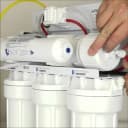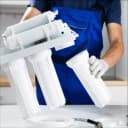
Manesar's rapid industrial and residential growth has created unique water challenges. Most households here depend on borewell supply rather than municipal water, and Haryana's groundwater is characteristically high in Total Dissolved Solids (TDS) — typically ranging from 800 to 1500 PPM. This mineral-heavy water places constant pressure on reverse osmosis systems, accelerating filter degradation and membrane wear.
An Eureka Forbes water purifier running in these conditions doesn't just need occasional attention; it requires a maintenance routine matched to your actual water source. Skipping or delaying service in Manesar's environment can mean drinking compromised water within weeks, rather than the months a purifier might last in a softer water area. This guide explains how to manage your RO system effectively given the specific water conditions you face here.
Select Service

.webp&w=256&q=75)
Everything you need to know
Borewell water in the Manesar region carries dissolved minerals, dissolved iron, and hardness levels that challenge every stage of an RO filtration system. The sediment pre-filter clogs faster here than in areas with cleaner municipal supply. The carbon filter, designed to remove chlorine and odor, works harder in water that often contains iron compounds and salts. Most critically, the RO membrane — the most expensive component in any purifier — deteriorates significantly faster when processing water with consistently high TDS levels.
Many households in Manesar report that their Eureka Forbes purifier, which might last three years in a different city, needs deeper maintenance or component replacement within 18 to 24 months. This isn't a product defect. It's the result of your water source. Understanding this distinction helps you budget for service costs accurately and avoid the frustration of being surprised by bills.
Because borewell water here is inherently mineral-heavy, watch for these specific warning signs that indicate your purifier needs urgent attention:
Borewell water areas like Manesar see these problems more frequently than soft-water regions, so staying vigilant about these signs prevents prolonged use of a purifier that's no longer protecting your water quality effectively.
Standard filter replacement schedules — typically every 6 to 12 months — often don't account for water quality. In Manesar's environment, here's a more realistic timeline:
Asking a technician about TDS levels during your first service visit helps establish a schedule suited to your specific borewell. If your water supply TDS was recently tested, share that number — it's the key to planning service correctly and avoiding preventable breakdowns.
Service costs in Manesar tend to reflect both labor and the higher consumption of replacement parts. Understanding what drives these costs helps you evaluate whether paying more upfront for an AMC plan actually saves money:
Budget planning for Eureka Forbes service in Manesar should assume higher-than-national-average costs for parts and slightly more frequent visits. An AMC plan may actually work out economically favorable over the course of a year if it includes frequent filter replacements.
An AMC plan bundles service visits and filter replacements into a single annual fee. For households in high-TDS water areas, the math often favors buying an AMC plan rather than paying per visit.
If your usage is average (family of four, regular cooking and drinking), and your borewell TDS is between 1000 and 1500 PPM, you'll likely need sediment filter replacement every three months, carbon filter replacement every four months, and at least one membrane inspection or replacement annually. Booking each separately across the year typically costs more than a comprehensive AMC. Additionally, an AMC plan removes the psychological burden of delaying service to save money — knowing everything's covered encourages you to schedule the visit as soon as the technician has availability, rather than postponing because the cost feels uncertain.
If you live in a newer colony with treated municipal water backup (rare in Manesar, but it happens), or if your household uses purified water minimally, individual pay-per-visit may cost less. Also, if you're uncertain whether you'll stay in Manesar beyond 12 months, committing to an annual contract might not make sense.
The best practice: ask a technician to assess your water and estimate annual service needs, then compare that projection against available AMC plan prices. A plan that covers 4 service visits, sediment and carbon filter replacements, and one membrane inspection should align roughly with your predicted usage.
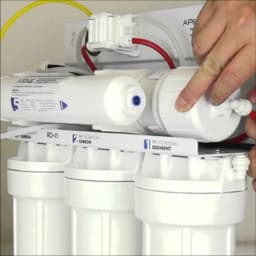
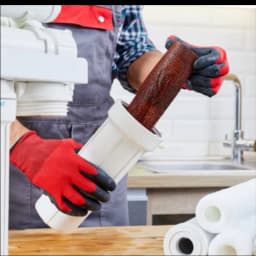
Understanding the service process helps you decide whether a technician is delivering value or rushing through the work:
A complete service visit typically takes 45 minutes to an hour. If a technician is in and out in 15 minutes, you haven't received a thorough inspection suited to high-TDS conditions.
Manesar's groundwater supply isn't constant throughout the year. Monsoon recharge changes water quality temporarily; summer drawdown concentrates dissolved minerals further. Some households experience seasonal shifts in borewell water quality that directly affect purifier maintenance.
If your TDS readings spike during certain months, adjust your service schedule accordingly. A monsoon spike in sediment often means more frequent pre-filter changes for a few months, then return to normal. Summer mineral concentration might warrant moving membrane replacement forward by a few weeks. Communicating these seasonal patterns to your technician helps them provide maintenance that actually fits your real usage, rather than following a flat annual template.
Sometimes a technician will recommend replacing internal components rather than simply repairing them. In Manesar's high-TDS environment, this is often the right call:
Get a written quote for both repair and replacement options. If a repair costs 60% or more of a replacement part's price, replacement usually makes more sense in Manesar's conditions, where wear is faster and component life is already shortened by water quality.
Keep a simple record of service dates, what was replaced, and technician contact details. This record becomes invaluable if you switch technicians or need to troubleshoot patterns (for instance, if membranes consistently fail at 14 months, you can predict and budget for replacement). In Manesar especially, where service intervals are tighter than national averages, this documentation helps you stay on top of maintenance rather than discovering a year has passed without realizing your purifier needs attention.
What makes us different
Manesar's rapid industrial and residential growth has created unique water challenges. Most households here depend on borewell supply rather than municipal water, and Haryana's groundwater is characteristically high in Total Dissolved Solids (TDS) — typically ranging from 800 to 1500 PPM. This mineral-heavy water places constant pressure on reverse osmosis systems, accelerating filter degradation and membrane wear.
An Eureka Forbes water purifier running in these conditions doesn't just need occasional attention; it requires a maintenance routine matched to your actual water source. Skipping or delaying service in Manesar's environment can mean drinking compromised water within weeks, rather than the months a purifier might last in a softer water area. This guide explains how to manage your RO system effectively given the specific water conditions you face here.
Step-by-step guidance
Don't wait! Get the at the most competitive rates. Contact rocareindia today for a free consultation and quote.

Verified Professionals

Work Assurance

On-Time Support

Covid-19 Safety
Find answers to common questions about our services
Find our nearby franchise stores in your city
Pure water, delivered.