
Select Service




.webp&w=256&q=75)
Everything you need to know
The Kaithal area relies partly on canal water from the Western Yamuna Canal and partly on groundwater sources. Canal water is treated municipally but still carries moderate sediment load, especially during monsoon runoff. Borewell water, which many households prefer for its availability during dry months, tends to be harder and carries elevated TDS—often in the range of 500 to 1000 ppm before treatment. This is well above drinking water standards and puts serious stress on any filtration system.
An RO purifier handles this challenge by forcing water through a semi-permeable membrane that blocks dissolved minerals. But the membrane itself deteriorates faster under high-TDS stress. Pre-filters that catch sediment need changing more often. The stored water develops a slightly salty taste if mineral removal isn't thorough. Recognising these patterns specific to Kaithal helps you understand why your service technician might recommend schedules different from the manufacturer's generic guidelines.
Rather than waiting for obvious breakdown symptoms, attentiveness to subtle changes catches problems early in Kaithal's demanding water environment:
Pricing for water purifier repair and maintenance depends on several factors specific to the work being done. Rather than a single number, think of it as a range that shifts based on what's needed:
Always request a written breakdown before a technician begins work. This separates labour charges from parts costs and gives you clarity on why Kaithal-specific service might cost differently than you'd expect from a city with lower water TDS.
An Annual Maintenance Contract groups service visits, filter replacements, and minor repairs into a single yearly fee. In a high-stress water environment like Kaithal, where your purifier works harder than average, these contracts often make financial sense if structured properly.
Read every word of the contract, especially sections on what's included versus what carries additional charges. Some AMC tiers cover only labour, leaving you to buy filters separately. Others bundle everything but limit how many visits you get annually—a poor fit if Kaithal's seasonal variations mean you need four or five service calls instead of the standard two or three.
The region's high TDS and seasonal swings make a one-size-fits-all schedule impractical. A realistic maintenance plan for Kaithal typically looks like this:
This schedule is more aggressive than national averages, but it reflects Kaithal's real water conditions. Sticking to it prevents costly emergency repairs and ensures your household's drinking water stays safe and palatable year-round.
When you search for help with a faulty purifier, you may find both independent technicians familiar with RO systems and formal service centres operated by major brands or regional networks. Each has trade-offs worth considering:
An independent technician often lives locally, understands Kaithal's specific water profile from experience, and can usually visit faster than a distant call centre representative. They may also be flexible on pricing and willing to discuss trade-offs (e.g., refurbishing an older membrane component versus replacing it outright). However, they may not have stock of every part on hand, and if your purifier is still under warranty, they typically cannot process manufacturer-backed repairs.
A formal service centre has standardised processes, genuine manufacturer-approved components, and warranty protection. They maintain parts inventory and can often schedule multiple visits in a single day during high-demand periods. The trade-off is slightly longer scheduling windows and less flexibility on pricing. For warranty work or major component failures, a service centre is usually your only option.
Many households maintain contact with both—a local technician for routine maintenance and filter changes, and a service centre if warranty work or complex repairs are needed. Knowing the difference helps you make the right call at the right time.
Several myths circulate among households in Kaithal about how often maintenance is needed or what counts as "normal" purifier behaviour. Clearing these up saves money and prevents unnecessary service calls:
Myth: A purifier should always produce water at the same flow rate. Truth: Flow naturally decreases slightly as filters age. Only when it drops to a trickle within a short time span is replacement urgent. In Kaithal's high-sediment environment, monthly pre-filter changes mean you'll notice output improvement after each service—this is normal.
Myth: RO water should always taste identical. Truth: Slight taste variations occur with seasonal water source changes and can be corrected through post-carbon filter tuning. Major taste shifts (salty, metallic) indicate membrane efficiency loss and warrant replacement.
Myth: Skipping one or two scheduled services won't hurt. Truth: In Kaithal's environment especially, skipping maintenance accelerates component wear exponentially. A membrane left in service three months past its effective lifespan can foul so badly that a simple replacement no longer restores performance—a full tank cleaning becomes necessary, costing significantly more.
Myth: Cheaper service providers are fine if they charge less per visit. Truth: Using low-grade filter components or incomplete cleaning during service saves a few hundred rupees upfront but leads to more frequent calls and potentially unsafe water. The most reliable long-term choice is usually a technician who explains the work being done and uses standard-quality parts.
Understanding the steps a competent technician follows helps you evaluate whether you're getting proper work:
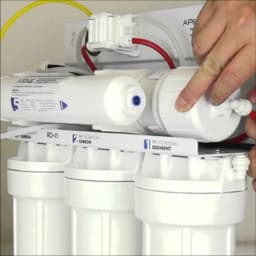
The visit begins with measuring incoming water TDS and comparing it to the unit's output. This tells the technician whether the RO membrane is still rejecting minerals effectively or has started to degrade. Next, the pre-filter and sediment stage get examined for visible clogging and replaced if necessary. The carbon filter undergoes a similar inspection. The technician then checks all fittings and connections for leaks or loose parts—a critical step in Kaithal where water pressure and mineral content stress seals earlier than normal.
The storage tank is emptied and inspected for white scaling or sediment accumulation. If present, the tank gets flushed and may receive a chlorine-based or other approved sanitization treatment. The RO membrane itself is usually tested in place first. If output and TDS readings show it's still performing, it stays. If readings fall outside expected ranges for your water quality, it gets replaced. Finally, the unit runs through a complete cycle, and the technician confirms output TDS, flow rate, and the absence of leaks before leaving. A written report of what was done and when the next service is due should be provided.
If a technician skips any of these steps—especially tank cleaning or membrane testing—ask why and consider calling someone else for a follow-up visit.
Technicians handle the heavy work, but you can extend intervals between visits and prevent emergencies by following simple practices:
When a purifier is new, manufacturer warranty typically covers defects in parts and sometimes labour for a specified period (often one to three years, depending on the brand). Warranty usually does not cover filter replacements or maintenance—these are the owner's responsibility. Some manufacturers offer "extended warranty" options that add years of coverage for a fee paid upfront.
An AMC plan is separate from warranty. You can have both active simultaneously, though claims typically go to one provider first. If a part fails within your AMC coverage but would also be covered by manufacturer warranty, clarify with your service provider which covers the cost. Similarly, accidental damage (e.g., dropping the unit, water damage from external flooding) is rarely covered by either warranty or AMC—this is important to understand before signing any agreement.
Keep your purchase receipt, warranty card, and any AMC or extended warranty documents in a safe place. When you book a service call, mention any active coverage—it can significantly reduce out-of-pocket costs and may change which service provider you call.
What makes us different
Kaithal's water supply—drawn from a mix of municipal canal distribution and private borewells—carries high total dissolved solids and significant hardness levels. The region's agricultural catchment and mineral-rich groundwater table mean that RO membranes and pre-filters work harder here than they do in many other parts of India. Summer months intensify the load, and seasonal variation in water quality means what works in winter may need adjustment by May.
Because of these conditions, standard service intervals work less well in Kaithal. A membrane that might last 18 months in softer-water areas often needs replacement after 10 to 12 months here. Sediment filters clog faster. Storage tanks accumulate mineral deposits that other regions might not see for years. Knowing this reality helps households plan ahead and avoid the frustration of a purifier suddenly failing during peak demand season.
Step-by-step guidance
Don't wait! Get the Best water purifier service at the most competitive rates. Contact rocareindia today for a free consultation and quote.

Verified Professionals

Work Assurance

On-Time Support

Covid-19 Safety
Find answers to common questions about our services
Pure water, delivered.