
Aquaguard Water Pressure Low in Gurgaon: How to Fix It at Home
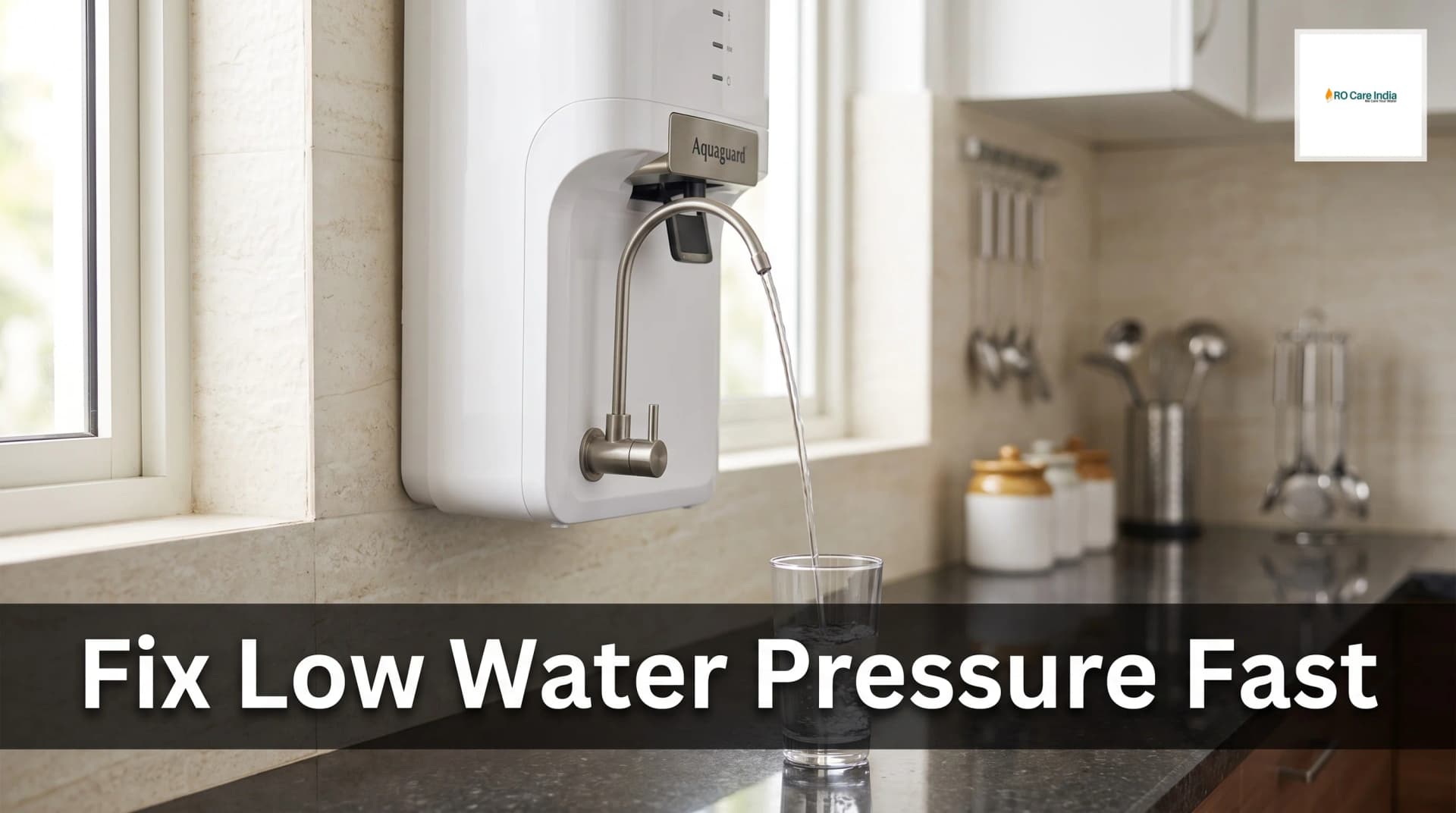
Complete Guide to Fixing Low Water Pressure Issues in Your Aquaguard Water Purifier in Gurgaon
Low water pressure from your water purifier can be frustrating, especially when you need clean drinking water quickly for your family. Many Gurgaon residents face this common problem with their Aquaguard purifiers, and it often happens at the most inconvenient times. Understanding why your purifier is producing slow output and knowing how to fix it can save you time and money. Before you search for Aquaguard repair service Gurgaon professionals, there are several troubleshooting steps you can try at home that might resolve the issue immediately.
Water pressure problems in purifiers can stem from various causes, ranging from simple filter blockages to more complex internal valve issues. Gurgaon's hard water conditions make these issues even more common, as mineral deposits build up faster than in areas with softer water. The good news is that identifying the root cause is often straightforward, and many solutions do not require professional intervention. Whether your purifier is producing a trickle of water or has stopped dispensing altogether, this comprehensive guide will walk you through each potential problem and its solution.
Most water pressure issues develop gradually over time, which means regular maintenance can prevent many of these problems from occurring. However, if you have already noticed decreased flow, immediate action is necessary to restore normal function. This article covers everything from basic cleaning procedures to advanced troubleshooting techniques specifically designed for Gurgaon residents dealing with local water conditions.
By the end of this guide, you will know exactly when you can handle the problem yourself and when it is time to contact the Aquaguard customer care number Gurgaon for professional assistance. Understanding these distinctions will help you maintain your purifier effectively and ensure your family always has access to clean, purified water at the right pressure.
Understanding Normal Water Pressure in RO Purifiers
Before attempting to fix low pressure issues, you need to understand what constitutes normal water output for your specific purifier model. Most RO water purifiers dispense purified water at a rate of approximately 200 to 300 milliliters per minute under normal conditions. This translates to filling a standard one-liter bottle in about three to five minutes. If your purifier is taking significantly longer than this, you are experiencing reduced pressure.
Several factors affect the normal dispensing rate of your purifier. The incoming water pressure from your municipal supply plays a crucial role, as RO membranes require adequate input pressure to function efficiently. In Gurgaon, water pressure typically ranges between 40 to 60 PSI in most residential areas, though it can drop during peak usage hours. Your purifier's storage tank capacity also influences the perceived output speed, as models with larger tanks can dispense stored water quickly before reverting to the slower RO filtration rate.
The age of your purifier and its maintenance history significantly impact performance. A well-maintained unit that has received regular filter replacements and cleaning will consistently deliver better pressure than a neglected one. Gurgaon's water quality, characterized by high TDS levels often exceeding 500 ppm in many neighborhoods, accelerates filter clogging and reduces efficiency faster than in cities with better water quality. This makes regular maintenance even more critical for local residents.
Common Causes of Low Water Pressure
Clogged sediment filters represent the most frequent culprit behind reduced water pressure. These pre-filters, designed to remove physical impurities like sand, rust, and silt, bear the brunt of Gurgaon's hard water conditions. When sediment accumulates beyond the filter's capacity, water flow becomes restricted, creating a bottleneck that affects the entire purification system. This problem intensifies during monsoon season when municipal water supplies often carry higher sediment loads due to increased runoff and infrastructure stress.
Membrane fouling occurs when the RO membrane becomes coated with dissolved minerals, organic matter, and other contaminants that pass through the sediment filter. Unlike sediment filters that trap visible particles, membranes work at a molecular level and are susceptible to scaling from calcium and magnesium deposits prevalent in Gurgaon's water supply. A fouled membrane not only reduces water output but also compromises purification quality, allowing higher TDS levels to pass through than designed.
Storage tank problems can create the illusion of low pressure even when the purification system functions correctly. The internal bladder inside the tank, which maintains pressure on stored water, can lose air pressure over time or develop leaks. Additionally, the tank's inlet valve might become partially closed or obstructed, preventing proper refilling. When the tank cannot maintain adequate pressure, dispensing becomes slow regardless of the RO system's actual performance.
Internal valve issues, particularly with the flow restrictor or the automatic shut-off valve, can dramatically reduce output. The flow restrictor regulates the ratio of purified water to wastewater, and if it becomes clogged or damaged, water flow decreases significantly. Similarly, if the automatic shut-off valve malfunctions, it might partially engage even when the tank is not full, restricting flow unnecessarily.
DIY Troubleshooting Steps You Can Try at Home
Start your troubleshooting by checking the most accessible components first. Turn off the water supply to your purifier and examine the sediment filter, typically located at the first stage of filtration. Remove the filter housing by turning it counterclockwise and inspect the filter element inside. If it appears brown, grey, or visibly dirty, replacement is necessary. Even if it looks moderately clean, replacing a sediment filter that has been in use for more than three months often resolves pressure issues immediately. Clean the housing thoroughly before installing the new filter to prevent any residual sediment from contaminating the fresh element.
Next, inspect your carbon filters, which follow the sediment filter in the purification sequence. These filters remove chlorine, odors, and organic compounds but can also become saturated and restrict flow. While carbon filters do not show visible signs of clogging like sediment filters, their effectiveness diminishes over time. If your sediment filter appears clean but pressure remains low, replacing carbon filters often restores normal flow. Remember that Gurgaon's chlorinated municipal water accelerates carbon filter saturation compared to well water sources.
Check the storage tank's air pressure using a standard bicycle pump with a pressure gauge. Disconnect the tank from the purifier system by closing the tank valve and relieving water pressure by opening the faucet. Locate the air valve, usually found at the bottom of the tank beneath a blue cap. The optimal air pressure should be between 7 to 9 PSI when the tank is empty. If the pressure reads lower, use the pump to inflate to the correct level. If the pressure drops quickly, the internal bladder may have ruptured and requires tank replacement.
Examine all tubing connections for kinks, bends, or external pressure that might restrict water flow. Over time, tubing can develop memory curves that reduce internal diameter, especially near connection points where it bends sharply. Straighten any kinked sections and consider rerouting tubes to eliminate tight bends. Also check for any loose fittings that might cause minor leaks, as even small leaks can reduce system pressure significantly.
When to Contact Professional Service
Despite your best DIY efforts, some issues require professional expertise and specialized tools. If you have replaced all filters and checked basic components but pressure remains low, the problem likely lies with the RO membrane or internal valves. These components require technical knowledge to diagnose and replace correctly. Attempting membrane replacement without proper understanding can damage the system or result in poor water quality, making it essential to reach out to authorized service technicians for assistance.
Persistent low pressure accompanied by changes in water taste or appearance indicates potential membrane failure or system contamination. These situations demand immediate professional attention because compromised purification poses health risks. Similarly, if you notice unusually high wastewater production alongside low output pressure, the flow restrictor or RO membrane has likely failed. Professional technicians have TDS meters and pressure gauges to accurately diagnose these issues and implement correct solutions.
Electrical problems affecting the booster pump, present in many advanced purifier models, absolutely require professional intervention. If your purifier makes unusual noises, if the pump runs continuously without building pressure, or if it fails to start, electrical components may be faulty. Working with electrical components without proper training risks personal injury and further equipment damage. Contact professional service immediately if you suspect pump-related issues.
When your purifier is still under warranty, professional service becomes even more important. DIY repairs beyond basic filter replacement can void warranty coverage, leaving you financially responsible for expensive component failures. Authorized technicians document all service work, maintaining your warranty validity while ensuring repairs meet manufacturer specifications. Keep your warranty papers accessible and verify coverage status before undertaking any significant troubleshooting.
Preventive Maintenance Tips for Gurgaon Residents
Regular filter replacement schedules form the foundation of pressure problem prevention. Create a maintenance calendar based on your specific model's requirements and Gurgaon's water conditions. Sediment filters typically need replacement every three to four months in areas with high sediment content, while carbon filters last six to eight months under normal usage. RO membranes generally require replacement every eighteen to twenty-four months, though heavy use or particularly hard water can shorten this lifespan significantly.
Consider installing a pre-treatment system if your building receives particularly hard or sediment-heavy water. A simple mesh filter at the main water inlet or a dedicated pre-sediment filter before your purifier can dramatically extend the life of your main purification filters. These additional filters capture larger particles and reduce the load on your purifier's built-in filtration stages. Many Gurgaon apartment complexes have successfully implemented community-level pre-treatment that benefits all residents and reduces individual maintenance requirements.
Monitor your purifier's performance indicators regularly rather than waiting for obvious problems to develop. Keep track of how long it takes to fill a one-liter bottle each week. A gradually increasing fill time indicates developing filter clogging that you can address before it becomes severe. Similarly, check the wastewater to purified water ratio periodically. A noticeable increase in wastewater production suggests membrane fouling that requires attention.
Sanitize your purifier system every six months to prevent biofilm development and maintain optimal hygiene. Biofilm, a layer of bacteria and organic matter that accumulates inside pipes and on filter surfaces, can restrict flow and contaminate purified water. Professional sanitization involves flushing the entire system with food-grade sanitizing solutions and thoroughly rinsing all components. Many service packages include periodic sanitization as part of comprehensive maintenance plans.
Cost Comparison for Different Solutions
| Solution Type | DIY Cost Range | Professional Service Cost | Time Investment | Success Rate |
|---|---|---|---|---|
| Sediment Filter Replacement | Rs. 150-300 | Rs. 500-800 | 15-30 minutes | 85-90% |
| Carbon Filter Replacement | Rs. 300-600 | Rs. 800-1200 | 20-40 minutes | 75-85% |
| RO Membrane Replacement | Rs. 1500-2500 | Rs. 2500-4000 | 45-90 minutes | 50-60% |
| Storage Tank Replacement | Rs. 1200-2000 | Rs. 2000-3500 | 30-60 minutes | 95-98% |
| Complete Service Package | Not Applicable | Rs. 1500-3000 | 60-120 minutes | 90-95% |
Understanding the cost implications helps you make informed decisions about maintenance approaches. While DIY filter replacements offer significant savings, the lower success rates for complex components like membranes often make professional service more cost-effective in the long run. Failed DIY membrane installation can damage other components, ultimately costing more than initial professional service would have. For routine maintenance like sediment and carbon filter changes, DIY approaches provide excellent value, especially for households with multiple purifiers.
Professional service packages typically include comprehensive system inspection beyond just addressing the immediate pressure issue. Technicians check all components, test water quality, measure actual TDS levels, and identify potential problems before they cause failures. This preventive value often justifies the higher upfront cost compared to targeted DIY repairs. Annual maintenance contracts, commonly offered in Gurgaon ranging from Rs. 3000 to Rs. 6000 per year, provide predictable costs and priority service during emergencies.
Water Quality Testing and TDS Management
Low pressure problems often coincide with water quality degradation, making testing essential after resolving flow issues. Purchase a reliable TDS meter, available online or at local hardware stores in Gurgaon for Rs. 300 to Rs. 800, to monitor your purified water's quality. Safe drinking water should measure below 150 ppm TDS, with optimal levels between 50 to 100 ppm. If TDS levels exceed these ranges after fixing pressure issues, your membrane may need replacement despite improved flow.
Gurgaon's municipal water TDS levels vary significantly by neighborhood and season. Areas like DLF Phase 1-5 typically receive water with 400-600 ppm TDS, while sectors near the highway often experience levels exceeding 800 ppm. During summer months when groundwater supplementation increases, TDS levels can spike further. Regular testing helps you anticipate when your purification system faces extra stress and may need additional maintenance attention.
High input TDS accelerates membrane fouling and reduces its effective lifespan. If your source water consistently measures above 500 ppm, consider installing additional pre-treatment or opting for purifiers with higher capacity membranes designed for challenging water conditions. Some advanced models include TDS controllers that allow you to adjust purified water TDS by mixing a small percentage of input water, which can reduce membrane stress while maintaining mineral content some users prefer for taste.
Document your TDS readings along with pressure measurements to establish baseline performance for your purifier. This historical data becomes invaluable when troubleshooting recurring issues or consulting with service technicians. Patterns like gradually increasing purified water TDS alongside decreasing pressure clearly indicate membrane problems, while sudden changes might point to filter displacement or system damage requiring immediate attention.
Seasonal Considerations for Gurgaon Climate
Monsoon season from July through September presents unique challenges for water purifiers in Gurgaon. Increased sediment loads during heavy rains clog pre-filters much faster than usual, often requiring replacement every four to six weeks instead of the typical three-month interval. Municipal water quality frequently deteriorates during this period due to stormwater infiltration and treatment plant capacity limitations. Plan to have spare sediment filters on hand during monsoon months to avoid extended downtime when pressure drops suddenly.
Summer months bring different pressures, as municipal water supply becomes erratic in many Gurgaon neighborhoods. When residents rely more heavily on groundwater through borewells or tanker supplies, TDS levels spike dramatically. This harder water increases scaling on membranes and internal components, reducing pressure and efficiency. If you switch to alternative water sources during summer, expect to perform maintenance more frequently and monitor performance indicators closely for early signs of problems.
Winter typically offers the most stable water conditions, making it an ideal time for comprehensive annual servicing. Scheduling major maintenance during December or January ensures your purifier operates optimally through the demanding summer months ahead. This timing also tends to offer better service availability, as fewer emergency calls mean technicians can provide more thorough attention to preventive work.
Temperature fluctuations affect purifier performance in subtle ways often overlooked. Cold water viscosity differs from warm water, slightly affecting flow rates through filters and membranes. During peak winter months when water temperatures drop, you may notice marginally slower flow rates even from a perfectly functioning system. This is normal and does not indicate a problem requiring intervention.
Learn more about maintaining optimal water flow in your Aquaguard purifier through our comprehensive troubleshooting resources. Discover how regular filter maintenance, membrane cleaning, and pressure valve adjustments can restore your system's performance. Explore further technical guides and preventive care tips to ensure your family always has access to fast-flowing, purified drinking water.
Related Blogs
- Kent RO Filter Change Indicator Not Working: What to Check
- Kent RO Water Turns Cloudy or Milky in Gurgaon: What Causes This and How to fix it?
- Aquaguard RO Water Tank Not Filling in Pune: What to Check First?
- Why Kent RO Water Tastes Bad or Salty in Gurgaon: Reasons and Fixes
- Kent RO Membrane Not Rejecting TDS in Kolkata: What to Do?