
Why Kent RO Water Tastes Bad or Salty in Gurgaon: Reasons and Fixes
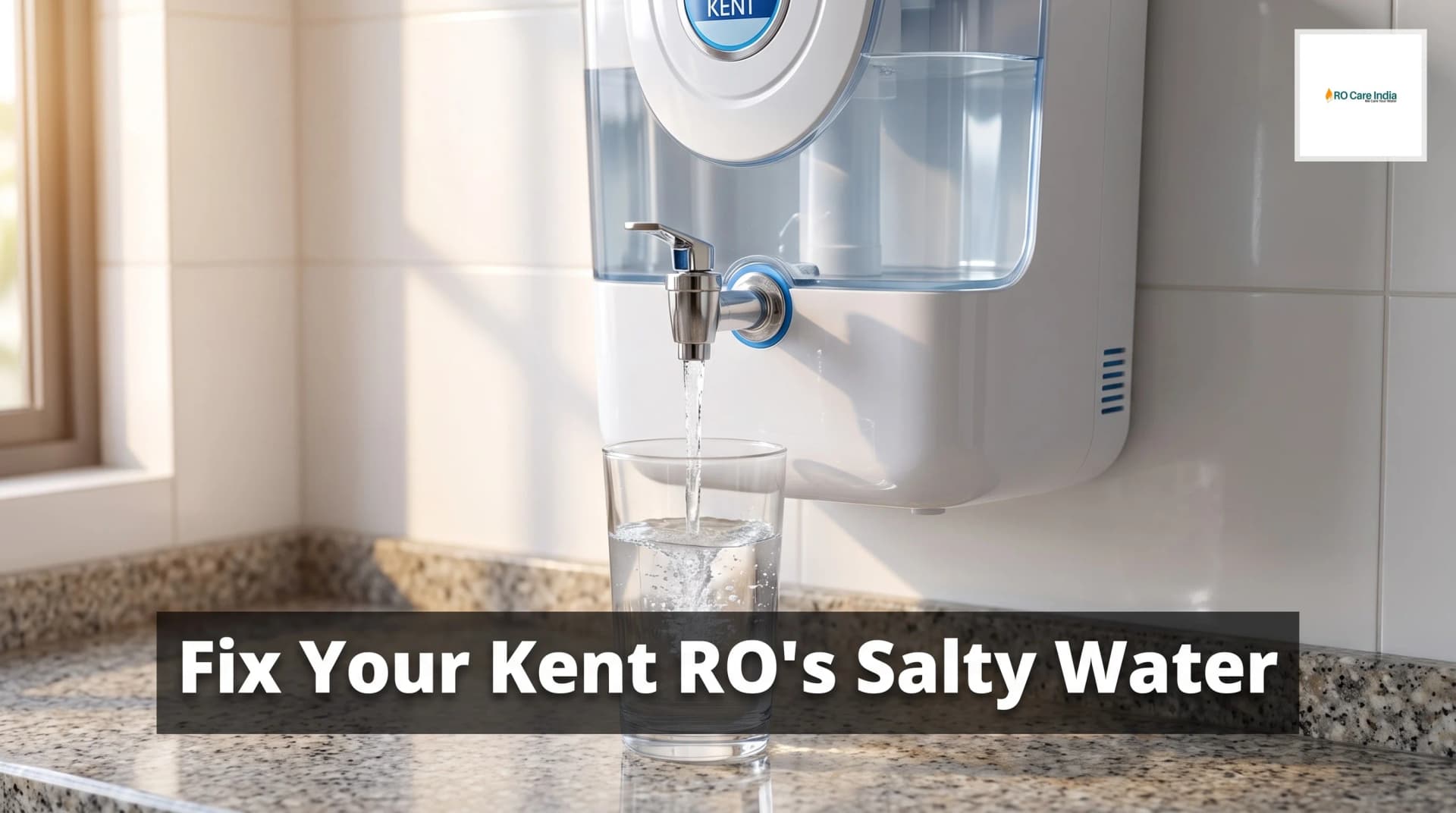
Understanding Why Your RO Water Tastes Bad or Salty in Gurgaon: Complete Troubleshooting Guide
When you invest in a water purification system for your home, you expect clean, fresh-tasting water every time you turn on the tap. However, many residents in Gurgaon frequently encounter an unpleasant surprise—their purified water develops a strange, salty, or metallic taste that makes it almost undrinkable. This frustrating problem affects thousands of households across Haryana's industrial hub, particularly during summer months when water quality naturally deteriorates. If your drinking water suddenly tastes off despite having an advanced filtration system installed, you're not alone in this struggle. The good news is that most taste-related issues have identifiable causes and practical solutions. Understanding why your purifier produces bad-tasting water is the first step toward resolving the problem permanently. Whether you need professional assistance from kent ro service gurgaon experts or prefer troubleshooting yourself, this comprehensive guide will walk you through every aspect of diagnosing and fixing water taste problems specific to Gurgaon's unique water conditions.
The capital region's groundwater contains exceptionally high levels of total dissolved solids, making it one of India's most challenging environments for water purification systems. Gurgaon's rapid urbanization, combined with depleting water tables and increasing industrial activity, has significantly impacted municipal water quality over the past decade. Residents frequently report bitter, brackish, or chemically-tainted water that requires multiple purification stages. Even after installation of supposedly advanced systems, many homeowners discover that their purified water doesn't taste as clean and refreshing as expected. This disappointment often leads to concerns about system effectiveness and fears about potential health risks from consuming improperly treated water.
Several interconnected factors contribute to unpleasant water taste after purification, ranging from membrane degradation and filter exhaustion to improper system settings and storage tank contamination. The complex reverse osmosis process involves multiple filtration stages, pressure requirements, and delicate component balancing that can easily go wrong without regular maintenance. Many users unknowingly operate their systems beyond recommended service intervals, causing gradual performance deterioration that manifests first as taste changes before escalating into more serious functionality problems. Additionally, Gurgaon's extreme seasonal temperature variations, voltage fluctuations, and inconsistent municipal water pressure create additional challenges for maintaining optimal purification performance throughout the year.
Identifying the exact cause requires systematic investigation of various system components, water source characteristics, and usage patterns. Some issues develop suddenly following component failure, while others emerge gradually as consumable parts approach the end of their functional lifespan. Homeowners should understand both immediate troubleshooting steps they can perform independently and situations requiring professional intervention through qualified ro water purifier service gurgaon technicians. The financial implications of delayed maintenance often far exceed the cost of timely servicing, as minor problems can cascade into expensive component replacements when ignored. Regular preventive care not only ensures consistent water quality but also extends equipment lifespan and protects your initial investment.
This detailed guide examines the specific causes behind salty or bad-tasting purified water in Gurgaon homes, provides actionable diagnostic procedures, and outlines effective remediation strategies. By following these expert recommendations, you'll be equipped to maintain optimal water quality, recognize warning signs before major failures occur, and make informed decisions about when professional servicing becomes necessary. Whether dealing with sudden taste changes or gradual quality degradation, understanding your purification system's operation and maintenance requirements empowers you to ensure your family always has access to safe, pleasant-tasting drinking water.
Primary Causes of Salty or Bad-Tasting RO Water in Gurgaon
The most common culprit behind salty or unpleasant-tasting purified water is a damaged or exhausted reverse osmosis membrane—the heart of any purification system. This semi-permeable membrane performs the critical task of separating dissolved salts, minerals, and contaminants from water molecules through applied pressure. When functioning correctly, it rejects approximately ninety-five to ninety-eight percent of total dissolved solids, producing clean, low-TDS water with neutral taste. However, membranes have finite operational lifespans, typically ranging from two to three years depending on source water quality and usage volume. Gurgaon's exceptionally hard water, often exceeding one thousand five hundred parts per million TDS, places extraordinary stress on membranes, accelerating wear and reducing effective filtration time significantly.
Membrane damage occurs through multiple mechanisms including chemical degradation, biological fouling, scaling from mineral deposits, and physical punctures from sediment particles that bypass pre-filters. When the membrane develops microscopic tears or becomes clogged with accumulated contaminants, it loses rejection capacity and allows increasing quantities of dissolved salts to pass through into purified water. This manifests as gradually intensifying salty taste, eventually producing water that tastes almost identical to untreated tap water. Temperature extremes common in Gurgaon—scorching summers exceeding forty-five degrees and relatively cold winters—cause expansion and contraction cycles that further stress membrane material, creating failure points even in relatively new systems.
Filter cartridge exhaustion represents another critical factor affecting water taste quality. Standard purification systems incorporate multiple pre-filtration stages including sediment filters, activated carbon blocks, and sometimes additional post-carbon filters. These components serve essential protective and polishing functions, removing chlorine, organic compounds, suspended particles, and other taste-affecting substances before water reaches the membrane. Sediment filters typically require replacement every six to nine months, while carbon filters need changing every nine to twelve months depending on source water contamination levels and daily consumption volumes. When these filters become saturated, they not only fail to remove taste-causing compounds but can actually leach accumulated contaminants back into processed water.
Carbon filter degradation particularly affects taste because these components specifically target chlorine, volatile organic compounds, and other flavor-imparting chemicals. Exhausted carbon loses its adsorptive capacity and may harbor bacterial growth that produces musty or unpleasant odors transferred to purified water. In Gurgaon, where municipal treatment facilities often use higher chlorine concentrations to combat water quality challenges, carbon filters work considerably harder than in regions with better source water. The combination of high chlorine exposure and elevated organic content drastically shortens effective filter lifespan, necessitating more frequent replacement schedules than manufacturer recommendations based on ideal water conditions.
Storage tank contamination emerges as a frequently overlooked cause of bad-tasting water, especially in systems that have operated for several years without comprehensive cleaning. The pressurized storage tank contains an internal bladder separating purified water from compressed air, and the water-contact surfaces can accumulate biofilm, mineral deposits, and stagnant water residues over time. Even when the purification components function perfectly, contaminated storage tanks reintroduce unpleasant tastes and odors into otherwise clean water. This problem intensifies during periods of low consumption when water sits stagnant for extended periods, allowing bacterial proliferation and chemical interactions between dissolved gases and tank materials.
Technical Factors Affecting Water Quality in Gurgaon's Environment
Incorrect system pressure settings significantly impact purification effectiveness and final water taste. Reverse osmosis requires adequate input pressure—typically between forty to sixty pounds per square inch—to force water molecules through the semi-permeable membrane while rejecting dissolved solids. Gurgaon's municipal water supply experiences notorious pressure fluctuations, with many residential areas receiving water at pressures below optimal operational ranges. Insufficient pressure reduces rejection rates, allowing higher TDS passage and resulting in saltier-tasting output water. Conversely, excessive pressure can damage membranes and accelerate component wear, also leading to quality deterioration over time.
Many households unknowingly operate their systems without functioning pressure booster pumps or with pumps operating inefficiently due to electrical issues, worn impellers, or inadequate maintenance. The combination of low incoming pressure and weak boosting creates perfect conditions for poor purification performance. Additionally, Gurgaon's electrical supply irregularities—frequent voltage fluctuations and power outages—stress electrical components and motors, reducing their operational efficiency and contributing to inconsistent treatment results. Installing voltage stabilizers and pressure monitoring systems helps maintain optimal operating conditions, but many users overlook these supporting elements when troubleshooting taste problems.
Drain line blockages or flow restrictor malfunctions create back-pressure conditions that interfere with proper membrane operation. The purification process generates concentrated reject water containing removed contaminants that must flow freely to drain. When drain lines become partially blocked by mineral scaling or debris, the system experiences elevated back-pressure that reduces effective pressure differential across the membrane. This condition forces the membrane to work inefficiently, allowing increased salt passage while simultaneously reducing production capacity. Flow restrictors—small devices regulating drain water flow rate—can become clogged or dislodged, disrupting the carefully calibrated balance between purified water production and waste water rejection.
Source water TDS variations throughout the year significantly affect system performance and output taste. Gurgaon's water quality fluctuates seasonally, with monsoon dilution temporarily reducing dissolved solid concentrations while summer months see dramatic increases as groundwater tables drop and mineral concentrations intensify. A system calibrated for average TDS levels may struggle when source water exceeds normal ranges, producing noticeably saltier output during peak contamination periods. Additionally, municipal supply mixing—when authorities blend groundwater with treated surface water from different sources—creates unpredictable quality variations that challenge consistent purification performance.
Post-filtration mineral addition systems, when present, can malfunction and over-mineralize processed water. Some advanced purifiers incorporate remineralization cartridges designed to add beneficial minerals back into ultra-pure RO water for improved taste and health benefits. When these cartridges age or malfunction, they may release excessive minerals, creating an artificially salty or mineral-heavy taste. Similarly, alkaline enhancement filters can over-correct pH levels, producing metallic or bitter tastes that users mistake for system failure. Understanding whether your specific model includes these enhancement stages helps accurately diagnose taste problems and determine appropriate solutions.
Diagnostic Steps for Identifying Water Taste Problems
Begin systematic troubleshooting by testing output water TDS levels using an inexpensive digital meter available at most hardware stores or through ro customer care number gurgaon service providers. Measure both input tap water and purified output water, recording readings for comparison. Properly functioning systems should reduce TDS to below fifty parts per million, with most achieving levels between ten to thirty ppm. If purified water tests above fifty ppm, especially when exceeding one hundred ppm, the system clearly suffers from rejection problems requiring immediate attention. Compare current readings with any historical measurements from when the system operated satisfactorily to quantify performance degradation.
Conduct sensory evaluation comparing water taste at different times throughout the day and from various usage patterns. Draw water immediately after system operation when the tank has recently filled, then again after water has sat stagnant for several hours overnight. Taste differences between fresh and stagnant water strongly suggest storage tank contamination rather than membrane or filter problems. Similarly, evaluate whether taste problems occur consistently or only during specific periods—morning-only issues may indicate overnight stagnation, while evening problems might reflect high daytime usage depleting the tank and forcing production of marginally treated water when system components are already stressed.
Visually inspect all system components for obvious problems including filter housing cracks, connection leaks, or physical damage. Check the date stickers on filter cartridges to determine whether they've exceeded recommended replacement intervals. Many users simply forget maintenance schedules, operating on exhausted filters without realizing the dramatic impact on performance. Examine drain line flow by disconnecting it briefly and observing whether reject water flows freely with appropriate pressure. Sluggish or minimal drain flow indicates blockages requiring clearing, while excessive flow suggests flow restrictor problems affecting system balance.
Evaluate system operational sounds and production times for abnormalities. Properly functioning systems produce characteristic sounds during operation—pump activation, water flow through membranes, and tank filling. Unusual grinding, excessive pump cycling, or continuous operation without proper shutoff indicates mechanical problems affecting performance. Monitor tank filling time from empty to full shutoff—dramatic increases in production time suggest declining membrane performance or pressure problems, while too-rapid filling with constant drain flow indicates bypassing or membrane damage allowing untreated water passage.
Consider conducting a controlled shut-down test to assess individual component contributions to taste problems. Bypass the storage tank temporarily by installing a direct-flow connection and taste water immediately from the membrane output. If direct-flow water tastes acceptable but tank-stored water doesn't, tank contamination is confirmed. Alternatively, test water before and after post-carbon or remineralization stages if your system includes these components, helping isolate whether problems originate in primary purification or enhancement stages.
Practical Solutions and Repair Approaches
Addressing membrane-related taste problems requires professional replacement in most cases, though some cleaning procedures may temporarily restore partial function. Reverse osmosis membranes represent precision-manufactured components that cannot be effectively cleaned or repaired once damaged or exhausted. Replacement involves proper system shutdown, pressure release, housing disassembly, membrane extraction, and careful installation of new components with appropriate sealing and system sterilization. While technically possible for experienced DIY enthusiasts, most manufacturers recommend professional service to ensure correct installation and system calibration. Professional technicians also evaluate whether membrane failure resulted from inadequate pre-filtration, pressure problems, or other underlying issues requiring concurrent attention.
Filter cartridge replacement follows straightforward procedures that most homeowners can perform independently with basic tools and instructions. Purchase genuine replacement cartridges from authorized dealers rather than generic substitutes that may not meet specifications or could damage other system components. Follow proper replacement sequences starting with sediment filters, then carbon stages, ensuring housing O-rings receive lubrication and all connections seal properly without over-tightening. After replacement, flush the system thoroughly by allowing several tank cycles to waste before consuming treated water, ensuring manufacturing oils and carbon fines wash away completely.
Storage tank cleaning and sanitization addresses contamination issues effectively when performed correctly. This process requires draining the tank completely, disconnecting it from the system, and flushing with food-grade sanitizing solution specifically designed for water treatment applications. Some contamination situations require tank replacement, particularly when biofilm develops extensively or internal bladders degrade. During tank servicing, inspect and replace tank valves which frequently develop leaks or blockages affecting water quality and system operation. Professional cleaning services provide comprehensive sanitization including system-wide disinfection that addresses contamination throughout connected components.
Pressure adjustment and system optimization require professional equipment and expertise in most situations. Installing or repairing booster pumps, adjusting pressure regulators, and calibrating flow restrictors involve technical knowledge about proper operational parameters and electrical safety. However, homeowners can monitor pressure using simple gauges installed at system input points, providing valuable diagnostic information for service technicians. Ensuring adequate input pressure through building plumbing improvements—such as upgrading supply lines or installing dedicated purifier connections—provides long-term performance benefits beyond immediate taste problem resolution.
Preventive Maintenance Schedule for Gurgaon Conditions
Establishing a comprehensive maintenance calendar specifically tailored to Gurgaon's challenging water conditions prevents most taste problems before they develop. Create a written schedule tracking all service activities including filter changes, membrane replacements, tank cleaning, and professional inspections. Set smartphone reminders for upcoming maintenance dates, treating water purifier care with the same priority as other essential home systems. Regular servicing costs significantly less than emergency repairs and ensures continuous access to quality drinking water without unpleasant interruptions.
Recommended maintenance intervals for standard residential systems operating in Gurgaon include:
- Sediment pre-filters: replacement every six months
- Carbon pre-filters: replacement every nine months
Learn more about maintaining your water purification system by understanding the root causes behind taste issues. Discover how factors like membrane degradation, TDS creep, improper servicing schedules, and Gurgaon's unique groundwater composition affect your RO's performance. Explore further into preventive maintenance practices that ensure consistently fresh-tasting water for your family's daily needs.