The Ganga supplies water to millions in Varanasi, but the journey from river to tap involves municipal processing that leaves considerable dissolved solids and seasonal turbidity — especially during monsoon months when runoff increases sediment load. Households relying on Eureka Forbes RO systems face specific challenges that demand regular, competent maintenance rather than sporadic repairs.
An improperly serviced purifier in Varanasi can allow high TDS levels to reach your drinking glass within weeks, or accumulate silt in ways that damage the membrane before you notice a problem. Understanding your local water conditions and matching them to a proper service schedule is not a luxury — it's a practical necessity for safe drinking water year-round.
Select Service
.webp&w=256&q=75)
Everything you need to know
Unlike cities fed primarily by groundwater reservoirs, Varanasi draws from a river source that carries seasonal variations. During the monsoon, incoming water contains suspended particles, algae, and organic matter that stress pre-filtration systems. In the dry months, mineral concentration rises as river flow reduces, pushing TDS levels higher. This dual pressure — high turbidity in one season and high mineralization in another — means a Eureka Forbes purifier operating in Varanasi faces conditions more demanding than a unit in a city with stable municipal borewell supply.
The practical outcome is that filter life becomes shorter, and skipping even one scheduled service can visibly degrade water quality. A technician who understands Varanasi's water profile will recommend a service schedule that aligns with seasonal changes rather than applying a generic timeline.
Several warning signs appear in Varanasi households before a purifier stops working entirely. Acting on these signals early keeps repair costs manageable:
Addressing these issues within a week or two prevents costly replacement of internal components and keeps your water supply uninterrupted.
A service visit to your home involves several components, each with its own cost range. Knowing what drives these charges helps you evaluate quotes fairly:
Ask the technician to itemize charges before beginning work, and clarify whether parts carry any warranty. This transparency prevents disputes and helps you budget accurately for the next service cycle.
A generic "replace every six months" timeline does not account for Varanasi's seasonal water changes. Adjust your schedule based on what flows through your taps:
June to October (monsoon and post-monsoon): High turbidity means the sediment pre-filter clogs faster. Many households find replacement is needed every 3 to 4 months during this period rather than the standard 6 months.
November to May (dry season): Lower sediment load allows longer intervals between sediment filter changes, but higher TDS means the RO membrane works harder. Carbon filter life may shorten as the membrane's efficiency drops, requiring earlier replacement to maintain taste.
The RO membrane itself — the most expensive component — typically lasts 12 to 18 months in Varanasi, shorter than in lower-TDS areas. Monitoring TDS readings monthly or using the purifier's indicator light (if equipped) provides a practical guide rather than following the calendar blindly.
An Annual Maintenance Contract bundles several service visits and filter replacements into one predictable yearly cost. For Varanasi homes, the decision depends on your specific situation:
Benefits of an AMC plan in Varanasi: You avoid the hassle of calling for service each time a filter needs changing. Plans typically include more frequent filter replacements during monsoon, when demand spikes. You know the annual cost upfront, which simplifies household budgeting. Technicians under an AMC arrangement often respond faster during peak seasons when many households face urgent purifier issues.
When an AMC plan may cost more than you actually need: If you use the purifier lightly — a small household drinking water only, not cooking — your filter life extends longer, and fewer replacements may make pay-per-service cheaper. If your purifier is less than a year old and still under manufacturer warranty, the dealer may be handling service at no cost, making an AMC redundant. If you're planning to shift homes or replace the unit within eighteen months, locking into a year-long plan wastes money.
Compare the annual AMC cost against the typical cost of 2 to 3 service visits with filter replacement during a year. If the AMC price is lower and you live in a high-turbidity area like Varanasi, it often makes financial sense.
Varanasi's sprawling layout, with areas ranging from central ghat-facing properties to peripheral housing colonies, means response times vary depending on location. When seeking Eureka Forbes RO repair service, a few factors separate a trustworthy technician from an unreliable one:
Local knowledge matters. A technician familiar with Varanasi's water supply variations and aware that sediment pre-filters clog faster here will diagnose issues more accurately than someone following a generic checklist. Ask whether they service other homes in your area and what they typically encounter with local water conditions.
Genuine spare parts. Ask upfront whether they use original Eureka Forbes filters or compatible alternatives. Low-quality replacement filters wear out faster and defeat the purpose of maintenance. Trustworthy providers stock parts in their vehicle or can procure them within a day rather than delaying your repair.
Honest assessment of what needs replacement. A good technician inspects each stage individually and explains why a particular filter needs changing. They won't recommend replacing a sediment filter that still has useful life remaining simply because it's the cheapest upsell.
Willingness to explain local factors. Since Varanasi's water conditions are distinct, a technician who explains how monsoon turbidity affects your system, or why RO membrane life may be shorter here, is demonstrating genuine expertise rather than rote service procedures.
Knowing what comprises a thorough service visit helps you evaluate whether the technician is providing value:
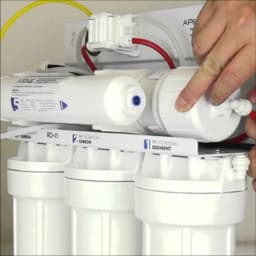
The technician begins by testing water flow at the outlet and measuring TDS (total dissolved solids) using a handheld meter. Low flow combined with high TDS output indicates membrane fouling or multiple clogged filters. Next, they inspect each filtration stage visually — sediment filters for discoloration and buildup, carbon filters for saturation, and the RO membrane for visible damage or scaling. In Varanasi's high-sediment environment, visible grit in the sediment cartridge is common and warrants replacement.
The storage tank gets checked for leaks, odor, or bacterial growth. If months have passed since the last service, the tank interior may need cleaning with a mild sanitizer to remove biofilm. All connections and valves are inspected for drips or looseness, which are common in older installations.
Once faulty components are identified, the technician replaces them with your approval and tests water flow, taste, and TDS again. A reliable provider confirms that output quality has improved and documents what was replaced, so you have a record for warranty purposes or future reference. They'll also suggest when the next service is due based on your specific purifier model and local water conditions.
Varanasi's location on a river means your purifier faces harder working conditions than units in many other Indian cities. This affects not just how often filters need replacing, but also the kinds of problems you'll encounter:
Sediment pre-filters become the bottleneck during monsoon months. Because they're the first line of defense against silt, sand, and particles, they clog before other stages and need the most frequent attention. Some Varanasi households find upgrading to a purifier with a larger-capacity sediment stage, or adding an external pre-filtration tank, reduces strain and extends overall filter life — a conversation worth having with your technician if you're replacing the unit or considering long-term modifications.
The RO membrane — the core filtration component — works harder here than in areas with lower TDS. This means membrane replacement becomes a more predictable and recurring expense. Tracking when your last membrane was replaced helps you anticipate the next one rather than being caught by sudden water quality issues.
Tank sanitization becomes more critical due to warm, humid conditions that promote bacterial and algal growth. Annual tank cleaning as part of routine service prevents odor issues and ensures the water stored in your tank remains safe to drink between filtration stages.
New Eureka Forbes purifiers come with manufacturer warranty covering defects in materials and workmanship for a specified period (usually 1 to 3 years depending on the model). Knowing what your warranty covers prevents you from paying for repairs that should be free:
Warranty typically covers pump failures, defects in RO membrane material, and faulty valves or fittings within the unit's housing. It does not cover wear and tear from normal use — meaning filter replacement costs are yours to bear even during warranty. It also doesn't cover damage from improper installation, usage of water sources outside normal range (extremely high TDS, for instance), or negligence.
If your purifier develops an issue you suspect is a manufacturing defect, contact Eureka Forbes customer care with your product serial number and purchase date before paying for a repair. They can advise whether it qualifies for warranty service. For routine servicing needs — filter changes, tank cleaning, minor adjustments — independent technicians are typically faster and just as reliable, especially outside the warranty period.
What makes us different
The Ganga supplies water to millions in Varanasi, but the journey from river to tap involves municipal processing that leaves considerable dissolved solids and seasonal turbidity — especially during monsoon months when runoff increases sediment load. Households relying on Eureka Forbes RO systems face specific challenges that demand regular, competent maintenance rather than sporadic repairs.
An improperly serviced purifier in Varanasi can allow high TDS levels to reach your drinking glass within weeks, or accumulate silt in ways that damage the membrane before you notice a problem. Understanding your local water conditions and matching them to a proper service schedule is not a luxury — it's a practical necessity for safe drinking water year-round.
Step-by-step guidance
Don't wait! Get the at the most competitive rates. Contact rocareindia today for a free consultation and quote.
Real repairs · Real customers · Real results

Verified Professionals

Work Assurance

On-Time Support

Covid-19 Safety
Find answers to common questions about our services
Find our nearby franchise stores in your city
Pure water, delivered.