Water quality in Gadag varies significantly with the season and the source — municipal supply differs from borewell water, and both present different filtration demands on your Eureka Forbes system. Dust, dissolved minerals, and seasonal turbidity all wear on RO membranes and filters faster than you might expect. Regular maintenance of your Eureka Forbes purifier isn't just about convenience; it's about ensuring your family has access to clean drinking water throughout the year without unexpected breakdowns.
This guide covers how to recognize when your purifier needs attention, what different service options cost, and how to choose between one-time repairs and longer-term maintenance plans.
Select Service

.webp&w=256&q=75)
Everything you need to know
Gadag experiences distinct seasonal shifts that affect how hard your Eureka Forbes purifier has to work. During the monsoon months, municipal water often turns turbid, carrying sediment and suspended particles that clog pre-filters faster than normal. Summer brings increased water demand and, in many areas, greater reliance on borewell supply — which typically carries higher dissolved mineral content. This seasonal stress means your filter replacement schedule isn't uniform year-round; the purifier demands more attention during transitions between seasons.
Understanding this local pattern helps you plan maintenance proactively rather than waiting for a sudden failure. A purifier running on high-TDS borewell water for three months straight may need an earlier membrane replacement than the manufacturer's standard interval suggests. Similarly, a post-monsoon service often uncovers sediment accumulation that wasn't visible during the dry months.
A functioning Eureka Forbes purifier should deliver steady water pressure and neutral-tasting output. Deviation from this normal state is your cue to arrange service:
Acting on these signals before the purifier stops working entirely saves both money and the stress of living without safe water for several days while you arrange emergency service.
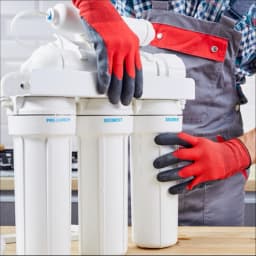
Repair and maintenance service for your Eureka Forbes purifier typically involves several overlapping components:
The technician inspects the entire system — inlet connection, pre-filters, RO membrane, storage tank, and outlet tap — to identify which parts are degrading. In areas with hard water like Gadag, the RO membrane often shows mineral scaling that reduces its filtering efficiency, even if water flow appears normal.
Sediment, carbon, and post-carbon filters are replaced on separate schedules depending on water source and usage. The RO membrane, which is the costliest single component, typically lasts longer than disposable filters but still requires replacement once its filtration capacity declines. A technician tests output water quality to confirm when replacement is actually needed, rather than changing parts prematurely.
The storage tank accumulates residual sediment and can develop bacterial biofilm over months of use, especially in humid climates. Professional cleaning removes this buildup and restores water quality. This step is often overlooked but directly affects the safety of water stored in the tank between use cycles.
Pumps, check valves, and pressure regulators all wear with time. A technician identifies worn components before they fail catastrophically, allowing planned replacement rather than emergency calls during monsoon season when service demand peaks.
Service pricing isn't a fixed figure; it depends on multiple interconnected factors:
Type of service needed. Replacing a single sediment filter costs significantly less than replacing the RO membrane alongside a pump bearing replacement. A diagnostic visit that identifies no immediate faults costs less than a full overhaul.
Your water source and TDS level. Households on high-TDS borewell supply often face higher parts costs because membranes degrade faster and may need more frequent replacement than those on municipal water. The technician's assessment of your specific water quality informs the cost estimate.
Purifier model and age. Older Eureka Forbes models sometimes require harder-to-find components or more labor-intensive access to internal parts, which raises visit charges. Knowing your exact model and age helps the technician prepare accurate quotes.
Warranty and service contract status. If your purifier is within manufacturer warranty or covered by an active AMC plan, labor and parts often come at a reduced rate or no charge at all, depending on terms.
Geographic location within Gadag. Service charges can vary between central areas and outlying neighborhoods, reflecting local travel time and availability of technicians in specific zones.
Always request a written estimate before the work begins, breaking down visit charges, labor, and individual parts. This transparency prevents misunderstandings and gives you the option to defer non-urgent repairs if budget is tight.
An AMC plan pools your expected service costs into a single annual fee, typically covering scheduled visits, filter replacements, and minor repairs. For households in Gadag relying on variable water sources, an AMC plan offers several practical advantages:
Rather than facing a large bill during monsoon season when water quality deteriorates, an AMC plan spreads costs evenly across twelve months. This is particularly useful if you switch between municipal and borewell supply depending on season, since both sources demand service attention at different times.
Monsoon and early summer are peak seasons for water purifier problems across the region. AMC subscribers typically get priority scheduling, reducing the wait time for a technician visit when water quality issues spike.
Some AMC tiers bundle unlimited servicing and scheduled filter replacement, while others limit visits but include parts. Understanding what your specific plan covers before signing is critical — a plan that excludes membrane replacement, for instance, may look cheap but leaves you exposed to a large unexpected cost.
If your purifier is brand new and covered by manufacturer warranty, an AMC plan is unnecessary for the first one or two years. Similarly, if you plan to replace or upgrade your purifier within 12 months, a full-year contract doesn't justify itself. Low-usage households — such as those with a small family and a part-time second home — may find that one or two paid service visits per year cost less than an annual contract.
Each component of your Eureka Forbes purifier degrades at a different rate, and local water conditions significantly affect these timelines:
Sediment pre-filter (4 to 5 months typical): This filter traps dust, sand, rust particles, and monsoon-season silt before water reaches finer stages. In Gadag, especially during and after monsoon, this filter may clog faster. Visual inspection — looking for brown or gray discoloration — is a quick way to assess condition without waiting for pressure to drop noticeably.
Carbon filter (6 to 8 months typical): Removes chlorine, odor, and organic compounds that affect taste and smell. Borewell water often has fewer of these organic contaminants, so carbon filters on borewell-only systems sometimes last toward the longer end of this range, whereas municipal supply with higher chlorine residuals demands earlier replacement.
RO membrane (12 to 18 months typical in Gadag's water conditions): This is your system's workhorse, and it's also the costliest single replacement. High-TDS borewell water accelerates membrane scaling, shortening its useful life. A professional service visit includes a TDS test to confirm when membrane replacement actually becomes necessary, rather than replacing it on calendar schedule alone.
Post-carbon filter (8 to 12 months typical): This final stage polishes water just before it reaches your tap. It typically shows wear more gradually than earlier filters, but neglecting it allows taste and odor issues to persist even after other components are fresh.
Keeping a maintenance log — noting each filter change date and which component was replaced — helps you predict upcoming costs and avoid the common pitfall of forgetting when your last service occurred.
Some homeowners attempt to replace filters themselves to save on labor charges. This approach has both real advantages and genuine risks:
Replacing simple cartridge filters — sediment or carbon — is often straightforward if you have clear instructions and the correct replacement part. Hardware costs are lower when you source parts independently, and a mechanically inclined household member can complete the work in 30 to 45 minutes.
However, RO membrane replacement and internal component work (pump, valve, or tank cleaning) require specialized knowledge. Incorrect reassembly can allow unfiltered water to bypass the RO stage, defeating the entire purpose of purification. Similarly, improper tank sanitization after cleaning leaves bacterial residue that won't appear until water quality noticeably declines weeks later. In these cases, professional Eureka Forbes service pays for itself by preventing damage and ensuring safety.
A practical middle ground: let a technician handle annual deep servicing and membrane work, while managing routine cartridge filter changes yourself if you're confident. This approach cuts costs without compromising water quality or system integrity.
When you need to arrange service, a few practical steps ensure you get the right technician at a reasonable time:
Describe your water source and the specific symptoms. Whether you're on municipal water, borewell, or alternating between sources affects how the technician prepares. Mentioning water pressure, taste changes, or noise helps them understand the likely cause before arrival.
Confirm technician experience with your specific Eureka Forbes model. Older purifier models or specialized units (high-capacity, UV-UF hybrid) require a technician familiar with that particular design. A technician who has only worked on basic RO units may spend extra time troubleshooting a model they haven't seen before, increasing your service time and cost.
Verify that spare parts are available locally or will be sourced before the visit. Some components are stocked regularly, while less common parts may need to be ordered. Confirming availability prevents a wasted trip where the technician identifies the problem but can't complete the repair the same day.
Ask whether the service includes a post-visit water quality check. A professional technician should test output TDS, flow rate, and taste after service to confirm everything is working correctly. If these checks aren't offered, question why not.
After your Eureka Forbes purifier has been serviced, a few weeks of attentive use help confirm the work was successful and may catch early signs of a problem the technician missed:
Monitor water pressure and flow for the first few days. A sudden drop after service may indicate a filter wasn't installed correctly or a valve wasn't reopened properly. Contact the technician immediately if pressure seems abnormally low.
Taste and smell the water from your tap several times over the first week. If odor or metallic taste reappears within days of a filter change, the replacement part may be defective or installed improperly. Most good service providers will revisit at no charge if problems surface immediately after service.
Note the service date and next recommended service on a calendar or phone reminder. This simple habit prevents the drift into neglect that happens when you can't recall whether service was done six months or a year ago.
Viewing Eureka Forbes service as an investment rather than an expense shifts your perspective on spending. A purifier that receives consistent maintenance — including seasonal adjustments for water quality changes — reliably delivers safe water for eight to twelve years or more. Neglected systems often face catastrophic failure by year four or five, forcing replacement and wasting the original capital investment.
The cost of three years of regular service visits and filter replacement is typically far less than the cost of buying a new purifier when the old one fails. This long-term economics favor proactive maintenance, especially in a city like Gadag where water quality varies seasonally and sourcing a replacement quickly during monsoon season can be difficult.
What makes us different
Water quality in Gadag varies significantly with the season and the source — municipal supply differs from borewell water, and both present different filtration demands on your Eureka Forbes system. Dust, dissolved minerals, and seasonal turbidity all wear on RO membranes and filters faster than you might expect. Regular maintenance of your Eureka Forbes purifier isn't just about convenience; it's about ensuring your family has access to clean drinking water throughout the year without unexpected breakdowns.
This guide covers how to recognize when your purifier needs attention, what different service options cost, and how to choose between one-time repairs and longer-term maintenance plans.
Step-by-step guidance
Don't wait! Get the at the most competitive rates. Contact rocareindia today for a free consultation and quote.
Real repairs · Real customers · Real results

Verified Professionals

Work Assurance

On-Time Support

Covid-19 Safety
Find answers to common questions about our services
Find our nearby franchise stores in your city
Pure water, delivered.