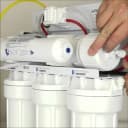
Tirap's water supply comes largely from river sources and seasonal streams that carry heavy sediment loads, particularly during the monsoon months when turbidity spikes sharply. An Aquaguard purifier working in these conditions faces a faster accumulation of suspended solids in its pre-filters, putting greater strain on the membrane and shortening component lifespans compared to cities with treated piped water. Regular servicing is not a luxury here—it is the difference between a purifier that runs reliably and one that fails when you need it most.
The high humidity and frequent rainfall in the region also create additional challenges. Condensation can form on electrical connections, and standing water around the unit invites corrosion of metal fittings. An Aquaguard system installed in Tirap benefits from more frequent inspection and preventive care than might be necessary elsewhere, which is why knowing how to access a competent technician matters so much for homeowners here.
Select Service



.webp&w=256&q=75)
Everything you need to know
Finding reliable Aquaguard service in Tirap requires understanding your options. Direct manufacturer support, independent certified technicians, and local service dealers all operate in the region, each with different response times and service models. Before picking up the phone, decide whether your need is urgent or routine, since that shapes which path makes most sense.
For same-day or next-day visits—such as when your Aquaguard stops producing water entirely or begins leaking—you will likely need a local service provider familiar with Tirap who can reach you without waiting for a technician to travel from a distant city. For routine maintenance or filter changes, the manufacturer's own service network may offer better pricing on genuine parts and warranty coverage, though the visit might be scheduled further ahead. A middle ground many households prefer is to identify a trusted local technician who knows multiple Aquaguard models well, keeps common spare parts in stock, and can respond quickly for emergencies while offering reasonable rates for planned servicing.
When you contact a service provider, have your Aquaguard model number and serial number ready. The model name tells the technician which filtration stages your unit has, whether it includes UV disinfection, and which spare parts fit. Describing your problem clearly at the outset—whether the unit works but produces little water, if there is a visible leak, or if the taste of water has changed—helps the technician decide what parts to bring and gives you a rough service estimate before arrival.
Aquaguard service pricing breaks down into two main parts: the technician visit charge and the cost of any parts needed. Knowing what influences each helps you budget realistically and spot pricing that seems out of line.
The visit charge covers the technician's time to diagnose the problem and perform repairs or filter changes. In Tirap, where distances between neighbourhoods can be significant and road conditions variable, some providers charge slightly more for visits to remote locations or factor in travel time differently than providers in larger metros. Emergency or same-day visits sometimes carry a premium, typically ranging from 50 to 100 percent above the standard service visit cost, depending on when you call.
Parts costs depend entirely on what your Aquaguard needs. A sediment or carbon filter replacement costs considerably less than a membrane or pump replacement. Purifiers that include UV stages have more components to potentially replace and generally cost more to service. The water quality issues in Tirap—high sediment load from monsoon runoff and river silt—mean you will typically replace pre-filters more often than in regions with cleaner supply water, so budgeting for this recurring expense makes sense. Many providers sell filter packs at a small discount to customers who buy them together, a practical choice if you schedule service during known filter-replacement intervals.
Before the technician begins work, always ask for a parts list and cost breakdown. A transparent provider will show you the filter or component that needs replacement, explain why, and quote a total amount before opening the unit. If a technician recommends replacing multiple components at once and cannot clearly justify each one, request a second opinion or ask for a follow-up visit to replace only the most urgent part first.
An AMC plan pools routine servicing, scheduled filter changes, and minor repairs into a single yearly fee. For households in Tirap, where water conditions demand more frequent filter replacement than elsewhere, an AMC can provide both cost savings and peace of mind.
Under a typical AMC, the provider commits to visiting your home on a set schedule—often every three to four months—to inspect the Aquaguard, check for leaks or performance drops, and replace filters as needed. All routine parts and labour are included in the annual fee, meaning you do not face surprise bills when a filter runs out earlier than expected due to high sediment load. Most AMCs also prioritize your service requests during peak demand periods like the monsoon, when water quality issues are most likely to cause breakdowns.
The catch is that AMCs work best for households committed to the full contract term. If you are uncertain about keeping your Aquaguard beyond a year, or if you use very little water and filters last far longer than average, paying for an AMC becomes less economical than paying per-visit. For families with heavy daily water usage or for homeowners who value predictable annual budgeting, the AMC is often worth it, particularly in Tirap where water quality variability means filter life is harder to predict.
When comparing AMC options, check exactly what is covered. Some plans include all filters and basic repairs but bill separately for major component replacements like the pump or membrane. Others set a cap on how many service visits are included per year. Reading the fine print before signing prevents frustration when you later discover that a needed repair falls outside the plan's scope.
Tirap's river-fed supply presents specific challenges that differ markedly from the problems more common in other regions. Understanding what typically goes wrong helps you recognize when your Aquaguard needs attention.
Rapid pre-filter clogging is by far the most common issue. The sediment carried by local water sources can block a sediment filter in weeks rather than months, forcing the pump to work harder and reducing water output noticeably. If your Aquaguard suddenly produces a thin trickle instead of its normal flow, a clogged pre-filter is the first thing to suspect. This is not a serious fault—replacing the filter solves it—but it happens more frequently here than in regions with cleaner input water, so budget for it and do not delay when you notice the slowdown.
Water taste or odour changes also occur more readily when sediment and organic matter from seasonal runoff increase. If the water smells earthy or tastes different, the activated carbon filter has likely absorbed as much as it can hold and needs replacement. Unlike a clogged pre-filter, a saturated carbon filter does not necessarily reduce flow, so relying on flow alone to judge filter life can lead to water that looks clear but carries unwanted flavour and odour.
Leakage and condensation-related corrosion are more pronounced in Tirap's humid climate. The constant moisture in the air means metal fittings oxidize faster, and O-rings degrade sooner than in drier climates. Regular inspection and prompt tightening of loose fittings can prevent leaks from developing. If you see rust staining around any fitting or notice condensation pooling inside the cabinet, call a technician sooner rather than later, as water entering electrical components can be dangerous and costly to repair.
Red or amber indicator lights on your Aquaguard should never be ignored. Modern models use these to signal filter saturation, electrical faults, or pressure imbalances. When a light comes on, the system is telling you something needs attention. Delaying usually means the problem worsens and repair costs rise, so schedule a technician visit promptly.
When you call or message a service provider, the quality of your description directly affects how well the technician can help you. A vague complaint—"my purifier is not working"—could mean anything from a tripped electrical switch to a failed pump. Being specific saves time and money.
If water flow is reduced, say so and note whether it trickled gradually lower or dropped suddenly. If the water tastes or smells different, describe the flavour or odour rather than just saying it tastes bad. If there is leakage, describe where it is coming from: dripping from under the unit, around a fitting, or from inside the cabinet. If the unit makes a noise, describe whether it is a humming sound, a squealing noise, or a rattling, and note whether it is constant or intermittent.
Mention when you last had the filters changed and, if possible, which model of Aquaguard you own—you can usually find this on a sticker under the sink or inside the cabinet door. If the unit is still under warranty or covered by an AMC, mention this at the outset, since it affects which service pathway to use and what you should expect to pay.
A well-conducted Aquaguard service visit follows a logical sequence that lets you understand what the technician is doing and why. Recognizing this flow helps you spot if something is being skipped or if repairs are being recommended without proper justification.
The visit typically starts with the technician asking you to describe the symptoms in detail. Rather than jumping straight to opening the unit, a careful technician listens to whether the problem is recent or gradual, whether you have noticed any changes in water appearance or taste, and whether any lights have come on. This information narrows down the possible causes before any tools come out.
Next comes physical inspection. The technician checks the inlet and outlet tubing for kinks or loose connections, examines the storage tank for cracks, looks at the filter housings for leaks, and tests the pressure gauge if the model has one. Each filtration stage—pre-filter, carbon filter, membrane, and any UV module—gets evaluated for obvious wear or damage.
Based on this inspection, the technician explains the diagnosis: which component is worn out or failing, why you are experiencing the symptoms you described, and what parts need replacement to fix it. At this point, you should receive a cost estimate, including parts and labour, before any work begins. If the estimate comes as a surprise or the explanation does not make sense, ask the technician to clarify or to show you the worn component.
Once you approve, the repair or replacement begins. Filters get swapped, fittings get tightened, or electrical components get tested. After the work is complete, the technician should run the Aquaguard to confirm that water flow is normal, the pressure reading is in the safe range, and any warning lights have extinguished. A final check of water taste or clarity helps confirm the repair was effective.
Before the technician leaves, ask for a record of what was done—a receipt or service note that lists which components were replaced, when the next filter change or maintenance is due, and the technician's contact details in case the same problem returns within a short time. This documentation also helps you track your Aquaguard's service history and decide later whether continued service from this provider is reliable.
Proper daily habits and basic upkeep extend your Aquaguard's lifespan and reduce how often you need a technician visit. None of these require special skill—they just require awareness and consistency.
First, never ignore an indicator light. The moment one comes on, note the date and call for service. Lights are not false alarms; they are built-in fault detection. Ignoring them invariably leads to larger problems.
Second, keep the area around your Aquaguard clean and dry. Tirap's humidity means moisture tends to linger. If you notice condensation or water pooling near the unit, improve ventilation or move it to a drier location if possible. Wipe away standing water regularly, and check metal fittings for early corrosion.
Third, monitor water flow over time. The first sign of a clogged pre-filter is a gradual decrease in how much water comes out. If you notice this trend, contact your provider for a filter change rather than waiting for flow to drop further.
Fourth, track your last filter replacement date. Many users forget when a filter was changed and guess when the next one is due. Set a phone reminder based on your Aquaguard model's recommended filter life so you never forget. Delaying a routine filter change puts the membrane under unnecessary stress and shortens its life significantly.
Finally, avoid running your Aquaguard when the inlet water supply is very low or muddy. During heavy monsoon rains when sediment in the water spikes, you may want to let water settle in a tank before sending it to the purifier, or to reduce usage briefly until the water clears. This simple practice reduces the load on filters and prevents unnecessary clogs.
What makes us different
Tirap's water supply comes largely from river sources and seasonal streams that carry heavy sediment loads, particularly during the monsoon months when turbidity spikes sharply. An Aquaguard purifier working in these conditions faces a faster accumulation of suspended solids in its pre-filters, putting greater strain on the membrane and shortening component lifespans compared to cities with treated piped water. Regular servicing is not a luxury here—it is the difference between a purifier that runs reliably and one that fails when you need it most.
The high humidity and frequent rainfall in the region also create additional challenges. Condensation can form on electrical connections, and standing water around the unit invites corrosion of metal fittings. An Aquaguard system installed in Tirap benefits from more frequent inspection and preventive care than might be necessary elsewhere, which is why knowing how to access a competent technician matters so much for homeowners here.
Step-by-step guidance
Don't wait! Get the at the most competitive rates. Contact rocareindia today for a free consultation and quote.
Real repairs · Real customers · Real results

Verified Professionals

Work Assurance

On-Time Support

Covid-19 Safety
Find answers to common questions about our services
Find our nearby franchise stores in your city
Pure water, delivered.