
DM Plant Explained: Working Principle & Components
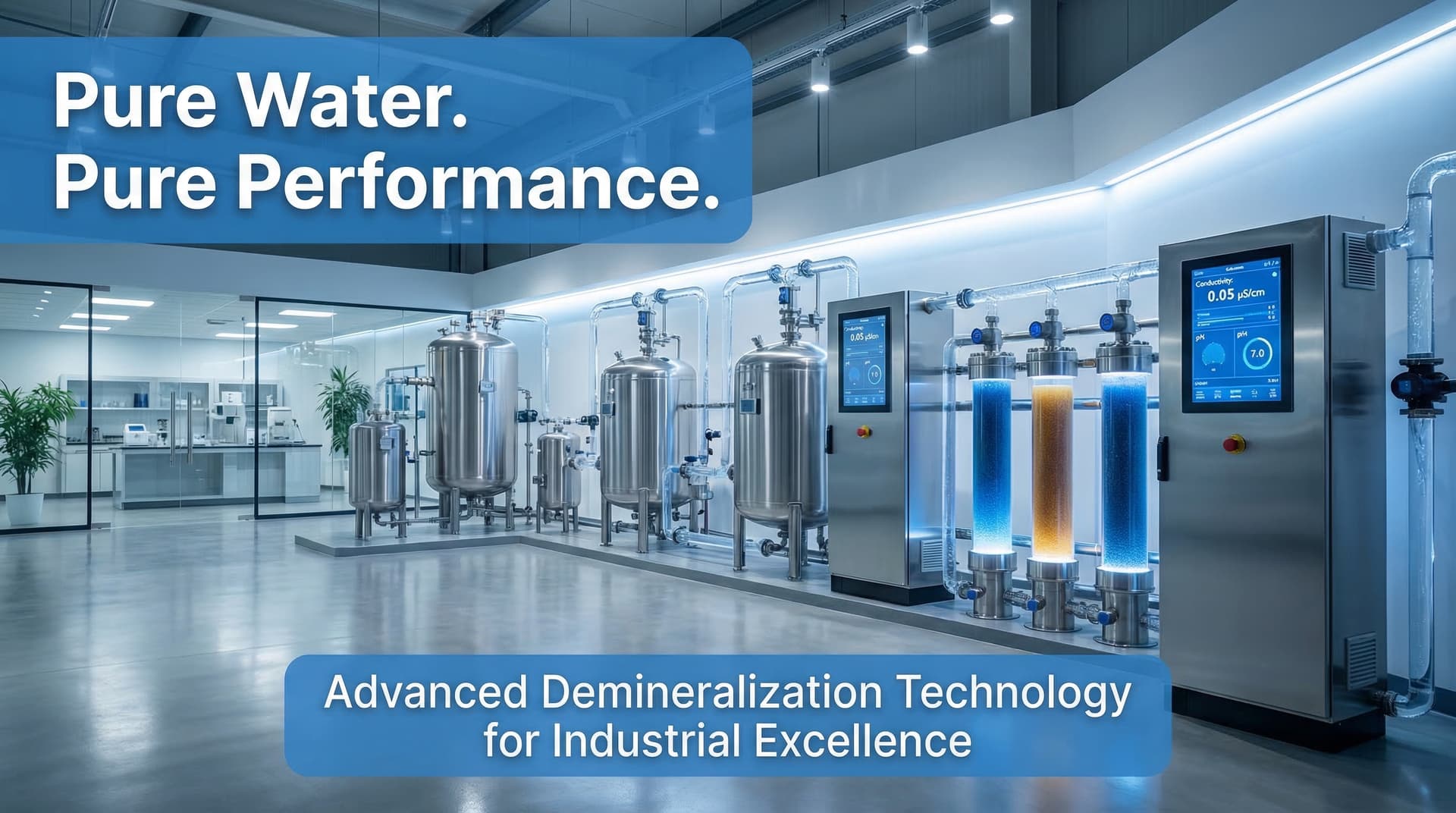
Industrial operations across manufacturing, power generation, and pharmaceutical sectors face a critical challenge: obtaining ultra-pure water for their processes. Regular tap water contains various dissolved minerals and salts that can damage equipment, reduce efficiency, and compromise product quality. This necessity has made demineralization technology an essential component of industrial infrastructure worldwide.
The process of removing dissolved ionic impurities from water has evolved significantly over the past decades. Today's demineralization systems represent sophisticated engineering solutions that combine chemical principles with advanced automation. These installations serve as the backbone for industries requiring high-purity water, where even trace amounts of minerals can cause substantial operational issues.
Understanding how these purification systems function requires examining the fundamental chemistry behind ion removal. Unlike simple filtration that removes suspended particles, demineralization addresses dissolved substances at the molecular level. This distinction makes these systems particularly valuable for applications where conventional filtration methods prove inadequate.
The investment in demineralization infrastructure reflects the critical role pure water plays in industrial success. From preventing scale formation in boilers to ensuring pharmaceutical product integrity, the applications span numerous sectors. As industries continue advancing toward higher precision and efficiency standards, the demand for reliable water purification technology grows correspondingly.
The Science Behind Ion Exchange Technology
Demineralization relies on ion exchange reactions occurring within specialized resin beds. These synthetic polymer beads contain active sites that attract and hold ionic impurities from passing water. The cation exchange resin captures positively charged ions like calcium, magnesium, sodium, and iron, while anion exchange resin removes negatively charged ions including chlorides, sulfates, and nitrates.
The exchange process follows predictable chemical equilibrium principles. As water flows through the resin bed, dissolved ions transfer from the liquid phase onto the resin surface. Simultaneously, the resin releases hydrogen ions (from cation exchangers) or hydroxyl ions (from anion exchangers) into the water. This bidirectional exchange continues until the resin reaches saturation capacity.
Modern installations typically employ multiple treatment stages arranged in specific sequences. The most common configuration involves a cation exchanger followed by an anion exchanger, with a degassing unit positioned between them. This arrangement ensures systematic removal of different ion types while maintaining process efficiency.
The regeneration cycle represents a crucial aspect of continuous operation. Once resin beds become exhausted, strong acid (typically hydrochloric or sulfuric acid) regenerates the cation unit, while caustic soda solution restores the anion unit. This regeneration process reverses the ion exchange reaction, preparing the system for another service cycle.
Comprehensive Process Flow Through Treatment Stages
Water entering a demineralization facility first passes through preliminary filtration stages. These pretreatment steps remove suspended solids, organic matter, and chlorine that could damage or foul the sensitive ion exchange resins. Multi-media filters and activated carbon units typically handle these initial purification requirements.
The cation exchange vessel represents the first major demineralization stage. Here, acidic resin exchanges hydrogen ions for metallic cations present in the feed water. The effluent from this unit contains free mineral acids formed from the original salt content, along with dissolved carbon dioxide released from bicarbonates.
Between the cation and anion stages, a degassing tower removes dissolved carbon dioxide through forced air stripping. This intermediate step prevents the anion resin from unnecessary exhaustion by carbon dioxide, which would otherwise convert to carbonic acid and consume exchange capacity. The degasser significantly improves overall system efficiency and extends regeneration intervals.
The anion exchange unit completes the purification process by removing acidic ions. Strong base anion resin captures sulfates, chlorides, nitrates, and silica, exchanging them for hydroxyl ions. The hydrogen and hydroxyl ions released throughout the process combine to form pure water molecules, achieving demineralized product quality.
Final polishing sometimes employs mixed bed technology, where cation and anion resins occupy a single vessel in intimate mixture. This configuration achieves the highest purity levels, often measured in resistivity exceeding 15 megohm-cm, suitable for the most demanding applications.
Industrial Applications Across Multiple Sectors
Power generation facilities represent the largest consumers of demineralized water. Boiler feed water must maintain extremely low dissolved solids to prevent scale formation on heat transfer surfaces. Even minimal mineral content at high temperatures and pressures can precipitate, creating efficiency losses and potential equipment failure.
Pharmaceutical manufacturing requires water meeting stringent purity standards defined by pharmacopeias worldwide. Demineralization forms the foundation for producing Water for Injection and Purified Water grades used in drug formulation and equipment cleaning. The absence of ionic contaminants ensures product safety and regulatory compliance.
The electronics industry depends on ultra-pure water for semiconductor fabrication and circuit board manufacturing. Residual ions can cause defects in microelectronic components or leave deposits that compromise product performance. Demineralization systems integrated with additional purification technologies deliver the required quality levels.
Chemical processing operations utilize demineralized water as a reaction medium, solvent, or ingredient. The predictable composition of ion-free water enables precise process control and consistent product characteristics. Industries producing specialty chemicals, resins, and coatings particularly benefit from this water quality.
Automotive manufacturing employs demineralized water in painting operations and final vehicle rinsing. The mineral-free water prevents spotting and ensures uniform coating application. Similarly, textile industries use treated water for dyeing processes where hardness ions would interfere with color development.
Advanced Treatment Variations and Hybrid Systems
Ro Plant technology often precedes or replaces conventional demineralization in modern installations. Membrane-based separation reduces total dissolved solids by 95-98 percent, significantly decreasing the ionic load on downstream ion exchange units. This hybrid approach reduces chemical consumption and extends resin service life.
Electrodeionization represents an emerging technology that combines ion exchange principles with direct current electricity. This continuous process eliminates the need for chemical regeneration, offering environmental advantages and reduced operating costs. However, it requires higher initial investment and works best with pretreated feed water.
Portable demineralization units serve temporary or mobile applications where permanent installations prove impractical. These skid-mounted systems employ the same treatment principles in compact configurations. Industries performing equipment commissioning, maintenance operations, or temporary production expansions utilize these flexible solutions.
Two-bed, three-bed, and mixed-bed configurations offer different balances between capital cost, operating expense, and product quality. Two-bed systems provide adequate quality for many applications at lower investment. Three-bed arrangements incorporate a weak base anion unit for improved efficiency. Mixed beds deliver the highest purity where applications demand it.
Comparison with Alternative Water Treatment Methods
Water Softener addresses only hardness-causing ions like calcium and magnesium through exchange with sodium. While softeners prevent scale formation, they do not remove total dissolved solids or reduce conductivity. The treated water remains unsuitable for applications requiring complete demineralization.
Distillation achieves high purity through phase change, evaporating water and leaving dissolved solids behind. This energy-intensive process excels at removing non-volatile contaminants but requires substantial operational costs. Industrial applications typically reserve distillation for specific requirements where ion exchange proves inadequate.
Membrane technologies including reverse osmosis, nanofiltration, and ultrafiltration operate on size exclusion principles. These systems effectively reduce dissolved solids without chemical consumption during normal operation. However, membrane fouling, limited lifespan, and concentrate disposal present ongoing challenges.
The distinction between softening and complete demineralization remains crucial for proper system specification. Softened water contains sodium salts that conduct electricity and can interfere with industrial processes. Demineralized water provides comprehensive ionic removal, delivering the true purity required for critical applications.
Leading Equipment Providers and Service Networks
Doctor Fresh has established comprehensive service capabilities across multiple regions, offering installation, maintenance, and emergency support for industrial water treatment systems. Their technical teams bring specialized knowledge to complex demineralization applications, ensuring optimal performance and extended equipment life.
RO Care India provides integrated solutions combining membrane and ion exchange technologies. Their approach emphasizes preventive maintenance and performance monitoring, helping industries maximize system reliability while controlling operational costs.
Mannubhai Service Expert delivers customized treatment system designs tailored to specific industrial requirements. Their engineering expertise addresses unique water chemistry challenges and space constraints faced by different manufacturing facilities.
Kent manufactures a range of water treatment equipment including demineralization components and complete systems. Their product portfolio serves both industrial and commercial applications with emphasis on quality and durability.
Aquaguard offers treatment solutions spanning residential to industrial scales. Their technology portfolio includes various purification methods suitable for different water quality requirements and application demands.
Aquafresh provides equipment and consumables for water treatment operations. Their distribution network ensures availability of replacement components and technical support across diverse geographical areas.
Pureit focuses on accessible water treatment technologies with applications in both domestic and light commercial settings. Their innovations emphasize ease of use and maintenance simplicity.
Blue Star brings HVAC expertise to water treatment applications, particularly in integrated building services where water quality affects heating and cooling systems. Their solutions address the intersection of climate control and water purification.
LG applies consumer electronics innovation principles to water treatment products. Their technology integration creates smart systems with enhanced monitoring and control capabilities.
Operational Monitoring and Performance Optimization
Conductivity measurement provides the primary indicator of demineralized water quality. Online conductivity meters continuously monitor product purity, triggering regeneration cycles when ion breakthrough occurs. Most industrial applications target conductivity below 10 microsiemens per centimeter.
Silica concentration requires separate monitoring in applications where even trace levels prove problematic. Boiler operations particularly concern themselves with silica, which volatilizes at high temperatures and deposits on turbine blades. Specialized analytical methods track silica levels to ensure acceptable concentrations.
Flow rate monitoring ensures proper contact time between water and resin. Insufficient contact allows inadequate ion exchange, while excessive velocity causes resin attrition and channeling. Automated systems maintain optimal flow conditions throughout the service cycle.
Differential pressure across resin beds indicates potential fouling or channeling issues. Gradual pressure increase suggests accumulation of suspended matter requiring backwashing. Sudden changes may signal resin damage or distribution system problems needing investigation.
Chemical consumption tracking during regeneration provides insight into system efficiency. Increasing acid or caustic requirements suggest declining resin performance, possible fouling, or inappropriate regeneration procedures. This data guides maintenance scheduling and operational adjustments.
Environmental Considerations and Sustainability Measures
Regeneration waste streams contain concentrated dissolved solids, acids, and caustic solutions requiring proper handling. Neutralization before discharge remains essential for environmental compliance. Many facilities install automated neutralization systems that blend acidic and alkaline wastes, reducing chemical treatment requirements.
Water conservation efforts focus on optimizing regeneration efficiency and recovering rinse water for reuse. Counter-current regeneration techniques reduce chemical and water consumption compared to traditional co-current methods. These advanced procedures lower operating costs while minimizing environmental impact.
Resin disposal presents environmental challenges as exhausted exchange media contains accumulated contaminants. Proper disposal through licensed waste handlers ensures compliance with hazardous waste regulations. Some emerging programs explore resin regeneration and reconditioning as alternatives to disposal.
Energy consumption associated with pumping, backwashing, and auxiliary equipment contributes to the carbon footprint of demineralization operations. Efficiency improvements through variable speed drives, optimized control strategies, and equipment upgrades reduce energy demand while maintaining performance.
System Design Considerations for Industrial Implementation
Feed water analysis determines appropriate treatment configuration and resin selection. Water chemistry including dissolved solids, hardness, alkalinity, silica, and organic content influences system design. Comprehensive testing identifies potential fouling agents and establishes baseline performance expectations.
Peak demand fluctuations require careful capacity planning to ensure continuous supply. Industries with variable water consumption patterns may specify duplex systems allowing one unit to remain in service during regeneration of the other. This redundancy prevents production interruptions.
Space constraints in existing facilities often dictate vertical vessel orientation and compact component arrangement. Retrofit projects particularly benefit from modern high-capacity resins that deliver performance from smaller footprint installations.
Automation level reflects the balance between capital investment and operational labor requirements. Fully automated systems with programmable logic controllers minimize manual intervention but increase initial costs. Semi-automated configurations offer compromise solutions for facilities with available operator attention.
Material selection addresses corrosion potential from aggressive regeneration chemicals and treated water. Fiberglass reinforced plastic vessels resist both acids and alkalis while offering weight advantages over metallic construction. Piping and valve materials require similar corrosion resistance.
Economic Analysis and Return on Investment
Capital expenditure encompasses equipment procurement, installation, instrumentation, and building modifications. System complexity and capacity requirements drive costs, with larger installations benefiting from economies of scale. Standardized packaged systems offer cost advantages for common capacity ranges.
Operating expenses include chemicals, replacement resins, electricity, maintenance labor, and waste disposal. Chemical costs dominate for conventional systems, while membrane hybrid approaches shift expenses toward electricity and consumable replacement. Accurate economic modeling requires site-specific analysis.
Product water quality directly impacts downstream equipment life and process efficiency. Preventing scale formation, corrosion, and contamination through proper demineralization generates substantial savings that often exceed treatment system costs. These indirect benefits significantly influence return on investment calculations.
Payback periods vary widely depending on application, water source quality, and alternative treatment options. Industries with expensive equipment vulnerable to water quality issues typically achieve rapid payback. Less demanding applications may extend payback beyond several years.
Troubleshooting Common Operational Challenges
Premature exhaustion indicating shortened service runs between regenerations suggests inadequate regeneration, resin degradation, or increased feed water contamination. Systematic investigation of chemical dosing, contact time, and inlet water quality identifies root causes. Resin sampling and laboratory analysis reveals physical or chemical damage requiring corrective action.
High treated water conductivity points to incomplete regeneration, channeling through resin beds, or anion resin fouling. Verifying regenerant concentration and distribution throughout the vessel addresses most issues. Persistent problems may require resin replacement or vessel internal inspection.
Pressure drop increases result from suspended solids accumulation, resin fines buildup, or biological growth. Regular backwashing removes accumulated material, while chlorination controls biological activity. Severe cases necessitate chemical cleaning or physical resin removal for external cleaning.
Resin loss through drain lines during backwashing indicates excessive flow rates or damaged retention screens. Adjusting backwash expansion rates prevents resin carryover, while screen repair or replacement eliminates escape pathways. Regular inspection catches developing problems before significant resin loss occurs.
Conclusion
Demineralization technology represents a fundamental pillar of modern industrial water treatment, enabling countless manufacturing processes and applications requiring high-purity water. The systematic removal of dissolved ionic impurities through ion exchange chemistry delivers water quality unattainable through conventional filtration methods. Understanding the working principles, process configurations, and operational requirements empowers industries to specify and maintain effective treatment systems.
The distinction between various purification approaches, particularly softening versus complete demineralization, guides appropriate technology selection for specific applications. While softening addresses hardness concerns, comprehensive demineralization provides the thorough ionic removal demanded by sensitive industrial processes. Similarly, hybrid systems combining membrane technology with ion exchange offer operational advantages through reduced chemical consumption and enhanced efficiency.
Successful demineralization operations require attention to monitoring, maintenance, and optimization. Regular performance assessment through conductivity measurement, chemical tracking, and system observation identifies developing issues before they compromise water quality or increase costs. Proper regeneration procedures, equipment maintenance, and operational discipline ensure long-term reliability and economic performance.
As industrial processes continue advancing toward higher precision and efficiency standards, demineralization systems will remain essential infrastructure components. Emerging technologies like electrodeionization and advanced membrane processes complement traditional ion exchange, creating opportunities for improved performance and sustainability. Industries investing in proper water treatment infrastructure position themselves for operational excellence and competitive advantage in their respective markets.
The distinction between various purification approaches, particularly softening versus complete demineralization, guides appropriate technology selection for specific applications. While softening addresses hardness concerns, comprehensive demineralization provides the thorough ionic removal demanded by sensitive industrial processes. Similarly, hybrid systems combining membrane technology with ion exchange offer operational advantages through reduced chemical consumption and enhanced efficiency.
Successful demineralization operations require attention to monitoring, maintenance, and optimization. Regular performance assessment through conductivity measurement, chemical tracking, and system observation identifies developing issues before they compromise water quality or increase costs. Proper regeneration procedures, equipment maintenance, and operational discipline ensure long-term reliability and economic performance.
As industrial processes continue advancing toward higher precision and efficiency standards, demineralization systems will remain essential infrastructure components. Emerging technologies like electrodeionization and advanced membrane processes complement traditional ion exchange, creating opportunities for improved performance and sustainability. Industries investing in proper water treatment infrastructure position themselves for operational excellence and competitive advantage in their respective markets.
Understanding the complexities of Dm Plant helps industries make informed decisions about water purification infrastructure. As technology advances and sustainability requirements evolve, staying current with treatment methodologies and best practices becomes increasingly valuable. Explore further resources on water quality standards, emerging purification technologies, and optimization strategies to ensure your operations maintain peak efficiency and regulatory compliance in an ever-changing industrial landscape.
FAQ Section
Q: What is the main difference between water softening and demineralization?
A: Water softening removes only hardness-causing minerals like calcium and magnesium by replacing them with sodium ions, leaving total dissolved solids largely unchanged. Demineralization, on the other hand, removes virtually all dissolved ionic impurities including both cations and anions through ion exchange resins. While softened water prevents scale formation, it still conducts electricity and contains dissolved salts, making it unsuitable for applications like boiler feed water, pharmaceutical manufacturing, or electronics production where complete mineral removal is essential.
Q: How often do demineralization systems need regeneration, and what does this process involve?
A: Regeneration frequency depends on feed water quality, system capacity, and flow rates, typically ranging from daily to weekly cycles. The process involves flushing exhausted cation resin with strong acid (hydrochloric or sulfuric acid) and anion resin with caustic soda solution to reverse the ion exchange reaction. This restores the resin's capacity to remove impurities from incoming water. Between regenerations, the system requires rinsing to remove excess chemicals before returning to service, with the entire regeneration cycle taking several hours depending on system size.
Q: Why do power generation facilities require demineralized water for boiler operations?
A: Boilers operate at extremely high temperatures and pressures where even trace amounts of dissolved minerals precipitate and form hard scale deposits on heat transfer surfaces. These deposits dramatically reduce thermal efficiency, increase fuel consumption, and can lead to localized overheating and catastrophic equipment failure. Demineralized water prevents scale formation, corrosion, and carryover issues that would otherwise compromise boiler safety and performance. The stringent purity requirements—often measured in parts per billion—can only be achieved through comprehensive demineralization processes.
Q: What are the primary indicators that a demineralization system requires maintenance or troubleshooting?
A: Key performance indicators include rising product water conductivity, shortened service cycles between regenerations, increasing chemical consumption during regeneration, and elevated pressure drop across resin beds. Conductivity increases signal incomplete regeneration, resin exhaustion, or channeling issues. Premature breakthrough suggests resin degradation or inadequate regeneration. Rising pressure indicates fouling by suspended solids or biological growth. Regular monitoring of these parameters allows operators to identify problems early and take corrective action before water quality deteriorates or operational costs escalate significantly.
Stay Informed About Industrial Water Treatment Solutions
Understanding the complexities of demineralization plants helps industries make informed decisions about water purification infrastructure. As technology advances and sustainability requirements evolve, staying current with treatment methodologies and best practices becomes increasingly valuable. Explore further resources on water quality standards, emerging purification technologies, and optimization strategies to ensure your operations maintain peak efficiency and regulatory compliance in an ever-changing industrial landscape.