
RO AMC vs One-Time Repairs: Compare Costs & Save Money
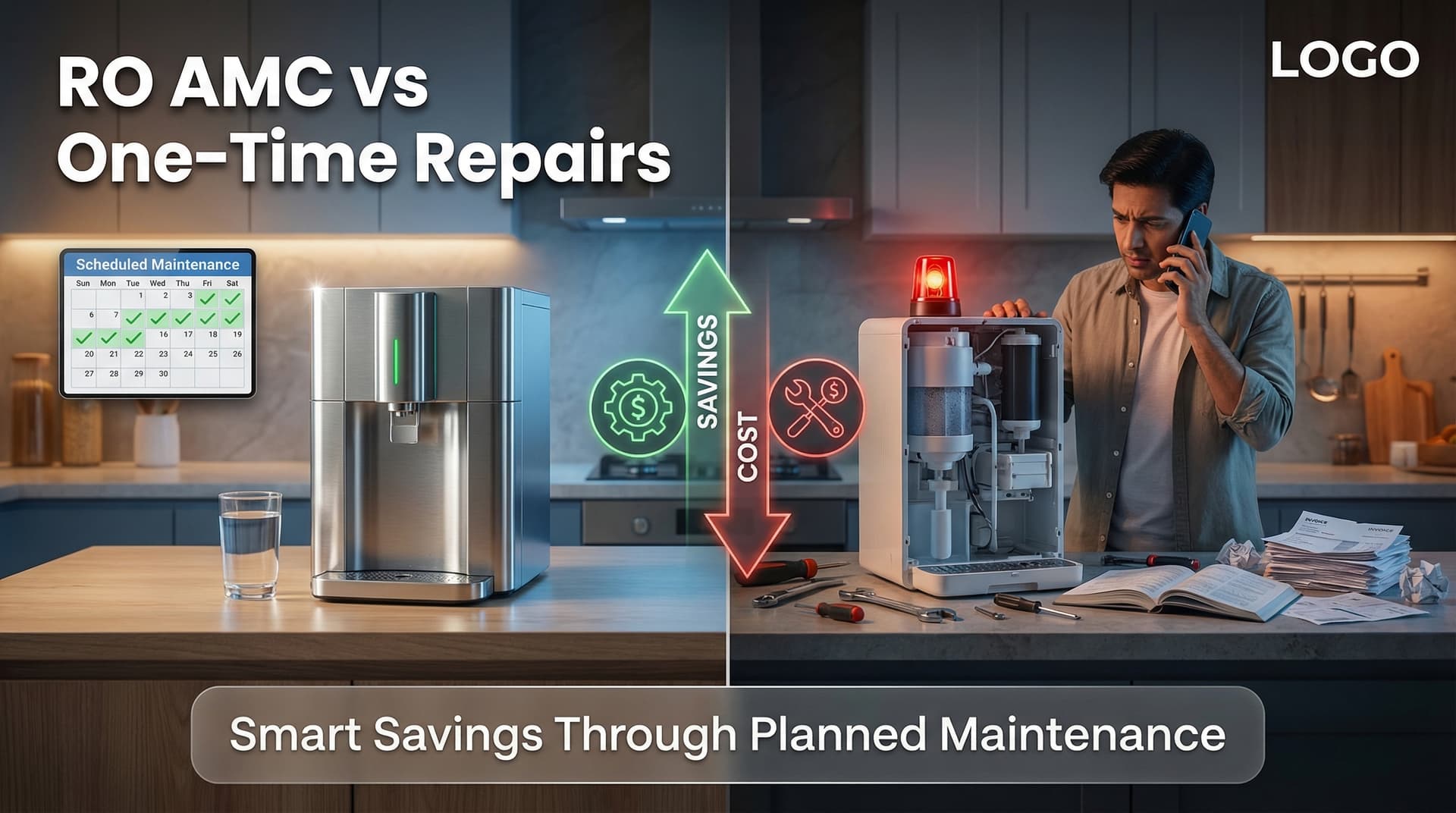
Access to Clean Drinking Water: A Fundamental Necessity
Access to clean drinking water remains a fundamental necessity for every household. As water quality concerns continue to rise across urban and rural areas, reverse osmosis water purifiers have become essential appliances in millions of homes. However, like any sophisticated equipment, these systems require proper care and attention to function optimally. Homeowners frequently face a critical decision: should they Buy water purifier or wait until problems arise and opt for individual repair sessions?
This choice impacts not only the immediate budget but also the long-term performance and lifespan of the water purification system. Many consumers believe that paying only when something breaks seems more economical at first glance. However, this perception often overlooks hidden costs, recurring problems, and the cumulative expenses that emergency interventions typically bring. Understanding the complete financial picture requires examining both approaches from multiple angles.
The maintenance approach to appliance care has gained significant traction in recent years, particularly for critical household systems. Water purifiers fall into this category because their failure directly affects family health and daily routines. The decision between structured maintenance agreements and sporadic repair calls deserves careful consideration based on actual usage patterns, water quality conditions, and realistic cost projections.
This detailed analysis explores both pathways, examining their respective advantages, limitations, and true costs over time. By understanding what each option actually delivers, households can make informed decisions that align with their financial priorities and ensure continuous access to safe drinking water without unexpected disruptions or inflated expenses.
The Structured Maintenance Approach: How It Works
Structured maintenance programs for water purification systems typically operate on an annual subscription model. Under this arrangement, Ro Service conduct scheduled visits to inspect, clean, and replace consumable components according to predetermined timelines. These visits usually occur quarterly or biannually, depending on the specific package selected and the manufacturer recommendations.
The systematic nature of this approach means technicians arrive before problems become severe. During each visit, they perform comprehensive checks including membrane inspection, filter replacement, water quality testing, and pressure valve adjustments. This preventive methodology aims to identify potential issues early when they remain simple and inexpensive to address.
Payment structures under these programs generally involve a fixed annual fee that covers a specified number of service visits and certain replacement parts. The exact components included vary between providers and price tiers. Basic packages might cover filters and routine cleaning, while premium versions include membrane replacement, UV lamp changes, and unlimited emergency visits.
The predictability factor represents a significant advantage for budget-conscious households. Knowing the exact annual expenditure for purifier maintenance allows families to plan their finances without worrying about sudden large expenses. Additionally, many providers offer priority response times and dedicated customer support channels exclusively for subscribers to these programs.
Individual Repair Sessions: The Pay-Per-Problem Model
The alternative approach involves contacting service providers only when the purifier exhibits problems or stops functioning. Under this model, homeowners pay separately for each technician visit, diagnostic assessment, labor charges, and replacement components. The total cost varies significantly depending on the nature and severity of the issue discovered.
This reactive method appeals to those who prefer avoiding ongoing financial commitments. Without annual fees, households only spend money when absolutely necessary. For purifiers that rarely malfunction or homes with excellent input water quality, this approach might seem financially sensible initially.
However, the unpredictability creates several challenges. Repair costs fluctuate based on component availability, urgency, and whether issues occur during regular business hours or require emergency attention. Weekend or holiday repairs typically command premium charges. Furthermore, without regular inspections, minor problems often escalate into major failures requiring expensive replacements instead of simple adjustments.
Component pricing also differs substantially between the two models. Maintenance programs negotiate bulk pricing with manufacturers and pass some savings to subscribers through included parts. Individual customers purchasing components during emergency repairs generally pay retail prices, which include higher markups to cover inventory costs and immediate availability requirements.
Breaking Down the Numbers: Actual Cost Analysis
Examining realistic scenarios helps clarify the financial implications of each approach. Consider a typical household with moderate water hardness using a standard reverse osmosis system. Annual maintenance programs for such setups generally range between three thousand to six thousand rupees, depending on included services and brand reputation.
This fee typically covers three to four scheduled visits, sediment and carbon filter replacements, membrane cleaning, and basic troubleshooting. Premium packages extending up to eight thousand rupees might include membrane replacement, which alone costs between two thousand to four thousand rupees when purchased separately during individual repairs.
Under the pay-per-problem approach, each service call incurs separate charges. Technician visit fees range from three hundred to eight hundred rupees, regardless of the actual work performed. Filter sets purchased individually cost between twelve hundred to two thousand rupees. Membrane replacement services combine component cost and installation charges, totaling four thousand to six thousand rupees.
If a purifier requires just two unscheduled repairs annually with standard filter replacements, the total easily approaches or exceeds the cost of basic maintenance programs. Add one membrane issue, and expenses quickly surpass even premium packages. The mathematics clearly demonstrates that systems requiring more than minimal intervention benefit financially from structured maintenance.
Hidden Costs That Shift the Balance
Beyond direct service charges, several indirect expenses significantly impact the true cost comparison. When purifiers malfunction unexpectedly, families must purchase bottled water until repairs are completed. Depending on household size and repair duration, this emergency expense ranges from several hundred to over a thousand rupees.
Downtime costs extend beyond water purchases. Scheduling emergency repairs often means waiting days for technician availability, particularly during peak seasons when service providers face high demand. Maintenance program subscribers typically receive priority scheduling, minimizing disruption and associated inconvenience costs.
Inefficient purifier operation due to clogged filters or degraded membranes increases electricity consumption and water wastage. Systems operating without regular maintenance may consume twenty to thirty percent more power and reject significantly more water than properly maintained units. Over months, these efficiency losses accumulate into measurable utility bill increases.
Equipment lifespan represents another critical financial consideration. Purifiers receiving regular professional attention typically operate effectively for eight to twelve years. Those maintained reactively often require complete replacement after just five to seven years due to accumulated wear and component stress. The replacement cost difference between these scenarios amounts to thousands of rupees.
Quality and Reliability Considerations
Service quality varies considerably between maintenance programs and individual repair arrangements. Companies offering structured programs invest in technician training and maintain quality standards to retain subscribers. Their business model depends on customer satisfaction and renewal rates, creating strong incentives for consistent, high-quality service delivery.
Individual repair services face different incentives. Without ongoing relationships, some providers might recommend unnecessary replacements or use substandard components to maximize per-visit revenue. While many technicians maintain high ethical standards, the lack of accountability present in subscription models creates greater risk exposure for consumers.
Genuine components represent another quality factor. Established maintenance providers typically use manufacturer-approved parts that meet original specifications. Independent repair services might substitute compatible but inferior alternatives to reduce costs and increase profit margins. These substitutions can affect purifier performance and longevity, though immediate functionality might appear satisfactory.
Documentation and service history tracking also differ substantially. Maintenance programs maintain detailed records of all visits, replacements, and adjustments. This documentation proves valuable for warranty claims, troubleshooting recurring issues, and ensuring service continuity even when different technicians attend consecutive visits. Individual repairs rarely generate such comprehensive records.
Categories of Water Purifier Maintenance Requirements
Different purifier technologies demand varying maintenance intensities. Basic reverse osmosis systems with standard filtration stages require quarterly filter changes and annual membrane servicing. These relatively straightforward needs align well with either maintenance approach, though structured programs still offer predictability advantages.
Advanced multi-stage purifiers incorporating UV sterilization, alkaline enhancement, or mineral addition cartridges demand more frequent attention. UV lamps require annual replacement regardless of visible performance changes. Alkaline cartridges need replacement based on water volume processed. These additional requirements increase the complexity and cost of individual repair approaches while fitting naturally into comprehensive maintenance programs.
Commercial or high-capacity systems serving larger families or small offices face accelerated component wear. These installations benefit substantially from professional monitoring because minor efficiency degradations significantly impact operating costs and water quality. The higher usage intensity makes structured maintenance particularly cost-effective for such applications.
Purifiers operating in areas with extremely hard water or high total dissolved solids face harsh conditions that accelerate filter clogging and membrane fouling. These challenging environments demand Water Softener service regardless of the chosen approach. However, the increased intervention frequency amplifies the cost advantages of inclusive maintenance packages compared to accumulating individual repair bills.
Service Provider Landscape and Options
The water purifier service industry includes manufacturers, authorized service centers, and independent technicians. Understanding these different provider categories helps consumers make informed choices aligned with their selected maintenance approach. Each category offers distinct advantages and potential limitations worth considering.
Doctor Fresh has established a strong presence in water purification services, offering both maintenance packages and individual repair options. Their technicians receive specific training for various purifier brands and maintain access to genuine replacement components. RO Care India similarly provides comprehensive service solutions, with particular expertise in reverse osmosis system maintenance and troubleshooting.
Mannubhai Service Expert focuses on multi-brand servicing capabilities, making them valuable for households with different purifier types or those preferring independent service providers over manufacturer-tied options. Their flexible approach accommodates both maintenance subscribers and customers seeking individual repairs.
Major manufacturers including Kent, Aquaguard, Aquafresh, Pureit, Blue Star, and LG maintain extensive authorized service networks. These brand-specific channels offer the advantage of guaranteed genuine parts and factory-trained technicians. However, their pricing structures for individual repairs versus maintenance plans vary considerably, making careful comparison essential before committing to either approach.
Making the Right Choice for Your Situation
Several factors should guide the decision between maintenance programs and individual repairs. Household water consumption patterns provide crucial insights. Families using twenty to thirty liters daily create different wear patterns than smaller households consuming ten liters. Higher consumption generally justifies maintenance programs through component cost savings alone.
Local water quality significantly influences maintenance requirements. Areas with municipal water supplies meeting basic quality standards impose less stress on purification systems than regions with high contamination levels or extreme hardness. Understanding your input water characteristics through periodic testing helps predict likely maintenance needs and associated costs.
Financial planning preferences also matter. Some households prioritize budget predictability and prefer fixed annual expenses over variable costs, even if annual totals prove similar. Others maintain emergency funds specifically for appliance repairs and value the flexibility of paying only when necessary. Neither approach is inherently superior; alignment with personal financial management style matters most.
System age and condition affect the calculation as well. Newer purifiers under manufacturer warranty might incur minimal costs through either approach. Aging systems approaching their expected lifespan might experience frequent problems that quickly make individual repairs expensive, favoring maintenance programs. Conversely, well-maintained older units might continue functioning reliably with minimal intervention, reducing the value proposition of comprehensive packages.
Long-Term Financial Planning Perspectives
Viewing the decision through a multi-year lens reveals patterns invisible in annual comparisons. Over a typical purifier lifespan of eight years, the cumulative cost difference between approaches can reach significant amounts. A household spending five thousand annually on maintenance invests forty thousand rupees over this period. Individual repairs might total less if problems remain minimal, but could substantially exceed this amount if major component failures occur.
Risk tolerance plays an important role in long-term planning. Maintenance programs essentially function as insurance against major repair costs, spreading expenses evenly across years regardless of actual problems encountered. This risk transfer appeals to households preferring certainty over potential savings from betting on minimal breakdowns.
Return on investment calculations should also consider non-financial benefits. The convenience of scheduled service eliminating the need to remember filter changes and the peace of mind from professional monitoring add subjective value difficult to quantify. For some families, these intangible benefits justify maintenance programs even when pure cost analysis suggests equivalence.
Tax considerations may apply for households claiming home office deductions or rental property expenses. Maintenance contracts for essential utilities often qualify as deductible expenses under appropriate circumstances, whereas individual repairs might face different treatment. Consulting tax professionals regarding specific situations can reveal additional financial implications worth considering.
Conclusion
The choice between systematic maintenance agreements and individual repair services for water purification systems extends beyond simple cost comparison. While analyzing direct expenses provides essential foundation for decision-making, the complete picture encompasses reliability, convenience, quality assurance, and risk management considerations that vary by household circumstances.
For most families using purifiers regularly in areas with typical water quality challenges, structured maintenance programs deliver superior long-term value through predictable costs, preventive care, and priority service access. The upfront commitment pays dividends through extended equipment life, consistent performance, and elimination of emergency repair stress. Households facing higher usage intensity or challenging water conditions benefit most dramatically from this approach.
Individual repair services remain viable for specific situations including minimal usage patterns, exceptional input water quality, or strong personal preferences for variable expenses over fixed commitments. Success with this approach requires disciplined attention to performance indicators, prompt response to developing issues, and realistic acceptance of potential cost volatility.
Ultimately, informed decision-making requires honest assessment of actual usage patterns, local water conditions, financial preferences, and household priorities. Comparing specific offerings from reputable providers, examining included services carefully, and projecting realistic scenarios based on your situation enables choices that optimize both financial efficiency and water quality assurance for your family's unique needs.
FAQ
Q - How often should RO water purifiers receive professional maintenance to function optimally?
A - Most reverse osmosis water purifiers require professional attention quarterly or biannually, depending on usage intensity and local water quality conditions. Systems processing higher daily volumes or operating in areas with hard water or high contamination levels need more frequent servicing. Standard maintenance includes filter replacements every three to six months, membrane cleaning annually, and comprehensive system checks to identify potential issues before they escalate into costly failures.
Q - What are the typical costs associated with emergency repairs compared to preventive maintenance programs?
A - Emergency repairs involve multiple separate charges including technician visit fees (300-800 rupees), component costs at retail prices (filters: 1200-2000 rupees, membranes: 2000-4000 rupees), and labor charges. Two unscheduled repairs with standard replacements easily cost 4000-6000 rupees annually. In contrast, structured maintenance programs range from 3000-8000 rupees yearly, covering scheduled visits, routine replacements, and often priority emergency service, making them more economical for systems requiring regular attention.
Q - Can delaying regular maintenance significantly shorten a water purifier's lifespan?
A - Absolutely. Water purifiers receiving consistent professional maintenance typically operate effectively for 8-12 years, while those maintained reactively often require complete replacement after just 5-7 years. Neglected filters force membranes to work harder, accelerating degradation. Clogged components increase pressure on pumps and valves, causing premature wear. Additionally, inefficient operation from delayed maintenance increases electricity consumption by 20-30 percent and significantly increases water wastage, compounding the financial impact beyond just replacement costs.
Q - Do maintenance programs guarantee better service quality than individual repair calls?
A - Generally, yes. Companies offering structured maintenance programs invest in ongoing technician training and maintain quality standards to retain subscribers, as their business model depends on customer satisfaction and renewal rates. They typically use manufacturer-approved genuine components and maintain detailed service records. Individual repair services, while often competent, lack the accountability mechanisms of subscription models and may occasionally recommend unnecessary replacements or use compatible but inferior components to maximize per-visit revenue.
Short Informational CTA
Understanding water purifier maintenance costs is just the beginning. Stay informed about water quality standards, filtration technologies, and system performance indicators that affect your household's health and expenses. Explore comprehensive guides on water testing methods, component lifespan expectations, and seasonal maintenance considerations to maximize your purification investment and ensure consistent access to safe drinking water throughout the year.