
RO Membrane Replacement in Vijayawada– Signs, Cost & Expert Tips
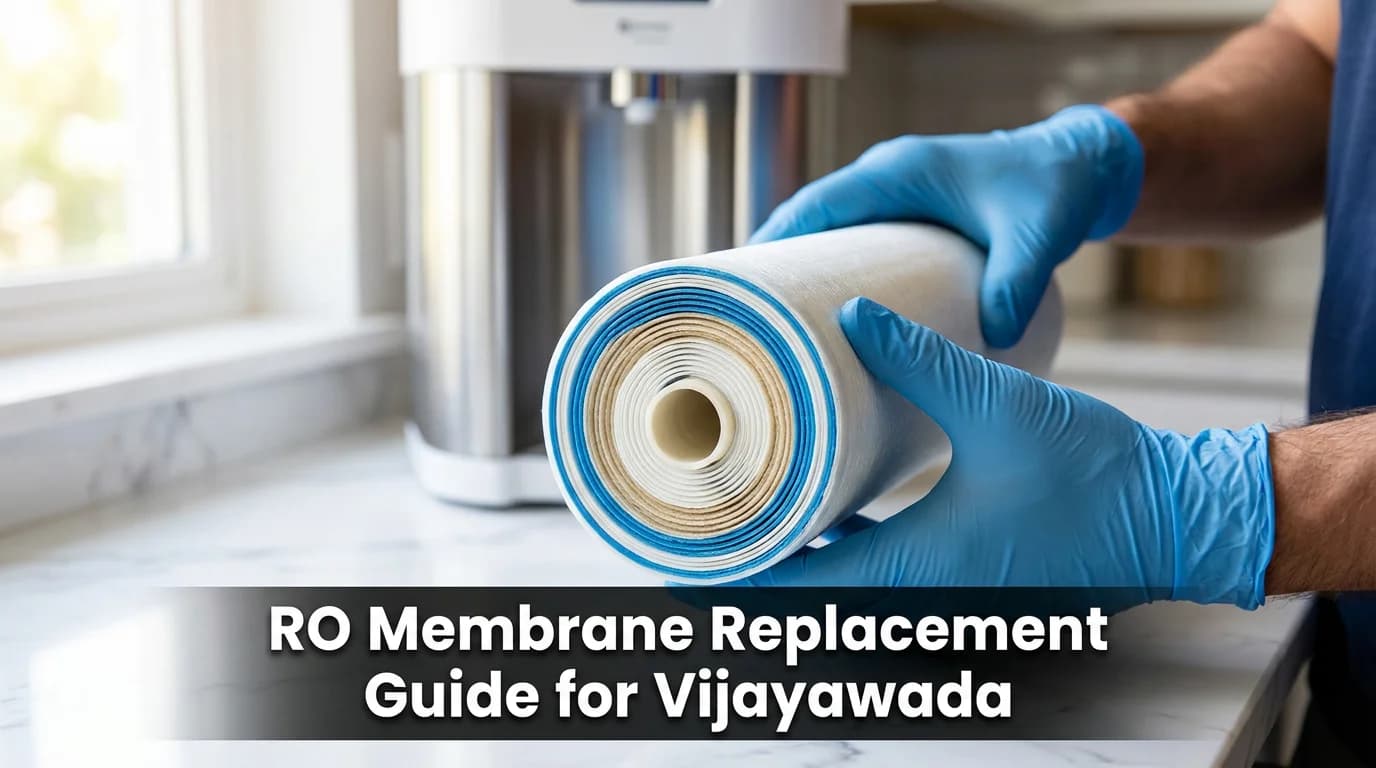
Complete Guide to RO Membrane Replacement in Vijayawada – Ensuring Pure Water for Your Family
Water quality concerns remain a significant challenge for households across Vijayawada, with fluctuating TDS levels and seasonal contamination affecting daily water consumption. The RO membrane serves as the heart of your water purification system, removing up to 99 percent of dissolved impurities, bacteria, and harmful contaminants from your drinking water. Understanding when and how to replace this critical component can save you from costly repairs while ensuring your family continues receiving safe, pure water. Many residents seeking ro service vijayawada often overlook the importance of timely membrane replacement, leading to compromised water quality and increased health risks.
The climate conditions in Vijayawada, combined with varying municipal water quality across neighborhoods like Benz Circle, Gunadala, and Poranki, place additional stress on water purification systems. Hard water with elevated calcium and magnesium content accelerates membrane degradation, while sediment buildup from aging pipelines further reduces filtration efficiency. Professional ro water purifier service vijayawada providers report that most residential RO membranes require replacement every 24 to 36 months, though this timeline varies based on water quality and daily usage patterns.
Recognizing the warning signs of membrane failure prevents sudden breakdowns and protects your family from consuming inadequately filtered water. Common indicators include unusual taste or odor in purified water, decreased water flow rate, and noticeably higher TDS readings in the output water. Many households discover these issues only during routine maintenance checks, emphasizing the value of scheduling regular inspections with qualified ro service in vijayawada technicians who can assess membrane condition before complete failure occurs.
Investment in timely membrane replacement represents a fraction of the cost involved in purchasing a new water purifier system. Understanding replacement costs, selecting quality components, and maintaining proper service schedules ensures your purification system delivers optimal performance throughout its operational lifespan. This comprehensive guide provides Vijayawada residents with essential information about membrane replacement procedures, cost considerations, and professional maintenance practices that extend system longevity.
Understanding RO Membrane Function and Degradation
The reverse osmosis membrane operates through a semi-permeable barrier that allows water molecules to pass while blocking dissolved solids, heavy metals, and microorganisms. This thin film composite membrane typically measures between 0.0001 to 0.001 microns in pore size, effectively filtering contaminants that pre-filters and carbon filters cannot remove. In Vijayawada's water conditions, where TDS levels frequently range between 500 to 1500 parts per million, the membrane performs continuous heavy-duty filtration that gradually reduces its effectiveness over time.
Several factors accelerate membrane degradation in local conditions. Chlorine present in municipal water chemically attacks the membrane surface, creating microscopic tears that compromise filtration efficiency. Hard water deposits form scaling on the membrane surface, reducing the effective filtration area and increasing pressure requirements. Organic matter and colloidal particles create biofouling, where bacterial colonies establish themselves on the membrane surface despite pre-filtration stages. These combined stressors explain why ro customer care vijayawada receives numerous calls regarding declining water quality from systems that appear externally functional.
The membrane lifespan depends significantly on pre-filter maintenance and input water quality. Households that regularly replace sediment filters and carbon filters every six months typically achieve longer membrane life compared to those neglecting pre-filter replacement. Water with TDS levels exceeding 2000 ppm places exceptional stress on membranes, potentially reducing their effective lifespan to 18 months or less. Conversely, well-maintained systems processing moderately hard water may achieve 36 to 48 months of efficient membrane operation before replacement becomes necessary.
Professional technicians assess membrane condition through multiple diagnostic methods. TDS testing of input versus output water provides immediate insight into rejection rates, with properly functioning membranes maintaining 90 to 95 percent rejection ratios. Flow rate measurements identify whether decreased output results from membrane fouling or pump failure. Pressure testing across the membrane housing reveals whether scaling has restricted water passage. These comprehensive diagnostics differentiate between membranes requiring cleaning versus those needing complete replacement.
Warning Signs Indicating Membrane Replacement
Recognizing early warning signs prevents extended periods of consuming inadequately purified water. The most obvious indicator appears when purified water develops an unusual taste, often described as slightly salty or metallic, suggesting the membrane no longer effectively removes dissolved minerals. This taste change typically occurs gradually, making it easily overlooked until someone compares the water to a freshly serviced system or bottled water.
Decreased water production rate represents another critical warning sign. A standard domestic RO system producing 10 to 15 liters per hour may slow to 5 to 7 liters hourly as the membrane becomes clogged or damaged. Many Vijayawada residents mistakenly attribute this slowdown to low water pressure or pump issues, delaying necessary membrane replacement. When seeking ro service vijayawada assistance, technicians often discover that reduced flow results from membrane scaling rather than mechanical failures.
Visible changes in water appearance warrant immediate attention. Cloudiness or white particles in purified water indicate the membrane has developed tears allowing sediment passage. Some households notice increased soap consumption for bathing and dishwashing, suggesting elevated TDS levels in purified water. Frequent gastrointestinal discomfort among family members, despite consuming purified water, often correlates with compromised membrane filtration allowing bacterial contamination.
The storage tank fills more slowly than normal, requiring extended waiting periods between refills. This symptom often accompanies increased wastewater production, where the reject water ratio climbs from the standard 3:1 or 4:1 to 6:1 or higher. Such inefficiency not only wastes water but increases electricity consumption as the pump operates longer to produce adequate purified water. Regular monitoring of these indicators helps schedule proactive membrane replacement rather than reactive emergency repairs.
RO Membrane Replacement Costs in Vijayawada
Understanding replacement costs helps Vijayawada households budget appropriately for this essential maintenance service. Membrane prices vary based on capacity, brand quality, and membrane technology, with most residential systems using 75 or 100 gallons per day capacity membranes.
| Membrane Type | Capacity | Price Range (INR) | Expected Lifespan |
|---|---|---|---|
| Standard TFC Membrane | 75 GPD | 800 - 1200 | 24-30 months |
| Premium TFC Membrane | 75 GPD | 1400 - 1800 | 30-36 months |
| Standard TFC Membrane | 100 GPD | 1000 - 1500 | 24-30 months |
| Premium TFC Membrane | 100 GPD | 1600 - 2200 | 30-36 months |
| Commercial Grade | 150+ GPD | 2500 - 4000 | 36-48 months |
Professional installation charges typically add 300 to 600 rupees to the total replacement cost, depending on system complexity and technician travel distance. Comprehensive ro water purifier service vijayawada packages often bundle membrane replacement with complete system servicing, including pre-filter replacement, storage tank sanitization, and post-carbon filter replacement, ranging from 2500 to 4000 rupees for complete service.
Labor costs fluctuate based on service provider reputation and technician expertise. Authorized service centers generally charge premium rates but provide genuine replacement parts with warranties. Independent technicians offer competitive pricing, though component quality varies significantly. Some ro service in vijayawada providers promote discounted membrane replacements during off-peak seasons, typically during monsoon months when water quality temporarily improves, and service demand decreases.
Additional costs emerge when membrane replacement reveals related issues. Damaged membrane housings require replacement costing 400 to 800 rupees. Worn O-rings and seals need simultaneous replacement, adding 100 to 200 rupees. Systems operating beyond recommended membrane lifespan often require pump replacement due to excessive strain, introducing costs of 1500 to 3000 rupees. Annual maintenance contracts ranging from 3000 to 6000 rupees provide cost-effective solutions covering multiple service visits and component replacements.
Professional Maintenance Tips for Extended Membrane Life
Implementing proactive maintenance practices significantly extends membrane lifespan while maintaining optimal purification performance. The foundation of membrane longevity lies in diligent pre-filter replacement, as sediment and carbon filters protect the membrane from premature fouling and chemical damage. Replace sediment filters every three to six months depending on water turbidity, with higher replacement frequency during summer months when sediment levels increase in municipal supplies.
Regular system sanitization prevents biofouling that accelerates membrane degradation. Annual sanitization using food-grade sanitizing solutions eliminates bacterial colonies from storage tanks, pipelines, and membrane surfaces. Many ro customer care vijayawada technicians recommend sanitization during membrane replacement to ensure the new component operates in a clean environment. Between professional services, flushing the system weekly by running purified water for several minutes prevents stagnant water from encouraging bacterial growth.
Monitor input water quality through periodic TDS testing, available through inexpensive handheld meters costing 300 to 600 rupees. Significant seasonal variations in municipal water quality may necessitate adjusting service schedules or installing additional pre-treatment. Neighborhoods receiving corporation water with consistently high TDS levels benefit from installing water softeners upstream of RO systems, reducing scaling and extending membrane life by 40 to 60 percent.
Pressure regulation protects membranes from mechanical stress. Ensure input water pressure remains between 40 to 60 PSI through pressure regulating valves. Excessive pressure forces contaminants through membrane pores, while insufficient pressure reduces purification efficiency. Storage tank air pressure requires annual checking, maintaining 7 to 8 PSI when empty. Proper air pressure ensures consistent water flow and prevents membrane back pressure damage.
Avoid system neglect during extended absences. Before traveling, shut off the input water supply and drain the storage tank to prevent stagnant water contamination. Upon return, flush the system completely before resuming normal use. Systems left idle for 30 days or longer benefit from professional sanitization before regular operation resumes. These simple practices prevent costly damage resulting from bacterial growth during inactivity periods.
Choosing the Right Service Provider
Selecting qualified ro service vijayawada professionals ensures proper membrane replacement and system maintenance. Evaluate service providers based on technician certification, genuine parts availability, and customer reviews from verified sources. Authorized service centers maintain direct manufacturer relationships, ensuring access to original components and updated technical training. Independent service providers often offer competitive pricing and flexible scheduling, though verifying their experience with your specific system model remains essential.
Request detailed service reports documenting pre-service and post-service TDS readings, water flow rates, and pressure measurements. Professional technicians provide transparency about component conditions, explaining why specific replacements are necessary rather than simply presenting bills. Reputable ro water purifier service vijayawada providers offer warranties on replacement parts, typically ranging from three to six months, providing recourse if premature component failure occurs.
Emergency service availability becomes crucial when membrane failure causes complete system shutdown. Establish relationships with service providers offering same-day or next-day service rather than waiting several days without purified water. Some providers maintain parts inventory enabling immediate membrane replacement without ordering delays. Annual maintenance contracts often include priority service scheduling and discounted emergency call rates.
Compare service packages across multiple providers before committing to contracts. Comprehensive packages covering all filter replacements, membrane replacement, and quarterly inspections provide better value than pay-per-service models for most households. Transparent pricing without hidden charges for travel, labor, or minor components indicates honest business practices. Avoid providers refusing to explain technical issues or pressuring immediate expensive component replacements without proper diagnostics.
Safeguarding Your Water Quality Investment
RO membrane replacement represents a critical maintenance requirement that directly impacts your family's health and water purification system longevity. Understanding warning signs enables timely intervention before complete membrane failure compromises water quality. Cost considerations span beyond membrane prices to include professional installation, related component replacements, and comprehensive system maintenance. Vijayawada households benefit from establishing regular service schedules with qualified ro service in vijayawada professionals who provide transparent diagnostics and genuine replacement components.
Proactive maintenance practices including regular pre-filter replacement, annual sanitization, and water quality monitoring extend membrane lifespan while maintaining optimal purification efficiency. The investment in quality membranes and professional installation pays dividends through consistent pure water production and reduced long-term maintenance costs. By implementing the guidance provided in this comprehensive guide, you ensure your water purification system continues delivering safe, healthy drinking water for your family throughout its operational life.
Explore further how regular RO membrane maintenance protects your family's health in Vijayawada's challenging water conditions. Learn more about identifying performance decline through TDS testing, understanding the typical 2-3 year replacement cycle, and recognizing early warning signs like slow filtration or unusual taste. Discover how professional servicing ensures optimal purification efficiency and helps you make informed decisions about membrane quality, installation standards, and long-term system performance for safe drinking water.
Related Blogs
- Fix Your Water Purifier Today: Same-Day RO Repair and Maintenance in Kolkata
- RO vs UV vs UF: Which Water Purifier is Best for Vijayawada Water?
- A Drastic Drop in Water Flow Rate in Ro What to do?
- RO Purifier Water Wastage Problem – How to Reduce It
- Why should I hire a professional technician to service My RO in Kolkata