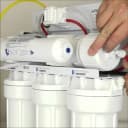
Hazaribag's water supply draws from both municipal sources and private borewells, with considerable seasonal variation. During monsoon months, turbidity spikes significantly as runoff affects local water sources. Outside the rains, groundwater TDS levels can rise, particularly in areas reliant on borewell extraction. These shifting conditions place additional demand on reverse osmosis systems, which is why regular Eureka Forbes RO service has become essential for households across the city.
A water purifier working under these conditions — filtering high sediment loads in monsoon, then managing elevated mineral content in dry months — needs scheduled attention to perform reliably. Many Hazaribag homeowners discover this only when their Eureka Forbes unit starts showing signs of strain, such as slower water output or taste changes that signal filter exhaustion.
Select Service

.webp&w=256&q=75)
Everything you need to know
Hazaribag experiences distinct seasonal water quality shifts that directly impact RO maintenance schedules. Pre-monsoon months see relatively stable mineral levels, but once the rains arrive, sediment content rises sharply as surface water enters the supply network. This influx of suspended particles — rust, clay, organic debris — clogs the sediment pre-filters far faster than in cities with more consistent supply quality.
What this means practically: a filter that might last six months under normal conditions often needs replacement within three to four months during and immediately after the monsoon season in Hazaribag. Ignoring this shift leaves homeowners with a purifier that appears to be working but is actually pushing inadequately filtered water into their storage tanks and glasses. The solution is not to replace your Eureka Forbes unit, but to align your service schedule with local water behavior rather than following a generic maintenance calendar.
In Hazaribag's climate, certain warning signs appear more frequently than they might in other regions:
Service requirements differ depending on whether your supply comes from the municipal network or a private borewell. Municipal supply in central Hazaribag is often treated at source but carries higher sediment during monsoon. Private borewells, common in residential colonies and periphery areas, have stable TDS but less predictable sediment based on local hydrogeology.
A technician familiar with Hazaribag's specific conditions will ask which source you rely on, because that determines replacement frequency. Borewell users generally face higher mineral loading and may benefit from more frequent RO membrane checks, even if sediment filters don't require changing. Municipal supply users see greater variation with season but more predictable overall wear. Eureka Forbes service providers in the city who understand this distinction avoid over-servicing some households and under-servicing others.
Pricing for Eureka Forbes RO repair work varies based on several factors specific to local conditions:
Request a written quote that specifies the visit charge, labor time, and parts cost separately. This breakdown helps you understand whether you're paying for convenience, expertise, or parts when comparing quotes from different technicians.
An AMC plan offers predictable costs and scheduled visits, but its value in Hazaribag depends on your specific situation and how your provider structures the plan.
An AMC makes strong sense if: you draw water from a borewell with high TDS and sediment that demands frequent filter changes; you rely on a combination of municipal and private sources that create unpredictable demand; you want priority scheduling during monsoon when technicians are busy; or you prefer not to think about maintenance scheduling and simply want your unit serviced reliably. The annual cost often comes out lower than paying for three or four individual service visits spread across the year, especially if you factor in rush charges during peak seasons.
An AMC may not suit you if: your purifier is new and still under manufacturer warranty; you use relatively small quantities of water and place minimal demand on the system; you plan to relocate or replace the unit within the contract period; or the plan you're offered doesn't include parts (only labor), since parts are where most monsoon-related expenses occur in Hazaribag. Read the fine print carefully — some plans cap the number of filter replacements covered annually, which can be insufficient if your water source forces more frequent changes than expected.
Standard filter life estimates assume relatively consistent water quality. Hazaribag's seasonal shifts mean you should expect different replacement intervals depending on the time of year:
Pre-monsoon (March to May) is when sediment filters typically give you their longest life, often stretching to 5 or 6 months. During monsoon itself (June to September), sediment filters need replacement every 3 to 4 months because rainfall runoff massively increases suspended solids. Post-monsoon (October to December), as water clears up, you return to a 5-month cycle. Winter and early spring (January to March) see stable conditions but potentially rising TDS if borewell usage dominates your supply, so RO membranes need close attention even if sediment filters appear to last longer.
The carbon filter, which removes taste and odor, follows a steadier schedule of 6 to 8 months regardless of season, but monsoon monsoon-season water can contain more organic matter that exhausts carbon filters faster. Post-carbon filters (the final polishing stage) generally last 10 to 12 months but may need earlier replacement if you notice any taste changes mid-cycle, particularly after heavy rains.
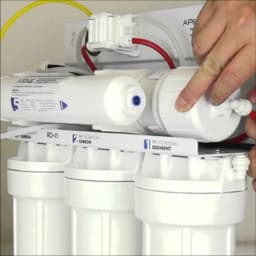
When you schedule an Eureka Forbes RO service, knowing what the technician will do helps you evaluate the quality of work:
Multiple pathways exist to reach service support. The Eureka Forbes customer care line can address warranty queries and direct you to authorized service partners in Hazaribag. For faster response on routine maintenance — filter changes, minor repairs, and scheduled AMC visits — independent technicians specializing in Eureka Forbes systems often provide same-day or next-day scheduling, particularly outside monsoon season. If your issue is urgent, specifying whether it's warranty-related or routine helps the service provider allocate technicians more efficiently. During monsoon months, booking a service visit a few days in advance rather than last-minute ensures faster response than waiting until water quality problems become critical.
Beyond scheduled servicing, several habits reduce repair costs and extend component lifespan in Hazaribag's conditions:
Monitor the inlet tap regularly, especially during monsoon when debris can clog the entry point before water reaches the purifier. A blocked inlet forces the pump to work harder and can lead to premature failure. Ensure the unit sits in a reasonably dry location, since humid monsoon air accelerates corrosion of external fittings. If power cuts are common in your area, avoid running the purifier immediately after power restoration, as sudden pressure changes can stress internal seals. Note the date of your last service visit somewhere visible — a sticky note on the storage tank works — so you don't lose track of when filters were last replaced. Before monsoon arrives, check that all outlet connections are tight, since seasonal pressure fluctuations loosen fittings over time.
What makes us different
Hazaribag's water supply draws from both municipal sources and private borewells, with considerable seasonal variation. During monsoon months, turbidity spikes significantly as runoff affects local water sources. Outside the rains, groundwater TDS levels can rise, particularly in areas reliant on borewell extraction. These shifting conditions place additional demand on reverse osmosis systems, which is why regular Eureka Forbes RO service has become essential for households across the city.
A water purifier working under these conditions — filtering high sediment loads in monsoon, then managing elevated mineral content in dry months — needs scheduled attention to perform reliably. Many Hazaribag homeowners discover this only when their Eureka Forbes unit starts showing signs of strain, such as slower water output or taste changes that signal filter exhaustion.
Step-by-step guidance
Don't wait! Get the at the most competitive rates. Contact rocareindia today for a free consultation and quote.

Verified Professionals

Work Assurance

On-Time Support

Covid-19 Safety
Find answers to common questions about our services
Find our nearby franchise stores in your city
Pure water, delivered.