Select Service



.webp&w=256&q=75)
Everything you need to know
The water supply in Dhamtari typically shows TDS levels ranging from 400 to 800 ppm depending on the source and season. Borewell-dependent households often experience even higher mineral loads, with some reaching 1000 ppm or more during summer months when groundwater becomes more concentrated. This mineral-heavy input places particular demand on Eureka Forbes purifiers because the reverse osmosis membrane must work harder to push water through while rejecting dissolved salts and ions.
When TDS levels remain high for months without proper service, the sediment pre-filter clogs faster, the carbon stage becomes saturated with minerals that it cannot absorb, and the RO membrane faces accelerated fouling. A purifier that might run for 18 months in a low-TDS city can see membrane life cut to 10 to 12 months in Dhamtari if maintenance is neglected. This is why local homeowners who understand their water profile often adopt more aggressive Eureka Forbes service schedules than the standard national guidelines suggest.
Several warning signs tell you it's time to call an Eureka Forbes technician rather than waiting for a full breakdown:
Any of these symptoms warrant booking Eureka Forbes RO service without delay, as the local water chemistry means problems escalate faster than they would in cities with naturally softer water supplies.
Homeowners in Dhamtari typically face a choice between pay-per-visit servicing and annual maintenance contracts. Understanding which model suits your situation depends on several practical factors:
Single-visit service works best if your purifier is relatively new, experiences infrequent problems, or if you want to maintain flexibility without a long-term commitment. You call a technician when needed, describe the issue, receive a diagnostic and quote, and pay only for the work performed that day. For isolated problems like a cracked housing or a loose connection, this approach keeps costs low.
Annual Maintenance Contracts (AMC) become more economical for households in Dhamtari because the local water's mineral content demands more frequent filter replacements than many other regions. An AMC typically includes three to four scheduled service visits per year (rather than the standard two elsewhere), with all filter replacements, basic repairs, and tank cleaning covered under a single annual fee. Given that each filter change or membrane replacement in a high-TDS area can cost between 800 and 2000 rupees when purchased individually, an AMC paying for 3 to 4 complete filter sets annually often saves 3000 to 5000 rupees per year compared to booking each service separately.
To decide: calculate how many times per year your purifier typically needs service based on past history, estimate the combined cost of those visits, and compare it to available AMC package rates from local Eureka Forbes service providers. If the AMC covers more visits than you strictly need, the pay-per-visit model may be cheaper. If your water is particularly hard or you use the purifier heavily, the bundled cost of an AMC usually works in your favor.
Dhamtari's water profile means filter replacement schedules differ from national guidelines. Here's what typically applies locally:
Sticking to these tighter timelines requires more frequent bookings and higher cumulative parts costs, which is why an Eureka Forbes AMC plan becomes particularly valuable for Dhamtari households. Delaying any of these replacements directly compromises water quality and accelerates wear on expensive downstream components.
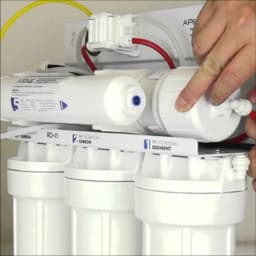
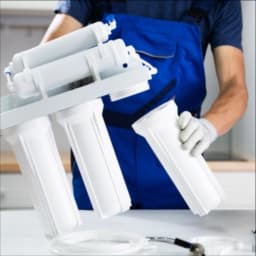
When a trained Eureka Forbes technician arrives at your Dhamtari home, the visit follows a structured process designed to identify issues before they cause breakdown:
First, the technician assesses current system performance by measuring water flow rate and TDS levels in the output. For Dhamtari homes, the TDS reading is particularly important — if the purified water TDS is climbing toward 150 to 200 ppm when it should be below 100 ppm, the membrane is losing efficiency and requires replacement regardless of how long it's been installed.
Next comes visual inspection of all visible components: the pre-filter housing, carbon stage connections, the membrane unit, and the storage tank. In Dhamtari's mineral-rich environment, the technician specifically looks for white scaling deposits, signs of mineral corrosion on metal fittings, and any discoloration inside the tank that might indicate bacterial growth.
Based on the diagnosis, the technician discusses which parts need replacement. This is not an automatic process — filters are inspected for actual wear rather than replaced on a calendar basis alone. However, in high-TDS areas like Dhamtari, most service visits do involve at least the sediment and carbon filter replacement, since the local water chemistry degrades these components faster.
During replacement, the technician sanitizes the unit's internal surfaces to remove mineral buildup and any bacterial film that may have formed. The storage tank gets drained, cleaned, and refilled with purified water before the system is reassembled and tested.
The final step is verification: the technician confirms that water flow has returned to normal, TDS levels in the output are within acceptable range, and all connections are secure. You should receive documentation noting the service date, parts replaced, and when the next service is recommended.
Dhamtari is a growing district with increasing demand for RO maintenance services, particularly during March to June when water quality stress peaks. Response times can vary based on whether you're booking through the official Eureka Forbes customer care number or through an authorized independent technician in your area.
Official customer care channels handle warranty-related work and may require you to provide proof of purchase and registration. For non-warranty repair or routine AMC service visits, authorized independent technicians often provide faster scheduling — sometimes same-day or next-morning service depending on their current workload.
When you call to book, communicate clearly whether the work is under warranty or paid service, describe the symptoms you're experiencing, and mention your water source (borewell or municipal). This context helps the technician come prepared with the correct parts and finish the job without multiple trips. If you're on an AMC plan, have your contract number ready to confirm coverage.
A typical Eureka Forbes service visit in Dhamtari lasts between 45 minutes and 1.5 hours depending on the complexity of work needed. Simple filter changes are quicker; full sanitization and membrane replacement take longer. Plan accordingly and ensure someone is home during the appointment window.
Service charges in Dhamtari for Eureka Forbes purifiers typically range from 300 to 500 rupees per visit as a technician fee, plus the cost of actual parts replaced. Sediment filters average 150 to 400 rupees each, carbon filters 200 to 500 rupees, and RO membranes 1200 to 2000 rupees depending on purifier model and part quality. Tank cleaning and sanitization may add another 200 to 300 rupees if the service includes this step.
For a household that needs service four times per year (typical for Dhamtari given local water conditions), paying individually could total 3000 to 6000 rupees annually in visit charges alone, plus 2000 to 3000 rupees in filter costs per visit — a yearly total of 8000 to 14000 rupees or more. An AMC plan covering four visits per year, all filter replacements, and tank cleaning typically ranges from 3000 to 6000 rupees annually, providing substantial savings for mineral-rich water areas like Dhamtari.
Before committing to an AMC, ask the provider whether it covers emergency repair and replacement of major components (like the pump or membrane housing) or only routine maintenance. Some plans include accidental damage coverage; others explicitly exclude it. Understanding these boundaries prevents billing disputes when a genuine emergency arises.
Your habits between professional servicing directly affect purifier longevity and water quality consistency. In Dhamtari's challenging water environment, a few practical steps reduce the need for emergency repairs:
Check the purifier's inlet water line and connections monthly for any visible scaling or discoloration. If mineral deposits are visible on external surfaces, internal mineral buildup is likely accelerating. This is a signal to prioritize the next scheduled service rather than postpone it.
Monitor the storage tank visually when you open it to refill. If the inside has developed a white coating or shows discoloration, book an urgent service to prevent bacterial growth from reaching your tap.
Note the date of your last service somewhere visible — a calendar marking, a note on your phone, or a label on the purifier itself. Dhamtari's demanding water chemistry makes it easy to lose track of maintenance intervals, and then discover months later that filters are overdue for replacement.
Avoid running the purifier continuously without a break. If your household uses high volumes of water, spacing usage throughout the day rather than back-to-back heavy draws reduces pump strain and extends filter life.
If you notice any change in water taste, smell, or flow — even a subtle one — don't dismiss it as temporary. In high-TDS areas, performance decline usually accelerates once it begins, so early intervention with a service call prevents larger problems from developing.
What makes us different
Water quality in Dhamtari presents specific challenges that drive the need for consistent Eureka Forbes purifier upkeep. The district draws from both municipal supply and private borewells, many of which carry high mineral content and elevated TDS levels, especially during the dry season from March to June. When hard water flows continuously through your RO unit, the internal components work under greater stress than they would with softer municipal water sources found in other cities.
An Eureka Forbes water purifier handles this workload effectively — but only when filters and membranes are replaced on schedule and the system is inspected regularly. Skipping maintenance in Dhamtari's water environment leads to premature membrane fouling, reduced flow rates, and the risk of mineral-laden water reaching your tap despite the purifier running. Understanding how local water conditions affect your purifier helps you plan service intervals and avoid expensive component failures.
Step-by-step guidance
Don't wait! Get the Best water purifier service at the most competitive rates. Contact rocareindia today for a free consultation and quote.

Verified Professionals

Work Assurance

On-Time Support

Covid-19 Safety
Find answers to common questions about our services
Pure water, delivered.