Select Service

.webp&w=256&q=75)
Everything you need to know
Before diving into service intervals and costs, it helps to understand what your RO system is actually dealing with. Coimbatore's water typically shows high TDS (Total Dissolved Solids) — often in the range of 600 to 1200 ppm depending on which area and season — and significant hardness from dissolved calcium and magnesium. This is harder water than many other cities in Tamil Nadu, which translates directly into faster filter and membrane wear.
During the southwest monsoon (June to September), surface-derived canal water becomes turbid, meaning it carries visible and invisible sediment. This loads the pre-filtration stages immediately, requiring more frequent cleaning or replacement. Conversely, in peak summer (April-May) when bore wells become the primary source, mineral concentration peaks, stressing the RO membrane itself. Understanding which season brings which challenges helps you anticipate service needs rather than scrambling after a breakdown.
Your Eureka Forbes unit speaks to you through several signals if you know what to listen for:
Spotting these signs early and booking service, rather than operating the purifier until it fails completely, saves you from both water-quality problems and higher repair costs later.
Generic filter-change schedules printed on the manual don't always fit reality in Coimbatore, especially if you're drawing from bore wells or canal-fed supply networks. Here's a more practical approach:
The key is flexibility. If you notice earlier warning signs, don't wait for the calendar date. A diagnostic check during a routine visit can reveal whether a filter still has useful life or should come out sooner.
Asking "how much does Eureka Forbes RO service cost" is reasonable, but the answer depends on several specifics to your situation:
A basic filter-replacement visit — changing one or two filters and cleaning the tank — costs less than a membrane replacement alone, which is a more expensive part. If your unit includes UV or UF stages in addition to RO, labour and part costs typically run higher because the technician must work with multiple filtration stages. High TDS water in Coimbatore means you may need more frequent filter changes, which spreads the annual expense across more visits but keeps per-visit costs relatively modest.
Parts themselves — whether genuine Eureka Forbes filters or compatible alternatives — carry different pricing. Quality matters here; bargain-basement replacement filters wear faster and don't filter as effectively, potentially forcing you into even more frequent replacements. Labour charges vary slightly by locality within Coimbatore (urban Gandhipuram versus outskirts) and depend on whether the visit is routine scheduled maintenance or an emergency repair.
Warranty status also shifts costs dramatically. If your purifier is registered with Eureka Forbes and still under warranty, certain repairs and even some filter replacements may be fully or partially covered. Always verify coverage before paying for a service call, since a five-minute clarification can save hundreds of rupees.
An AMC bundles your service visits, filter replacements, and minor repairs into a fixed annual fee. For Coimbatore residents, the calculation is worth doing carefully because water conditions here demand more frequent maintenance than many other cities.
If you're on bore well water or in an area with consistently high TDS, you'll need regular filter changes anyway — typically 4 to 5 visits per year rather than 2 to 3 elsewhere. Paying per visit under these circumstances adds up quickly. An AMC spreads that cost predictably across twelve months and often includes priority scheduling during monsoon season, when purifier problems spike due to increased turbidity. You also avoid the "sticker shock" of an unexpected major repair, since most AMC plans cover component failures that fall outside normal wear.
If your purifier is brand new and still under the manufacturer's warranty, an AMC duplicates coverage unnecessarily for the first year. Very low-use households — a single person living in a small flat who barely uses the purifier daily — may get more value from pay-per-service arrangements. If you're planning to move or replace your system within eighteen months, signing a multi-year AMC doesn't make financial sense.
Before committing, read what the specific plan covers. Some AMCs include all filters and service visits but exclude the RO membrane. Others bundle everything but cap the number of free service visits. Others charge separately for major repairs. Knowing these boundaries beforehand prevents disputes when you actually need to claim.
The temptation to replace filters yourself is understandable — video tutorials exist, parts are available online, and you'd save the technician visit charge. However, several factors argue for bringing in a trained professional at least for some components:
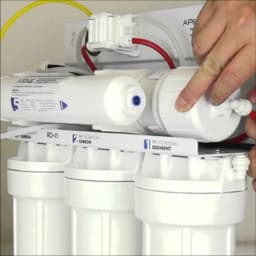
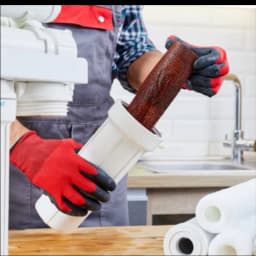
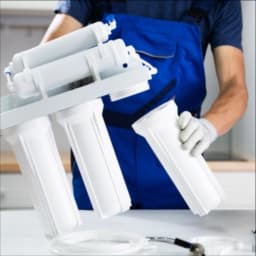
Sediment and carbon filter changes are relatively straightforward and some handy homeowners do these successfully. Pre-filters are large and simple to swap. But RO membrane replacement requires careful handling, proper sanitisation of the membrane chamber beforehand (to prevent bacterial contamination), and correct seating to avoid leaks. Carbon post-filters also benefit from system flushing before reinsertion. More importantly, a technician inspects the entire unit during a visit — checking for leaks, testing water output and TDS levels, examining fittings and valves — not just swapping the one filter that's obviously due.
In Coimbatore specifically, where water conditions are challenging and membrane lifespan is shorter, having an expert eye catch early signs of stress (colour change in the filter media, unusual sounds from the pump, discoloration inside the tank from algae or mineral buildup) often prevents much larger problems. Some homeowners compromise by handling the simple filters themselves but calling a technician for membrane work and annual deep cleaning.
Knowing the process helps you verify you're getting thorough work rather than a quick filter swap:
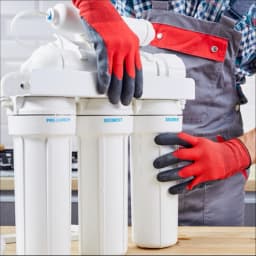
A trained technician arrives and first checks the unit's basic operation — water flow rate, pressure gauge reading if visible, and any obvious leaks or noises. They'll ask about water taste, smell, or any recent issues you've noticed. Next, they inspect each filtration stage. Sediment pre-filters get checked for colour and texture — a brown or grey coating means they've captured particles and need replacement. Carbon filters are held up to light; if they look dark and compacted, they're saturated. The RO membrane gets inspected without removal if possible, though a full replacement visit requires taking it out, cleaning the housing, and installing the new membrane with proper pressure sealing.
The storage tank gets drained and a mild bleach solution is often used to sanitize internal surfaces, preventing bacterial growth (which is important in a climate like Coimbatore's where warm temperatures favour microbial multiplication). The post-filter stage is inspected and replaced if needed. Finally, the technician reassembles everything, runs water through the system to flush out any residual sanitiser or air pockets, and tests the final output — checking TDS levels with a portable meter to confirm the membrane is still rejecting dissolved solids properly. They'll also verify that the taste and odour are normal and check that no leaks develop after reassembly.
A conscientious service provider hands you a written record of what was done and which parts were replaced, and they mention when the next service is due based on your water conditions. If they can't explain what they did or why, that's a red flag.
Coimbatore has many independent RO technicians and authorized service centers. Separating reliable ones from the rest requires a bit of due diligence. Look for someone who asks questions about your water source (bore well versus municipal supply), knows the seasonal variations in your area, and can explain why a particular filter needs replacement rather than pushing every component simultaneously. A provider who keeps records of your service history and remembers which filters were done last time demonstrates they've built a relationship with customers rather than just moving through quick jobs.
Check whether they carry genuine Eureka Forbes filters or quality compatible alternatives. Ask about their response time — during monsoon season when systems get overloaded, a provider who can visit within 24 hours is worth knowing. Verify they offer written estimates before beginning work and can explain cost breakdowns. Online reviews from Coimbatore residents specifically often reveal patterns about wait times, professionalism, and follow-up support.
Starting with a small job — a filter replacement or diagnostic check — lets you evaluate a technician before committing to an AMC plan or calling them for a major repair.
Beyond individual service visits, managing your purifier's long-term cost comes down to prevention. Keeping filters on schedule is far cheaper than replacing a membrane prematurely or repairing a pump strained by running against clogged filters. Coimbatore's challenging water conditions mean your system will need more attention than units in cities with cleaner supply, but staying proactive costs significantly less than reactive emergency repairs.
Tracking your service dates — whether in a notebook kept near the unit, a phone reminder, or an AMC provider's schedule — prevents the common mistake of forgetting when the last service was. This is particularly important because Coimbatore's seasonal variations mean you may need to adjust the interval; winter bore well water might require different maintenance timing than monsoon supply.
What makes us different
Coimbatore's water supply — drawn from irrigation canals, bore wells, and seasonal sources — carries dissolved minerals and suspended particles that vary throughout the year. When the monsoon arrives, turbidity spikes. As summer progresses, mineral concentration rises. An Eureka Forbes RO unit works hard in these conditions, and that means filters clog faster, membranes face heavier loads, and regular maintenance becomes not a luxury but a necessity.
The textile industry that defines this city also means factories upstream release treated effluent into shared water sources, adding another reason why membrane life tends to be shorter here than in cities with cleaner municipal supplies. Understanding this reality helps homeowners appreciate why staying on top of service schedules protects both water quality and equipment longevity.
Step-by-step guidance
Don't wait! Get the Best water purifier service at the most competitive rates. Contact rocareindia today for a free consultation and quote.

Verified Professionals

Work Assurance

On-Time Support

Covid-19 Safety
Find answers to common questions about our services
Pure water, delivered.