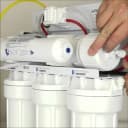
West Godavari's water supply—sourced from the Godavari River and canal networks—carries a distinct seasonal character. During monsoon months, sediment load spikes sharply as runoff enters the water system. Pre-monsoon algal blooms and summer salt intrusion from nearby coastal influences add their own challenges. These patterns mean your Aquaguard purifier works under stress that differs significantly from inland areas.
An Aquaguard unit installed in West Godavari faces faster filter saturation than the same model might in a city drawing from a treated, stable municipal supply. The pre-filter clogs sooner. The membrane faces higher scaling risk when TDS levels climb during dry months. Corrosion from humidity and salt air can weaken fittings and the storage tank over time. Recognising these local realities helps you decide when to call for service, what kind of AMC plan suits your needs, and why skipping scheduled maintenance becomes expensive faster here.
Select Service



.webp&w=256&q=75)
Everything you need to know
Several symptoms commonly appear in West Godavari households running Aquaguard systems. Knowing what each one signals helps you diagnose the problem before calling a technician, which speeds up the repair and often points to the exact part that needs attention.
This is the most frequent issue in the region. Heavy sediment in the incoming water clogs the pre-filter rapidly. After a spell of rain, the Godavari's suspended-solids content rises significantly, and your Aquaguard's sediment stage bears the load. The membrane itself may also start scaling if the water's TDS is elevated. A technician visit should include inspection of both the pre-filter condition and the membrane pressure gauge to determine whether simple pre-filter replacement will restore flow or whether deeper cleaning or membrane change is necessary.
As canal water warms and stagnates during summer months, algae and organic matter build up. Even if municipal water undergoes basic treatment, your Aquaguard's carbon filter is the final barrier against taste and smell. Once the carbon is saturated—which happens faster during summer in West Godavari—water starts to taste flat, earthy or slightly off. This is not a safety issue if the RO membrane is functioning, but it signals that the carbon filter is near the end of its useful life and should be replaced promptly.
The combination of high humidity and salt-laden air accelerates corrosion of the tank's internal surfaces, particularly at seams and around the base. Early rust staining does not mean the tank has failed, but it does mean the protective coating is compromised. Once staining appears, plan to replace the tank within the next few months rather than waiting for a leak to develop. Neglecting this in West Godavari's climate leads to faster tank failure than in drier regions.
This indicates mineral scaling, especially common in summer when water evaporates from the tank and dissolved solids concentrate. It is harmless but signals that your water's TDS is high. The membrane is still doing its job, but increased mineral load means the membrane may need replacement sooner than standard guidelines suggest.
Start by checking the inlet tap and main supply pressure—low pressure is common during summer peak demand. If the mains pressure is normal but output remains blocked, the fault lies within the unit. Possible causes include a completely clogged pre-filter, a faulty inlet valve, or a failed pump. Only a technician can pinpoint which component has failed, so this warrants a same-day visit if possible, since you have no clean water supply until it is repaired.
Service costs depend on multiple factors specific to your situation and your purifier's condition. Understanding these helps you budget and avoid disputes with the technician.
A sediment or carbon filter swap is the most common and least expensive repair, usually a straightforward 15-minute job. Cost is modest because the filter cartridge itself is inexpensive, and labour time is minimal. In West Godavari, if you service regularly, you may need pre-filter replacement every 3–4 months during and after monsoon, versus 6–8 months in less challenging regions.
If slow flow persists after pre-filter change, the RO membrane has likely scaled or lost effectiveness. Membrane replacement is more costly than filter replacement but still reasonable. In areas with high TDS or heavy sediment, membranes may need replacement annually rather than every 2–3 years.
If the unit will not power up or the pump makes unusual noise, the motor or solenoid valve may have failed. Electrical faults are more expensive to diagnose and repair, sometimes requiring part replacement rather than simple adjustment. A failed pump typically costs significantly more than filter or membrane replacement.
If corrosion has compromised the tank or a crack appears, replacement is the only solution. Tank cost varies by capacity, and in West Godavari the coastal humidity means tanks corrode faster than in interior regions, so do not be surprised if a tank needs replacement sooner here than elsewhere.
If your Aquaguard needs repositioning due to humidity concerns or to move it away from splash zones, or if piping needs rework to prevent corrosion, installation labour will be charged separately from parts.
Most technicians separate the visit charge from parts cost and offer an estimate before starting work. Request this breakdown in writing so you can verify charges against the final bill.
An Annual Maintenance Contract is a prepaid plan that typically bundles routine servicing, filter replacements and minor repairs into a single yearly fee. The contract structure varies by provider, so clarity on what is included matters before you commit.
Most AMC packages include two or more scheduled service visits per year, replacement of pre-filters and carbon filters on schedule, minor repairs at no added cost, and priority call-out for emergencies. Some plans also include the RO membrane; others bill separately for it. Some offer unlimited visits; others cap visits to a fixed number annually. The storage tank might or might not be covered. Read the fine print carefully because the boundaries of coverage directly affect whether the plan saves you money.
An AMC makes strong financial sense if any of the following apply to you: your household uses the purifier heavily throughout the day; your water comes from a bore well with variable or hard-water characteristics; you live in an area that experiences extended power cuts or voltage fluctuations; you want the certainty of scheduled servicing without thinking about when the next filter change is due; or you value priority access to a technician during the peak-demand monsoon season. In West Godavari, where monsoon stress on the purifier is predictable and seasonal, an AMC roughly aligned to begin at the start of monsoon can mean you have fresh filters and a full system check precisely when your Aquaguard is about to face its toughest conditions.
An AMC may be less critical if your household water consumption is very low, the unit is still under manufacturer warranty, or you are uncertain whether you will keep the purifier long-term.
Before signing an AMC, compare offers on which components are included (pre-filters, membrane, tank), how many visits per year are guaranteed, response time for emergency calls, and whether parts must be purchased through the plan or whether you can source them independently if prices elsewhere are lower. Some plans also waive or discount the visit charge during emergency breakdowns, which adds real value during monsoon when issues are most likely.
When your Aquaguard needs attention, multiple routes exist to reach a technician. Knowing which suits your situation helps you get faster resolution.
You can reach our West Godavari service desk on 9311587744. When you call, be ready to describe the issue clearly—whether it is no power, low flow, leakage, unusual taste, or a warning light. Mention your Aquaguard model if you know it, as this lets the technician anticipate which parts might be needed. If it is an urgent issue like a leak, say so; this helps prioritise your appointment.
Many service providers offer online appointment booking, which is often faster than phone queues for non-emergency repairs. You can describe the problem in writing, see available time slots and confirm a visit without a telephone call. This also generates an automatic confirmation and reminder, reducing the chance of miscommunication.
If your Aquaguard is still under manufacturer warranty or you are covered by an AMC plan, contact the official Aquaguard customer care line for warranty-related issues or to have a claim logged. They handle product registration, warranty validation and formal complaints that need to be on record. For day-to-day repairs and filter changes outside warranty, the local technician route is often faster.
Understanding the service workflow helps you judge whether work done is thorough and fair.
The technician will ask what symptoms you noticed and when they started. Mention if it coincides with monsoon arrival or a recent water-pressure spike. This context helps them form a hypothesis about the cause before inspecting the unit.
A thorough visit includes checking the pre-filter cartridge colour and resistance to flow; testing the membrane pressure and output quality; inspecting the pump for noise or vibration; examining all visible fittings for leakage; and checking the storage tank interior for corrosion or discolouration. In West Godavari, the technician should pay particular attention to seams and connections where corrosion is most likely to start.
Before replacing anything, the technician should explain what is causing the problem and present an estimate for parts and labour. If they want to replace parts without a clear explanation, ask them to walk you through the diagnosis. Unnecessary replacement is one of the biggest sources of inflated service bills.
Once you approve, the work proceeds. After any repair, the technician should run the unit and confirm that water flow, pressure and taste are back to normal. Proper testing takes a few minutes and is not optional.
A responsible technician will note what was replaced or repaired and advise when the next service or filter change is due. Ask for this in writing so you can set a reminder and know what to budget for next time.
Occasionally an issue reappears days or weeks after a repair. This does not always mean the technician did poor work; sometimes a related component fails shortly after an adjacent one is fixed, or the initial diagnosis was incomplete.
First, contact the technician who performed the work and describe what is happening again. Many providers offer a short warranty—typically 7 to 30 days—on parts they have replaced or faults they have diagnosed. If the same problem resurfaces within that window, request a follow-up visit. This is often provided at no extra charge or for a reduced fee, and it is faster than seeking a second opinion elsewhere.
If the issue is different from the original complaint, document it clearly: the date you noticed it, how it differs from the previous fault, and any warning lights or sounds. This helps a new technician (or the same one) diagnose quickly without repeating earlier steps.
Keep receipts from all service visits. If a pattern emerges—the same component failing repeatedly—this information strengthens any claim for a full replacement under warranty or an extension of service coverage.
Water quality and conditions shift across the year in West Godavari. Adjusting your maintenance habits to the season extends your purifier's life and minimises breakdowns at the most stressful times.
Expect higher sediment in the incoming water. Schedule a pre-filter check and replacement shortly after the monsoon begins, then again halfway through. Do not wait for flow to drop noticeably; proactive replacement prevents pressure on the membrane and pump. Store-bought water during a monsoon purifier failure is more expensive than preventive filter changes, so budget for extra service visits during these months.
After the rains, flush the system by allowing water to run for a minute or two before using it for drinking, as residual sediment can still be present. This is also a good time for a full service visit to clean or replace the carbon filter if monsoon algae affected water quality.
Water pressure often drops as demand peaks. Run your Aquaguard during early morning or evening hours when mains pressure is steadier. Keep an eye on the storage tank for rust staining or mineral deposits. A full inspection and maintenance visit before summer peak helps catch problems before hot weather stress accelerates wear.
Though West Godavari winters are mild, humidity remains high. Wipe the exterior and check fittings for early corrosion. Winter is a quieter service season, so scheduling a comprehensive check-up or a tank inspection is often easier than during monsoon rush.
If your Aquaguard is old, a technician may suggest replacing rather than repairing. This is a fair question to evaluate honestly.
Repair makes sense if the unit is less than 8–10 years old, the fault is a single component (filter, membrane, or pump), and the repair cost is less than one-third of a new unit's price. In West Godavari's challenging water conditions, you can expect an Aquaguard to perform well for 7–10 years with consistent servicing, though corrosion from humidity means tanks and fittings may need earlier replacement than in drier regions.
Replacement becomes the better choice if multiple components are failing simultaneously, if repeated repairs are needed within short intervals, or if the unit is older than 12 years. A new Aquaguard with updated filter technology often uses water more efficiently and costs less to maintain than a decade-old model, especially in an area like West Godavari where incoming water quality is challenging.
Ask the technician for an honest comparison—repair cost versus replacement cost—and factor in the likelihood of further issues. If the unit is under warranty or AMC, replacement may be subsidised, which changes the maths significantly.
What makes us different
West Godavari's water supply—sourced from the Godavari River and canal networks—carries a distinct seasonal character. During monsoon months, sediment load spikes sharply as runoff enters the water system. Pre-monsoon algal blooms and summer salt intrusion from nearby coastal influences add their own challenges. These patterns mean your Aquaguard purifier works under stress that differs significantly from inland areas.
An Aquaguard unit installed in West Godavari faces faster filter saturation than the same model might in a city drawing from a treated, stable municipal supply. The pre-filter clogs sooner. The membrane faces higher scaling risk when TDS levels climb during dry months. Corrosion from humidity and salt air can weaken fittings and the storage tank over time. Recognising these local realities helps you decide when to call for service, what kind of AMC plan suits your needs, and why skipping scheduled maintenance becomes expensive faster here.
Step-by-step guidance
Don't wait! Get the at the most competitive rates. Contact rocareindia today for a free consultation and quote.
Real repairs · Real customers · Real results

Verified Professionals

Work Assurance

On-Time Support

Covid-19 Safety
Find answers to common questions about our services
Find our nearby franchise stores in your city
Pure water, delivered.