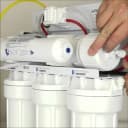
Nicobar's water landscape is unlike most urban areas. Freshwater is scarce, seasonal rainfall is heavily concentrated, and many areas contend with groundwater that carries salt-laden mineral content or tannic compounds from nearby vegetation. Piped supply, where it exists, often shows high turbidity during and after monsoon. Bore wells frequently pull up water with elevated TDS and brackish character. An Aquaguard unit operating in these conditions works under continuous strain from the moment inlet water enters the system.
This is not a problem unique to your household or neighbourhood — it is a direct result of Nicobar's geography. Understanding how your local water differs from purified supply in mainland cities helps explain why your Aquaguard may need more frequent servicing and why preventive maintenance becomes not a luxury but a practical necessity.
Select Service



.webp&w=256&q=75)
Everything you need to know
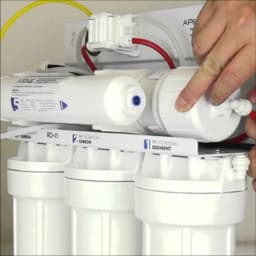
A standard RO purifier passes water through sediment removal, carbon filtration, membrane separation, and UV disinfection. In Nicobar, each stage faces specific pressures not commonly seen elsewhere. Sediment pre-filters clog faster because monsoon runoff carries silt, suspended algae, and organic matter. Carbon filters saturate more quickly when inlet water contains tannic acids from coconut plantation runoff. The RO membrane itself faces scaling from minerals in brackish water, and metal corrosion can affect stainless steel housings when saltwater spray or salt-laden air reaches outdoor installations or units placed near windows.
The UV lamp, if your model includes one, may dim faster in the presence of high turbidity, since it has to work harder to penetrate discoloured water. Some households in Nicobar report that water smell and taste issues — earthy notes, metallic notes, or saltiness — persist even after a new purifier is installed, simply because the inlet water quality is outside the operating range the manufacturer originally specified.
Recognising these pressures means understanding that your Aquaguard will require more attention in Nicobar than a similar unit would in a coastal city with municipal desalination or a mainland area with treated piped supply. This is not a defect in the purifier — it is a reality of your water source.
Manufacturers typically recommend sediment filter changes every 3 to 6 months under standard conditions. In Nicobar, particularly during and for 2 to 3 months after the monsoon, this interval often compresses to 2 to 3 months. A carbon filter rated for 12 months of normal use may become saturated in 6 to 8 months if your supply carries high organic load. RO membranes, which might run 2 to 3 years in cities with clean municipal water, often show measurable flow reduction or rejection drop within 12 to 18 months in brackish or high-TDS environments.
The practical implication is straightforward: scheduling Aquaguard service on the calendar, rather than waiting for a visible problem, avoids sudden drops in water quality or equipment breakdowns. Many households in Nicobar find that an annual maintenance contract structured around seasonal water quality changes — heavier servicing frequency during and after monsoon — pays for itself by preventing unplanned downtime.
Three problems appear frequently in Nicobar service calls: reduced flow, metallic or unusual taste in filtered water, and visible corrosion on metal fittings.
Reduced or no water flow is typically the result of a clogged pre-filter or, in older units, membrane scaling from mineral-rich inlet water. If water used to flow steadily and has gradually slowed, the pre-filter or sediment stage is almost certainly the culprit. If flow drops suddenly, the inlet line may be blocked or the inlet valve may have failed. In either case, a technician visit is needed to confirm, but describing how the flow changed — gradual versus sudden, whether it happens immediately after switching on, or only after the purifier has run for a while — helps the technician come prepared with the right components.
Taste or smell issues — even in filtered water — usually mean the carbon stage is no longer effective. Carbon filters absorb chlorine, organic compounds, and many dissolved salts. When they saturate, these compounds pass through to the storage tank, and from there into your glass. In Nicobar's high-organic-load environment, this happens sooner than most online guides suggest. A new carbon filter often restores taste within hours, but if taste remains off even after a filter change, the inlet water itself may carry mineral or salt content that a standard RO cannot reduce further, and a technician should assess whether an additional pre-treatment stage (like a water softener) would help.
Visible corrosion on the purifier's metal housing, fittings, or storage tank typically stems from salt-laden air or water splash. Stainless steel corrodes far slower than mild steel, but in island environments even stainless can show pitting over time. Plastic components are more resistant, but metal fixtures at inlet and outlet points are vulnerable. Early corrosion is a cosmetic issue, but if corrosion penetrates a metal tank wall, it can cause slow leakage or allow exterior contamination to enter the system. Regular inspection and, if needed, protective application of a rust-inhibitor coating on exposed metal can extend component life significantly.
Not every change in purifier behaviour requires a technician visit. Before calling, run through a quick checklist. First, ensure the inlet water is actually flowing — turn on a tap connected directly to your supply line and confirm water comes out at normal pressure. Second, check that the purifier is switched on and the power light is lit. Third, if the unit has an indicator light, note its colour and whether it is steady or blinking. Many modern Aquaguard units flag specific issues with light patterns — a red light often signals filter saturation, while a blinking amber might indicate low inlet pressure.
If the inlet supply is fine, power is on, and the light shows all clear, but you are not getting any output from the purifier tap, the fault lies inside the unit and needs a technician. If flow is slow but present, a filter change might be all that is needed. If the taste is off but flow is normal, carbon filter replacement is the likely answer. Only if a new filter does not solve the taste issue, or if you see visible leakage, corrosion damage, or the unit will not turn on at all, should you assume a more complex repair is needed.
Service cost depends on several factors. A filter change costs far less than a new membrane. A membrane costs less than a pump replacement. Technician call-out charges in Nicobar may be higher than on the mainland owing to travel time and the limited availability of service points on the island. If your unit is under warranty or enrolled in an AMC plan, many repairs and routine filter changes are included at no extra cost or at a reduced charge.
Some providers quote a separate "island surcharge" for Nicobar and nearby regions, reflecting the logistics of reaching island locations. Before booking, ask whether any travel charges are included in the visit fee or billed separately. Request an estimate based on your description of the problem — for example, if it is likely just a filter change, confirm the charge covers the filter itself, the labour, and testing. A transparent provider will separate these line items rather than quoting a single opaque total.
An Annual Maintenance Contract typically covers routine servicing, filter replacements, and minor repairs under a single yearly payment. In Nicobar, where water conditions demand more frequent attention, an AMC plan centred on quarterly visits during normal months and bi-monthly visits during monsoon season often makes strong financial sense.
A well-structured Nicobar AMC should include sediment and carbon filter changes on a fixed schedule, one or two membrane inspections per year to catch scaling early, and labour-free replacement of minor components like O-rings or inlet lines that corrode in the salt-air environment. Some plans also provide expedited response for leakage or complete breakdowns during peak monsoon, when running without a purifier can leave you without safe drinking water for extended periods.
Compare plans based on how many scheduled visits they include per year, which filter stages are covered, and whether membrane replacement is bundled or billed separately if needed. A lower upfront price is not an advantage if filters are excluded, forcing you to buy them separately and negating the savings. Before enrolling, confirm the plan covers your specific Aquaguard model — different units have different filter compatibility, and a mismatched plan creates disputes later.
For many Nicobar households, particularly those relying on bore wells or rainwater catchment with high sediment or organic load, an AMC plan structured around the island's water challenges pays for itself within the first year by preventing emergency repairs and ensuring consistent water quality.
Reaching a technician in Nicobar is simpler than it once was, but the logistics remain different from mainland service. When you call to request a visit, provide clear information: your exact location within Nicobar (neighbourhood or locality), the Aquaguard model if you know it, the specific issue you are experiencing, and how urgent it is. If your installation is in a building with irregular access or security restrictions, mention this upfront so the technician can arrange the right timing.
Response time on the island is typically 2 to 5 days for routine servicing, though emergency repairs — such as active leakage or complete system failure — may be accommodated faster if a technician is already on the island. During monsoon season, scheduling becomes more weather-dependent; heavy rain can delay travel, and it is wise to plan servicing before the peak monsoon rather than during it.
You can reach the service desk on the registered support number for your region. Online booking, if available, is often the fastest method for non-urgent service requests, as it avoids phone queue times and creates a service ticket you can track. Whether you call or book online, request a confirmation message with the scheduled date, the estimated time window, and the technician's contact details so you can reschedule if needed.
The best way to avoid a breakdown is not to wait until the purifier stops working. Simple habits extend lifespan and reduce repair frequency. Mark your calendar with the filter replacement dates recommended for Nicobar conditions — typically earlier than the manufacturer's baseline. Before monsoon, run a full inspection: check that all visible fittings are tight, that the inlet line is free of kinks, and that the storage tank is not leaking. If your purifier is outdoors or exposed to salt spray, wipe it down monthly with fresh water to prevent accelerated corrosion.
Do not ignore warning lights or changes in water taste. Address them within days rather than weeks. Neglecting a dim light or a slight taste change often leads to expensive repairs that could have been prevented with a timely filter swap. If you notice any hissing sound from the unit, water droplets forming on seams, or a sudden drop in flow, contact a technician rather than hoping it resolves on its own — island water conditions can turn a minor leak into a major problem quickly.
Keep a simple service log: dates of filter changes, any repairs performed, and the technician's name. This record helps the next technician understand the unit's history and spot patterns such as accelerated membrane scaling, which might suggest a pre-treatment stage would help.
What makes us different
Nicobar's water landscape is unlike most urban areas. Freshwater is scarce, seasonal rainfall is heavily concentrated, and many areas contend with groundwater that carries salt-laden mineral content or tannic compounds from nearby vegetation. Piped supply, where it exists, often shows high turbidity during and after monsoon. Bore wells frequently pull up water with elevated TDS and brackish character. An Aquaguard unit operating in these conditions works under continuous strain from the moment inlet water enters the system.
This is not a problem unique to your household or neighbourhood — it is a direct result of Nicobar's geography. Understanding how your local water differs from purified supply in mainland cities helps explain why your Aquaguard may need more frequent servicing and why preventive maintenance becomes not a luxury but a practical necessity.
Step-by-step guidance
Don't wait! Get the at the most competitive rates. Contact rocareindia today for a free consultation and quote.
Real repairs · Real customers · Real results

Verified Professionals

Work Assurance

On-Time Support

Covid-19 Safety
Find answers to common questions about our services
Find our nearby franchise stores in your city
Pure water, delivered.