
Why RO is Unable to control HIgh TDS Level in Gurgaon: How to fix it?
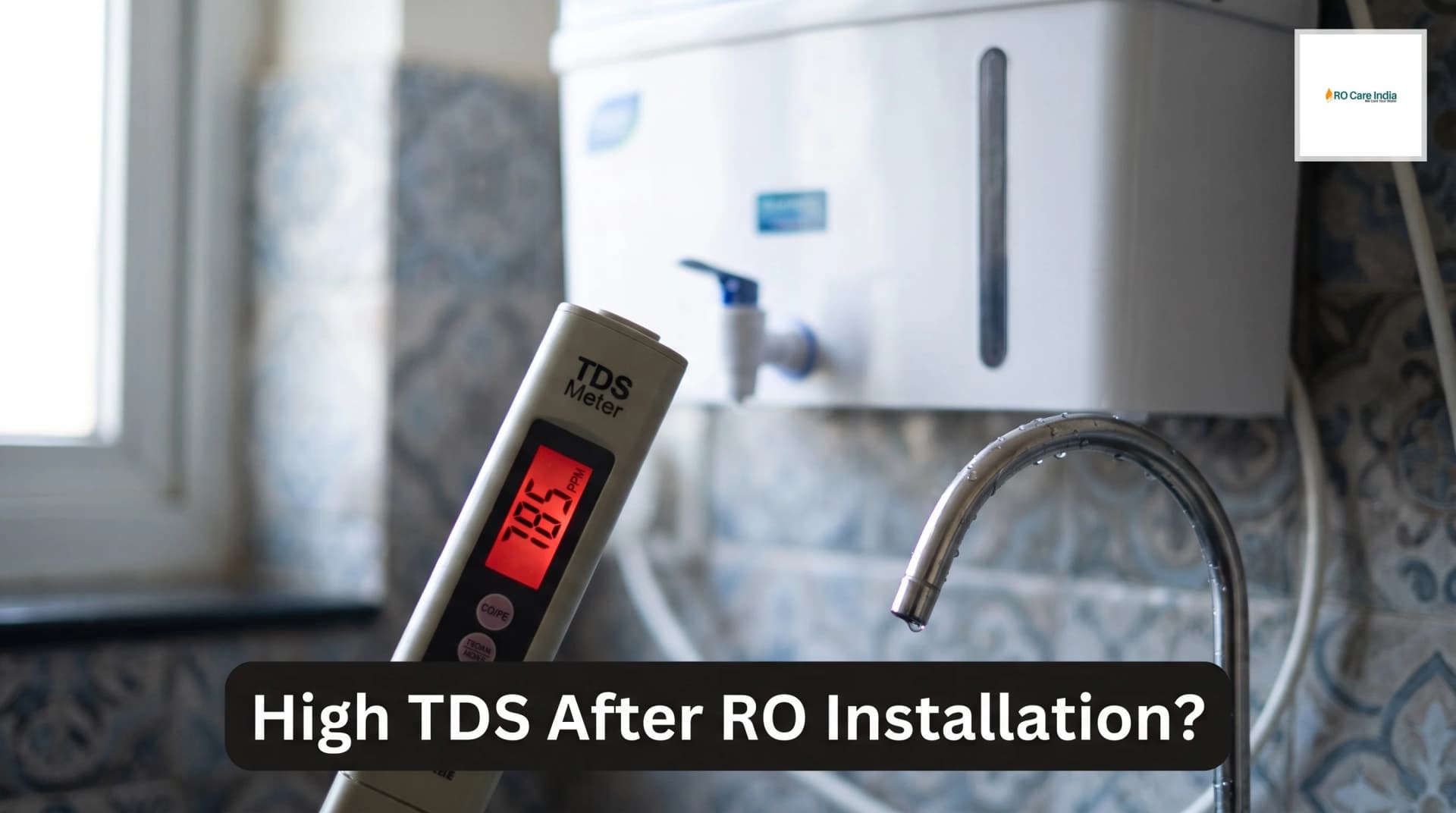
Why RO is Unable to control HIgh TDS Level in Gurgaon: How to fix it?
Gurgaon residents often face a persistent problem that leaves them frustrated and concerned about their drinking water quality: high Total Dissolved Solids (TDS) levels that refuse to drop even after installing expensive RO water purifiers. If you have invested thousands of rupees in a reverse osmosis system, only to find that the output water still shows elevated TDS readings on your meter, you are not alone. This widespread issue affects thousands of households across the city, particularly in rapidly developing sectors where groundwater quality has deteriorated significantly. Understanding why your RO is unable to control high TDS levels requires looking at both the technical limitations of your purification system and the unique water quality challenges specific to Gurgaon. Many homeowners discover this problem only after installation, leading them to search desperately for ro service gurgaon providers who can diagnose and resolve the issue effectively.
The situation becomes even more concerning when you realize that high TDS water can affect not just the taste and odor of your drinking water but also your health in the long term. Gurgaon's water supply, whether from municipal sources or borewells, frequently contains TDS levels ranging from 800 to 2000 ppm, far exceeding the Bureau of Indian Standards' recommended limit of 500 ppm for drinking water. When your RO system fails to bring these levels down to acceptable ranges of 50-150 ppm, it defeats the entire purpose of water purification. The challenge intensifies during summer months when water tables drop and groundwater becomes even more concentrated with dissolved minerals and salts.
What makes this problem particularly troublesome is that most people assume their RO system is working perfectly fine until they actually test the output water. The purifier runs normally, produces water at a steady flow rate, and shows no apparent signs of malfunction. However, a simple TDS meter reading reveals the truth: your expensive purification system is letting excessive dissolved solids pass through. This failure can stem from multiple factors ranging from membrane degradation and incorrect system configuration to overwhelming input TDS levels that exceed your purifier's capacity. Identifying the exact cause requires systematic troubleshooting and often professional intervention from qualified ro customer care gurgaon technicians.
Before panic sets in, it is important to understand that this issue is usually fixable with the right diagnosis and corrective measures. Whether your RO membrane needs replacement, your system requires reconfiguration, or you need a more robust purification setup altogether, solutions exist for every scenario. This comprehensive guide will walk you through the common reasons why RO systems fail to control high TDS in Gurgaon, how to diagnose the specific problem affecting your purifier, and practical step-by-step solutions to restore your water quality to safe drinking standards.
Understanding TDS and RO System Functionality
Total Dissolved Solids represent the combined content of all inorganic and organic substances dissolved in water, including minerals, salts, metals, and ions. In Gurgaon's water supply, the primary contributors to high TDS are calcium, magnesium, sodium, potassium, chlorides, sulfates, and carbonates. While some amount of dissolved minerals is actually beneficial for health, excessive TDS makes water taste unpleasant, leaves deposits on utensils and appliances, and can pose health risks when consumed regularly over extended periods.
A reverse osmosis system works by forcing water through a semi-permeable membrane under pressure, which theoretically blocks 90-95 percent of dissolved solids while allowing pure water molecules to pass through. The rejected impurities get flushed away as waste water, while the purified water gets collected in the storage tank. However, this rejection rate is not absolute and depends on several critical factors including membrane condition, input TDS levels, water pressure, temperature, and system configuration. When one or more of these factors fall outside optimal parameters, the RO membrane's effectiveness drops dramatically, allowing higher amounts of dissolved solids to pass into your drinking water.
The membrane is the heart of any RO system, typically made of thin film composite material with microscopic pores that measure about 0.0001 microns. These tiny pores allow water molecules to squeeze through while blocking larger dissolved particles. However, over time, the membrane surface gets coated with rejected minerals, organic matter, and contaminants in a process called scaling or fouling. This buildup progressively reduces the membrane's filtering capacity, eventually reaching a point where it can no longer effectively reject dissolved solids. Most RO membranes have a lifespan of two to three years under normal usage conditions, but in Gurgaon's challenging water quality environment, this lifespan often shortens to 18-24 months.
Another crucial component that affects TDS control is the booster pump, which provides the necessary pressure to push water through the membrane. RO purification requires a minimum water pressure of 40-60 psi to function effectively. When input pressure drops below this threshold, water molecules pass through the membrane more slowly, but dissolved solids face less resistance and pass through more easily, resulting in higher output TDS. Many Gurgaon apartments and independent houses receive municipal water at inconsistent pressures, and borewell systems often lack adequate pressure altogether, compromising the RO system's performance.
Common Reasons Why Your RO Cannot Control TDS in Gurgaon
The most frequent culprit behind high output TDS is a worn-out or damaged RO membrane that has exceeded its effective lifespan. When membranes age, the semi-permeable material loses its structural integrity, developing larger pores or even microscopic tears that allow dissolved solids to pass through freely. Many Gurgaon residents continue using their RO systems for three to four years without changing the membrane, unaware that filtration efficiency drops dramatically after the recommended replacement period. If you have not replaced your RO membrane in the past two years and are experiencing high TDS output, membrane failure is almost certainly the primary cause.
Input water with extremely high TDS levels can overwhelm even a well-functioning RO system. Standard residential RO membranes are designed to handle input TDS up to 2000 ppm efficiently, with rejection rates of 90-95 percent. However, in several Gurgaon locations, especially those dependent on deep borewells in sectors like 56, 57, 65, 66, and surrounding areas, groundwater TDS frequently exceeds 2500-3000 ppm. At these extreme levels, even a new membrane operating at peak efficiency may only achieve 80-85 percent rejection, resulting in output water with 300-450 ppm TDS, which is still above the ideal range. In such scenarios, a standard single-pass RO system simply lacks the capacity to bring TDS down to acceptable levels.
Inadequate water pressure represents another major factor affecting RO performance in Gurgaon households. Many apartments receive municipal water at pressures below 30 psi, and ground-level independent houses often face even lower pressures. When you have a ro service near me Gurgaon technician check your system, they typically measure both input and working pressure. If your booster pump has failed, is underpowered for your water conditions, or is not functioning optimally, water passes through the membrane without sufficient force, dramatically reducing TDS rejection rates. This problem becomes particularly noticeable during peak usage hours when water pressure drops across the supply network.
Incorrect system installation and configuration can also prevent your RO from controlling TDS effectively. Some installations skip the necessary pre-filtration stages or use inadequate sediment and carbon filters that fail to remove suspended particles and chlorine before water reaches the RO membrane. When these contaminants reach the membrane surface, they accelerate fouling and scaling, reducing the membrane's ability to reject dissolved solids. Additionally, if the automatic shut-off valve or flow restrictor is not properly calibrated, it can affect the purification process by allowing water to flow too quickly through the membrane, reducing contact time and rejection efficiency.
Bypass situations, though less common, can cause inexplicably high TDS in output water. In some cases, internal tubing connections loosen over time, creating unintended pathways where untreated water mixes with purified water before reaching your glass. Similarly, a cracked membrane housing or damaged O-rings can allow raw water to bypass the membrane entirely. These issues are often difficult to diagnose without professional inspection, as the system appears to function normally while delivering improperly filtered water.
How to Diagnose the Specific Problem
Accurate diagnosis begins with systematic testing of your RO system at multiple points in the purification process. First, measure the TDS of your input water directly from the tap before it enters the RO system. Record this baseline reading, which typically ranges from 800-2000 ppm in Gurgaon but may exceed these levels depending on your location and water source. Next, test the TDS of water coming from your RO purifier's storage tank or dispensing tap. The ideal output should be 50-150 ppm, representing a 90-95 percent reduction from input levels. If your output TDS exceeds 200 ppm, your system is definitely underperforming.
Calculate your RO system's actual rejection rate using this formula: Rejection Rate = [(Input TDS - Output TDS) / Input TDS] x 100. For example, if your input TDS is 1200 ppm and output TDS is 240 ppm, your rejection rate is 80 percent, which is below the expected 90-95 percent for a properly functioning system. A rejection rate below 85 percent indicates a problem requiring attention. Document these measurements over several days at different times to account for variations in municipal water supply quality and pressure.
Check the installation date and service history of your RO system, specifically when the membrane was last replaced. If the membrane is older than two years, replacement is likely overdue regardless of other factors. Examine the condition of pre-filters including sediment filter and activated carbon filter. These should be replaced every six to twelve months, as clogged or exhausted filters compromise the entire system's performance. Visibly dirty or discolored filters indicate they are no longer protecting your membrane effectively.
Assess water pressure by observing the purification process. A healthy RO system in Gurgaon with adequate pressure produces purified water at approximately 150-200 ml per minute, with a reject water ratio of 3:1 to 4:1 (meaning three to four liters of wastewater for every liter of purified water). If your system produces water very slowly or the waste water flow seems weak, pressure issues are likely affecting performance. Listen for the booster pump operation; it should activate when you open the purifier tap and the storage tank is not full. If the pump does not run or sounds unusual, pump malfunction may be preventing adequate pressure.
For thorough diagnosis, consider scheduling an inspection with experienced professionals who have specialized tools to measure membrane performance, check for bypass leaks, and assess overall system health. Professional technicians can perform pressure tests, membrane integrity checks, and system configuration assessments that go beyond what homeowners can do with basic testing equipment.
Effective Solutions to Fix High TDS Problems
The most straightforward solution when dealing with an old or damaged membrane is complete membrane replacement. Purchase a genuine, high-quality RO membrane rated for high TDS input, specifically designed for the challenging water conditions prevalent in North India. When replacing the membrane, ensure all O-rings and seals are also replaced to prevent bypass leaks. Flush the new membrane thoroughly for 30-45 minutes before collecting water for consumption, as new membranes release preservative chemicals that need to be flushed out. After installation, test output TDS to verify that rejection rates have returned to the 90-95 percent range. Membrane replacement costs typically range from Rs 1,500 to Rs 3,500 depending on the brand and model in 2026.
If testing reveals that your input TDS consistently exceeds 2000 ppm, a single-stage RO system will struggle regardless of membrane condition. The solution is upgrading to a double-pass or dual-stage RO configuration where water passes through two separate RO membranes in series. The first membrane reduces TDS from extreme levels to moderate levels, and the second membrane brings it down to safe drinking standards. While this approach increases both installation costs and water wastage, it represents the only effective solution for extremely high input TDS scenarios. Alternative options include installing a TDS controller or mineralizer in reverse configuration, though these solutions work only when output TDS is moderately high, not for severe cases.
Addressing pressure-related issues requires either repairing or upgrading your booster pump. If you have an older pump that has weakened over time, replacement with a higher capacity pump rated for 75-80 psi ensures adequate pressure for optimal membrane performance. For homes receiving very low municipal water pressure, installing an overhead storage tank system that provides consistent gravity-fed pressure can stabilize RO performance. Some advanced RO systems now feature variable-speed pumps that automatically adjust to maintain optimal operating pressure regardless of input fluctuations. Pump replacement or upgrade costs range from Rs 1,200 to Rs 3,500 depending on specifications.
Complete system servicing addresses multiple issues simultaneously and is recommended when your RO has not received professional maintenance in over twelve months. A comprehensive service from qualified technicians includes replacing all pre-filters and post-filters, cleaning or replacing the membrane, sanitizing the storage tank, checking all connections for leaks, testing and calibrating the booster pump, and adjusting the flow restrictor for optimal performance. This thorough approach resolves not just TDS issues but also improves water taste, odor, and flow rate while extending the overall lifespan of your purification system. Expect to pay Rs 800 to Rs 2,500 for complete servicing depending on the extent of parts replacement required.
When basic solutions prove insufficient, consider upgrading to a commercial-grade or high-recovery RO system specifically engineered for challenging water conditions. These systems feature larger membrane surface areas, stronger booster pumps, advanced pre-filtration stages, and better scaling prevention mechanisms. While initial investment is higher, ranging from Rs 12,000 to Rs 25,000, these systems deliver consistently better performance in high TDS environments and require less frequent maintenance.
Preventive Measures to Maintain Low TDS Output
Establishing a regular maintenance schedule prevents TDS control problems from developing in the first place. Replace sediment and carbon pre-filters every six months without fail, as these protect the expensive RO membrane from premature damage. Schedule professional servicing annually, even if your system appears to function normally, as preventive maintenance catches small issues before they become major problems. Set calendar reminders for membrane replacement every two years, treating it as a non-negotiable expense for safe drinking water.
Install a TDS meter permanently near your RO system and make it a habit to check output water quality weekly. This simple practice alerts you to declining performance immediately, allowing you to address issues before they worsen. When you notice output TDS creeping above 150 ppm, contact ro service near me Gurgaon providers promptly rather than waiting until it becomes a severe problem. Early intervention is always less expensive and more effective than waiting for complete system failure.
If your area receives particularly hard water or high-TDS supply, consider adding a water softener as a pre-treatment stage before the RO system. While this increases initial investment, it dramatically reduces scaling on the RO membrane, extending membrane life from 24 months to 36-48 months and maintaining consistent rejection rates throughout the membrane's lifespan. Water softeners work by exchanging calcium and magnesium ions with sodium ions, reducing hardness and preventing scale formation.
Ensure your RO system's storage tank remains clean and sanitized by draining and cleaning it every three months. Bacterial growth inside the tank can affect water quality even when the purification process itself works correctly. Additionally, flush your RO system by running water through it for 10-15 minutes after any extended period of non-use, such as vacations, to clear stagnant water from the lines and refresh the membrane surface.