
Is DM plant maintenance Gurgaon Worth the Cost? A Complete Breakdown
Understanding DM Plant Maintenance Value: Complete Cost and ROI Analysis for Gurgaon Businesses
Water treatment systems have become essential infrastructure for commercial and industrial facilities across India's National Capital Region. With Gurgaon emerging as a major corporate hub hosting numerous manufacturing units, pharmaceutical companies, and hospitality establishments, the demand for reliable water purification has grown exponentially. Among various treatment solutions, demineralization plants stand out as critical investments that require regular upkeep to maintain efficiency. Many business owners frequently question whether professional dm plant service gurgaon offerings justify their recurring costs or if they represent an avoidable expense. This comprehensive analysis explores the actual value proposition of systematic maintenance, comparing investment requirements against operational benefits while examining how these services stack up against alternative water treatment approaches. Understanding the complete financial picture helps facility managers make informed decisions about their water treatment infrastructure maintenance strategies.
Industrial water quality directly impacts production processes, equipment longevity, and compliance with regulatory standards. In Gurgaon's competitive business environment, where operational efficiency translates to market advantage, water treatment systems cannot be left to chance. The region's water quality presents unique challenges with high total dissolved solids, excessive hardness, and seasonal contamination variations that stress treatment equipment continuously. Professional dm plant service providers address these challenges through systematic inspection, component replacement, and performance optimization protocols designed specifically for local conditions.
The conversation around maintenance value extends beyond simple cost calculations to encompass risk management, compliance assurance, and long-term operational sustainability. Businesses operating without structured maintenance protocols often discover hidden costs through unexpected breakdowns, reduced equipment lifespan, and compromised product quality. This analysis examines both direct expenditures and indirect value creation that professional maintenance delivers, providing clarity on whether these services represent genuine investment or discretionary spending for Gurgaon establishments.
Demineralization Plant Service Requirements and Cost Components
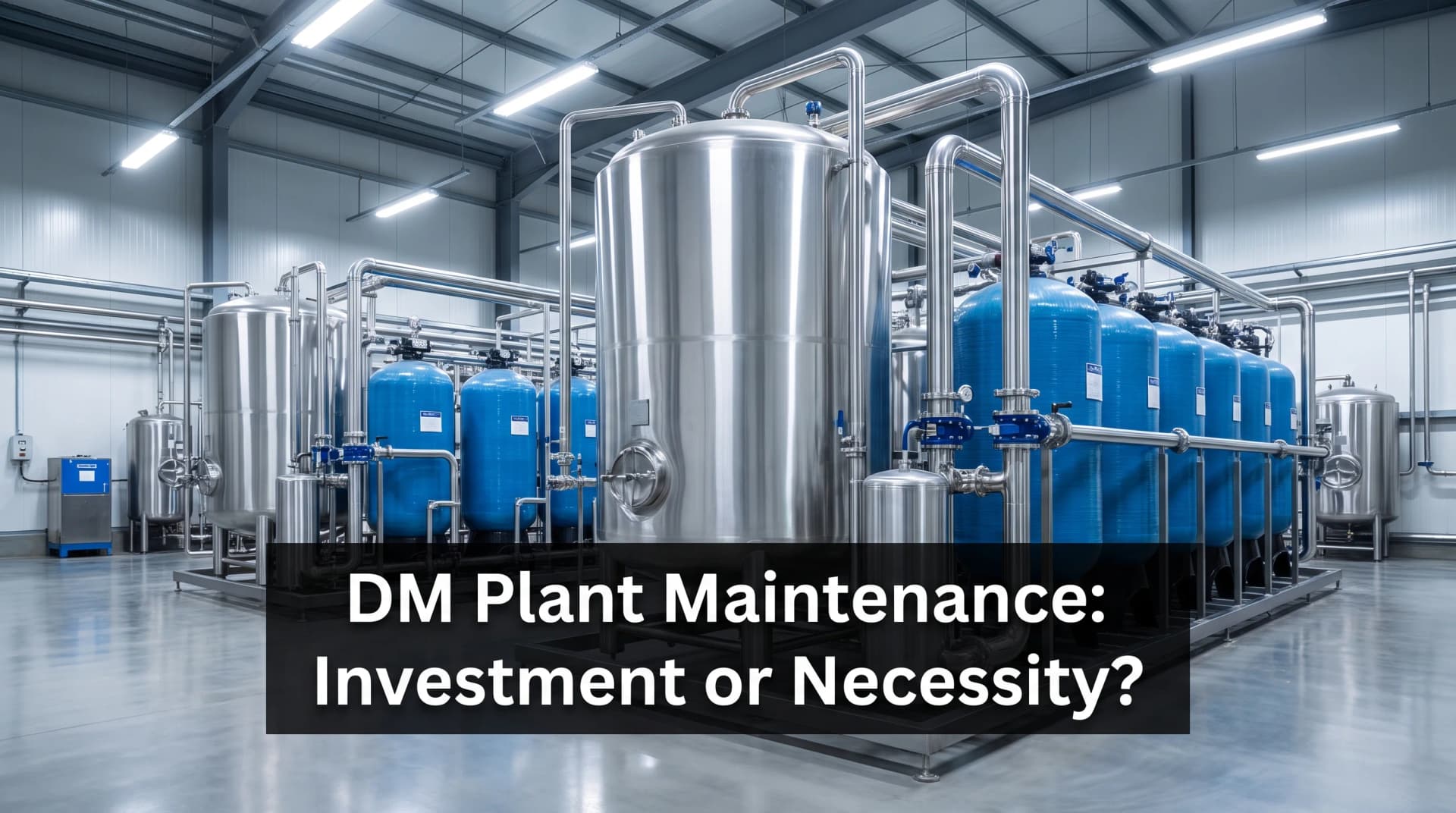
Demineralization systems remove dissolved minerals through ion exchange processes, producing ultra-pure water essential for boilers, pharmaceuticals, electronics manufacturing, and laboratory applications. These complex systems incorporate multiple components including resin beds, regeneration systems, control valves, and monitoring equipment that require coordinated maintenance for optimal performance. Understanding what demineralization plant service encompasses helps evaluate whether professional intervention delivers proportionate value.
Standard maintenance protocols include resin bed inspection and regeneration optimization, ensuring ion exchange media maintains effectiveness. Resin exhaustion represents the primary operational concern, as degraded media reduces treatment efficiency and increases regeneration frequency. Professional services test resin capacity, identify contamination issues, and determine optimal regeneration cycles based on feed water characteristics and usage patterns. This expertise prevents premature resin replacement while maximizing operational efficiency between regeneration cycles.
Control valve maintenance constitutes another critical service component, as these automated systems regulate water flow, regeneration sequences, and backwashing operations. Valve malfunctions cause treatment inconsistencies, water waste, and potential equipment damage. Technicians inspect valve seals, adjust timing sequences, and calibrate pressure sensors to maintain precise control. This preventive approach identifies developing issues before they escalate into costly failures requiring emergency repairs.
Chemical feed systems supplying regeneration acids and bases demand regular attention to prevent concentration errors, feed pump failures, and safety hazards. Service protocols verify chemical concentrations, inspect pump operation, and confirm safety equipment functionality. Given the corrosive nature of regeneration chemicals, proper system maintenance protects personnel safety while ensuring regeneration effectiveness. Professional oversight of these systems minimizes risks that untrained personnel might overlook.
Typical demineralization service costs in Gurgaon vary based on system capacity and service frequency. Small systems serving individual facilities might incur monthly maintenance costs between 3,000 to 8,000 INR, while larger industrial installations require 15,000 to 40,000 INR monthly investments. Annual resin replacement for medium-capacity systems ranges from 80,000 to 2,50,000 INR depending on resin type and bed volume. These figures represent standard maintenance expenses, excluding emergency repairs or major component replacements that result from neglected upkeep.
Comparative Analysis: Professional Service Versus In-House Maintenance
Many facility managers debate between hiring professional demineralization service providers versus developing internal maintenance capabilities. This decision significantly impacts both immediate costs and long-term operational outcomes. Examining both approaches reveals distinct advantages and limitations that vary based on facility size, technical expertise availability, and operational priorities.
In-house maintenance appears cost-effective initially, eliminating recurring service fees paid to external providers. Facilities assign existing staff to perform routine checks, chemical preparation, and basic troubleshooting. However, this approach requires significant knowledge transfer, ongoing training investments, and dedicated personnel time that diverts resources from core business activities. Water treatment systems demand specialized expertise that generalist maintenance staff may lack, potentially resulting in suboptimal adjustments and overlooked warning signs.
Professional service providers bring accumulated experience across diverse installations, enabling rapid diagnosis of complex issues and implementation of proven solutions. Technicians encounter various system configurations, failure patterns, and operational challenges regularly, developing problem-solving capabilities that individual facilities cannot replicate internally. This expertise proves particularly valuable during unusual operating conditions or when addressing performance degradation that has multiple potential causes.
Equipment and testing resources represent another consideration, as comprehensive maintenance requires sophisticated instruments for water quality analysis, resin capacity testing, and system performance measurement. Professional providers invest in diagnostic equipment that individual facilities find difficult to justify economically. Access to these resources ensures accurate assessments rather than approximations based on limited data. Additionally, established service networks maintain parts inventories, reducing downtime when component replacement becomes necessary.
The table below compares key aspects of both maintenance approaches for medium-sized DM plants:
| Aspect | Professional Service | In-House Maintenance |
|---|---|---|
| Monthly Cost | 12,000-25,000 INR | 8,000-15,000 INR (staff time) |
| Technical Expertise | Specialized, current | Limited, requires training |
| Response Time | 2-4 hours | Immediate but potentially ineffective |
| Equipment Access | Comprehensive diagnostics | Basic tools only |
| Liability | Provider assumes | Facility retains |
| Consistency | Standardized protocols | Varies with personnel |
ROI Calculation: Quantifying Maintenance Value
Determining whether demineralization plant maintenance represents worthwhile investment requires examining tangible returns that maintenance delivers. Return on investment extends beyond preventing breakdowns to encompass efficiency improvements, extended equipment life, and production quality consistency. Quantifying these benefits provides objective criteria for evaluating maintenance value.
Equipment longevity improvement constitutes the most measurable benefit, as properly maintained demineralization systems operate effectively for 15-20 years compared to 8-12 years for neglected installations. Considering typical medium-capacity system costs between 8,00,000 to 25,00,000 INR, extended operational life represents substantial capital preservation. Even with annual maintenance expenditures of 2,00,000 INR, protecting a multi-lakh investment against premature replacement delivers clear financial advantage.
Operational efficiency directly impacts running costs through chemical consumption, power usage, and water waste. Optimized regeneration cycles reduce chemical requirements by 15-30 percent annually, translating to savings of 50,000 to 1,50,000 INR for typical installations. Similarly, well-maintained systems minimize backwash water waste and reduce pumping energy consumption. These incremental savings accumulate significantly over years, often exceeding annual maintenance investments.
Production quality consistency represents less tangible but equally important value, particularly for pharmaceutical manufacturing, food processing, and precision electronics facilities. Water quality variations cause product rejections, rework requirements, and compliance issues that generate substantial costs. Professional maintenance maintains consistent water purity specifications, preventing costly production problems. A single batch rejection in pharmaceutical manufacturing might cost several lakh rupees, making prevention through reliable water treatment economically compelling.
Risk mitigation provides additional ROI through avoiding emergency repair costs, production downtime, and regulatory penalties. Unexpected system failures requiring emergency service typically cost 2-3 times standard repair expenses, while production interruptions generate even larger losses. Manufacturing facilities losing 50,000 to 2,00,000 INR per hour during unplanned downtime find that preventive maintenance represents insurance against catastrophic operational disruptions.
Integration with RO Systems: Comprehensive Water Treatment Maintenance
Modern water treatment often combines multiple technologies, with reverse osmosis and demineralization systems working complementarily. Many Gurgaon facilities utilize both approaches, requiring coordinated maintenance strategies. Understanding how ro service gurgan and demineralization plant maintenance interact helps optimize overall treatment system performance while managing combined maintenance investments effectively.
Reverse osmosis systems typically serve as pre-treatment for demineralization plants, removing bulk dissolved solids before water reaches ion exchange resins. This configuration extends resin life and reduces regeneration frequency substantially. However, it requires maintaining both systems in proper operating condition, as RO performance degradation directly impacts DM plant workload. Facilities implementing combined treatment benefit from integrated maintenance approaches that consider system interactions.
Service requirements differ between technologies, with RO systems demanding membrane cleaning, pressure monitoring, and permeate quality verification, while DM plants require resin testing, regeneration optimization, and valve calibration. Providers offering both reverse osmosis service and demineralization maintenance deliver advantages through understanding system integration. Technicians recognize how RO fouling increases DM resin loading or how regeneration chemical selection affects downstream RO membrane integrity.
Cost considerations for combined systems appear higher initially but deliver superior value through complementary benefits. Typical monthly maintenance covering both RO pre-treatment and DM polishing ranges from 18,000 to 45,000 INR based on capacity. However, this integrated approach reduces overall treatment costs through extended consumable life, improved efficiency, and minimized downtime compared to maintaining technologies independently.
Customers seeking reliable ro customer care gurgaon services should verify whether providers offer comprehensive treatment system maintenance or specialize narrowly in single technologies. Multi-technology capability ensures coordinated service delivery, prevents finger-pointing when performance issues arise, and simplifies vendor management. Facilities benefit from single-point accountability rather than coordinating between multiple service providers with potentially conflicting recommendations.
Local Market Dynamics: Gurgaon-Specific Considerations
Gurgaon's unique characteristics as an industrial and commercial center create specific maintenance requirements and service expectations. Understanding local market dynamics helps evaluate whether demineralization service offerings align with regional needs and whether pricing reflects appropriate value for conditions facility managers face.
Water quality in Gurgaon presents particular challenges with high TDS levels ranging from 800 to 1,500 ppm in groundwater sources, significantly above ideal levels for most industrial processes. This mineral loading accelerates resin exhaustion, increases regeneration frequency, and stresses equipment components more severely than locations with better source water. Consequently, maintenance requirements intensify compared to facilities operating in regions with superior raw water quality, making professional service more valuable for local installations.
The concentration of pharmaceutical, automotive, and electronics manufacturing in Gurgaon creates substantial demand for ultra-pure water, elevating maintenance service importance. These industries face strict regulatory requirements and quality standards where water purity directly impacts compliance. Professional maintenance ensures consistent performance meeting industry specifications, reducing audit findings and regulatory challenges. This regulatory environment increases maintenance value beyond simple equipment upkeep to encompass compliance assurance.
Service provider availability in Gurgaon offers competitive advantages, with multiple established firms delivering demineralization maintenance alongside numerous smaller operators. This competitive landscape moderates pricing while maintaining service quality standards through market pressure. However, quality variations exist between providers, making vendor selection critical for realizing maintenance value. Established providers with trained technicians, proper diagnostic equipment, and documented protocols deliver superior results despite potentially higher costs compared to informal operators.
Seasonal variations affect water quality and treatment system performance, with monsoon periods introducing contamination challenges while summer months concentrate mineral content. Service protocols accounting for these seasonal patterns optimize system performance throughout the year. Local providers familiar with regional conditions adjust maintenance schedules, implement preventive measures before seasonal transitions, and respond appropriately to weather-related water quality changes that unfamiliar operators might misinterpret.
Making the Investment Decision: When Maintenance Delivers Maximum Value
Determining whether professional demineralization service represents worthwhile investment depends on specific facility circumstances, operational priorities, and risk tolerance. Certain situations clearly favor professional maintenance while others might support alternative approaches. Understanding these distinctions helps facilities allocate maintenance budgets effectively.
Large-scale industrial operations with critical water quality requirements benefit most from professional maintenance, as production dependencies and regulatory compliance demands make reliable treatment non-negotiable. Pharmaceutical manufacturers, power generation facilities, and large food processing operations find maintenance costs insignificant compared to production value and downtime risks. These installations should prioritize comprehensive service contracts delivering predictable performance.
Medium-sized commercial facilities including hotels, hospitals, and manufacturing units occupy middle ground where maintenance value requires careful evaluation. Facilities with internal technical capabilities might manage routine maintenance while contracting specialized services for complex procedures, resin replacement, and system optimization. This hybrid approach balances cost control with access to expertise when needed, delivering reasonable value for operations with moderate technical resources.
Smaller installations serving individual businesses or facilities with less critical water quality requirements might justify basic maintenance contracts focusing on essential services while deferring optional optimization work. However, even limited budgets benefit from periodic professional inspections identifying developing issues before they escalate. The key involves matching service intensity to operational requirements rather than defaulting to minimal maintenance that risks costlier problems.
Decision factors should include:
- Production process sensitivity to water quality variations
- Regulatory compliance requirements and audit frequency
- Internal technical expertise and maintenance capabilities
- System age and historical reliability patterns
- Replacement cost implications and capital budget constraints
- Operational risk tolerance and business continuity priorities
- Alternative water source availability during system downtime
Conclusion
Professional demineralization plant service represents a valuable investment for most commercial and industrial facilities when evaluated comprehensively rather than viewing it as discretionary expense. The analysis reveals that maintenance costs ranging from 1,50,000 to 4,00,000 INR annually for typical installations deliver measurable returns through extended equipment life, operational efficiency, production quality consistency, and risk mitigation. These benefits substantially exceed service expenditures for facilities depending on reliable water treatment.
The value proposition strengthens when considering Gurgaon's challenging water quality conditions, stringent industrial requirements, and competitive business environment where operational disruptions create disproportionate impacts. Facilities integrating RO and DM technologies particularly benefit from coordinated reverse osmosis service and demineralization maintenance that optimizes combined system performance. Access to knowledgeable customer care providers further enhances value through responsive support when issues arise.
Ultimately, the worthiness question depends less on absolute maintenance costs than on returns these investments generate through protected capital equipment, consistent operations, and avoided risks. Facilities viewing water treatment as critical infrastructure rather than auxiliary equipment naturally recognize maintenance value, while those treating it as commodity service may discover expensive lessons through breakdowns and quality failures. The evidence strongly supports professional demineralization plant service as prudent investment delivering measurable ROI for Gurgaon's industrial and commercial sectors.
Investing in regular DM plant maintenance in Gurgaon delivers measurable returns through extended equipment lifespan, consistent water quality, and reduced operational disruptions. Professional servicing identifies potential failures before they escalate into costly breakdowns, while optimized resin performance lowers chemical consumption. Learn more about how preventive maintenance strategies protect your water treatment infrastructure and ensure compliance with industrial standards while minimizing long-term expenses.
Related Blogs
- Top Mistakes to Avoid When Hiring RO filter replacement Jaipur
- 5 Signs You Urgently Need best RO service center Pune This Month
- Eco-Friendly Practices in Modern RO purifier service plan Nagpur
- RO purifier not working Mumbai vs Local Plumbers: Which One Should You Trust?
- RO customer care East Godavari: Complete Guide to Pricing and Plans in 2026